Is spirulina halal? Yes. Spirulina is generally considered halal: it is a blue-green microalga (Arthrospira platensis), with no animal-derived ingredients and no alcohol. For a commercial spirulina ingredient, halal status also depends on what is added during processing and where it is made, which is why food manufacturers ask for a halal certificate. BINMEI’s spirulina extract, the natural blue also known as blue spirulina or phycocyanin, is made without any extraction solvent and holds both Halal and Kosher certifications.
Is Spirulina Extract Halal?
Yes. The coloring component in spirulina extract, phycocyanin (the blue pigment sold as blue spirulina), comes from the algae. The point to check is the finished ingredient and its processing, because commercial powders can include carriers and some extracts may use processing aids or solvents. BINMEI extracts phycocyanin from whole spirulina without any extraction solvent. Its current TDS lists Halal certification from JAKIM Malaysia, valid to 23 September 2027, and BPJPH Indonesia, valid to 13 September 2027.
Is Spirulina Concentrate Halal?
Spirulina concentrate is the liquid form of spirulina extract. The color itself comes from the algae; in liquid products, also check the other ingredients used. BINMEI’s Spirulina Concentrate YE3 contains fructose, water, spirulina concentrate, trehalose, glycerol sourced from palm oil, and sodium citrate. Its TDS lists Halal certification from JAKIM Malaysia and BPJPH Indonesia and Kosher certification from STAR-K.
What to Check Beyond the Algae
Extraction solvents
Alcohol-based solvents are the main halal concern in plant and algae extracts. BINMEI uses no extraction solvent for its spirulina extract.
Carriers, preservatives and glycerin
Powders may contain carriers, and liquids may contain glycerin or other formulation ingredients, and each needs to be checked. For BINMEI Spirulina Extract E18, the TDS lists spirulina concentrate (50–65%), trehalose (30–40%) and sodium citrate (5–10%). The E25 TDS also lists spirulina concentrate, trehalose and sodium citrate. The full ingredient list is provided on the applicable specification sheet.
Capsules and blends
If you put spirulina extract into capsules or supplement blends, the capsule shell and other ingredients must be halal too. Use vegetable capsules or halal-certified gelatin capsules.
Production facility
A halal or kosher certificate also covers the production site: production lines, cleaning and controls against cross-contact with non-halal materials. BINMEI produces spirulina extract under an FSSC 22000 food safety management system.
Is Blue Spirulina Kosher?
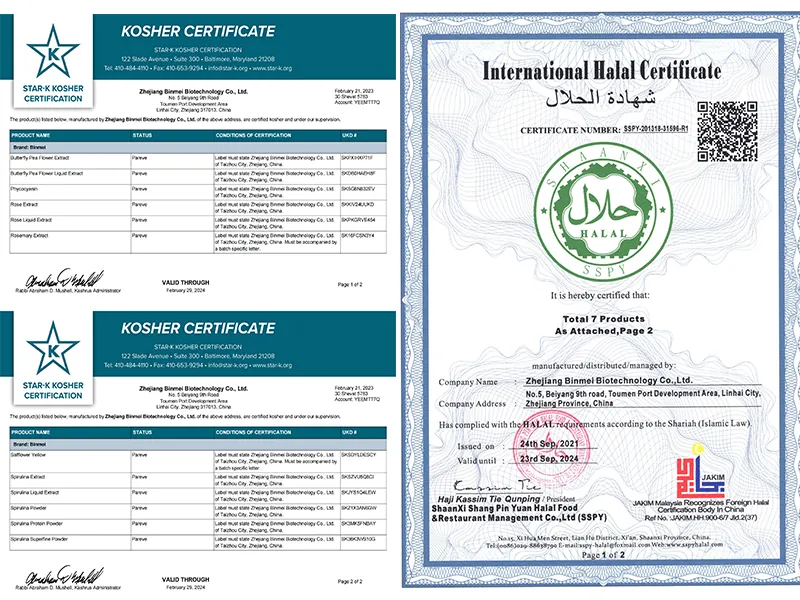
Yes. BINMEI’s blue spirulina (phycocyanin) is Kosher certified by STAR-K Kosher Certification. The current certificate covers Phycocyanin, Spirulina Extract, Spirulina Concentrate and Spirulina Liquid Extract and is valid through 28 February 2027. Kosher status, like halal status, is checked for the finished ingredient and the production system, not only for the algae.
BINMEI’s Halal and Kosher Certified Spirulina Extract
BINMEI Biotechnology, based in Taizhou, Zhejiang, began researching industrial extraction of blue spirulina in 2010. In 2013, BINMEI built its first industrial production line for spirulina extract, and in 2014 it applied for its first patent and began industrial production.
BINMEI’s current confirmed annual production capacity for its core E18 spirulina extract is 300 tons.
BINMEI’s food safety management system is certified to FSSC 22000 Version 6 by Intertek. The current certificate is valid until 18 September 2027 and covers production of spirulina extract (phycocyanin by spray drying) and spirulina liquid by osmotic sterilization.
BINMEI’s spirulina extract holds the following certifications:
- Halal: JAKIM Malaysia (valid to 23 September 2027) and BPJPH Indonesia (valid to 13 September 2027)
- Kosher: STAR-K Kosher Certification (valid through 28 February 2027)
- EU Organic and USDA Organic for certified organic powder grades; the liquid concentrate is not covered by the Organic certificates
- FSSC 22000 Version 6 food safety management system, certified by Intertek (valid until 18 September 2027)
Certificate copies are sent with quotations and samples.
Spirulina Extract: A Natural Blue Pigment
Spirulina extract, also called blue spirulina, is the blue pigment phycocyanin taken from spirulina. In the 1950s, the scientist R.C. Fuller observed that its structure and function differed from other proteins and resembled the structure of heme. In 1980, the Japanese company Dainippon Ink and Chemicals first extracted blue spirulina, and it was soon used in reagents and pharmaceuticals.
In 2013, the US FDA approved spirulina extract as a food color, making it one of the earliest natural blues available to food makers. Today it is a color additive exempt from certification under 21 CFR 73.530. In Canada it is on List 3 of Permitted Food Colours, and in the EU it is used as a colouring food under the NATCOL Code of Practice.
Colouring foods are foods with coloring properties, usually made from naturally colored vegetables, fruits or algae, such as carrots, pumpkins and blueberries, using physical processes to concentrate their pigments. As more food brands move to natural colors, spirulina extract is widely used to create blue in foods and beverages.
Applications of Spirulina Extract
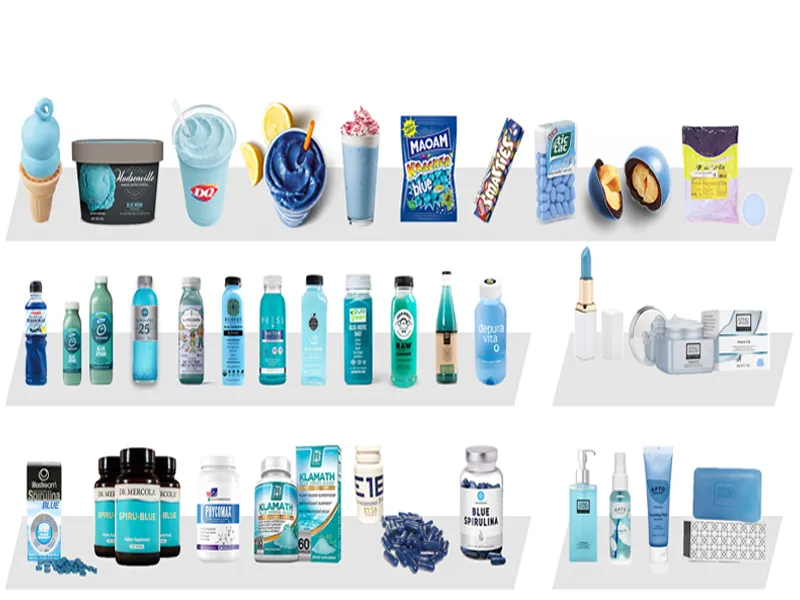
In food and beverages
Spirulina extract is a water-soluble natural blue for beverages, confectionery, jellies, dairy and ice cream. It works best in products at pH 4.5–8.0 that are processed below 65°C (149°F), and it is sensitive to light, so light-protective packaging helps keep the color. See our guide to pH stability of natural colors.
In dietary supplements
Spirulina extract is also used to color dietary supplements. For halal or kosher products, check the capsule shell and other ingredients as well as the color.
Where to Buy Kosher Blue Spirulina Powder in Bulk
BINMEI supplies kosher blue spirulina powder in bulk, direct from its factory:
- Certifications: Kosher and Halal for powder and liquid concentrate; EU Organic and USDA Organic for certified organic powder grades
- Product: blue phycocyanin powder, water-soluble, in E18 and E25 grades; also available as organic blue spirulina powder and liquid concentrate
- Packaging: 1 kg aluminum foil bag or 5 kg vacuum-packed PE + aluminum foil bag for powder; custom 20 g, 50 g and 100 g small packs are available
- Minimum order: 1 kg
- Availability and lead time: standard specifications are in stock; custom orders typically require 7–15 days
- Shelf life: 2 years
- Samples: free sample with the specification sheet and certificate copies
Frequently Asked Questions
Is spirulina halal or haram?
Spirulina is generally considered halal because it is an alga with no animal ingredients or alcohol. For processed products, check the additives and ask for a halal certificate that covers the grade you buy.
Is spirulina concentrate halal?
Yes. BINMEI Spirulina Concentrate YE3 is covered by Halal certification from JAKIM Malaysia and BPJPH Indonesia. Its TDS lists fructose, water, spirulina concentrate, trehalose, glycerol sourced from palm oil, and sodium citrate; the same product is also covered by STAR-K Kosher certification.
Is blue spirulina kosher?
Yes. BINMEI’s Phycocyanin, Spirulina Extract, Spirulina Concentrate and Spirulina Liquid Extract are listed on its STAR-K Kosher certificate, which is valid through 28 February 2027.
Can I get certificate copies with my sample?
Yes. Certificate copies can be provided with samples and quotations. Halal and Kosher cover BINMEI spirulina powder and liquid concentrate; EU Organic and USDA Organic certificates apply to certified organic powder grades, not the liquid concentrate.
Spirulina is generally considered halal, and spirulina extract made without alcohol-based solvents or non-halal additives can be certified Halal and Kosher. BINMEI’s blue spirulina is solvent-free, Halal and Kosher certified, and made under FSSC 22000. To check it in your own product, request certificates and a free sample.