Spirulina Extract
What is Spirulina Extract?
Spirulina extract, also called phycocaynin, blue spirulina. On the earth, Spirulina extract only exists in a few algae such as spirulina. Currently, spirulina extracts are allowed to be used in most countries, including Europe, the United States, Japan and China, etc. BINMEI uses its top-quality spirulina to produce its spirulina extract through a strict quality system, BINMEI's spirulina extract is guaranteed to be world-class. Our spirulina extract is FSSC 22000-certified, which ensures we manage our food safety responsibilities effectively. We’re also ensured by many certifications including Kosher, Halal and Organic. Our spirulina extract is 100% compliant with both the new EU Guidance Notes and FDA quality specifications.

BINMEI's Top Quality Spirulina Extract
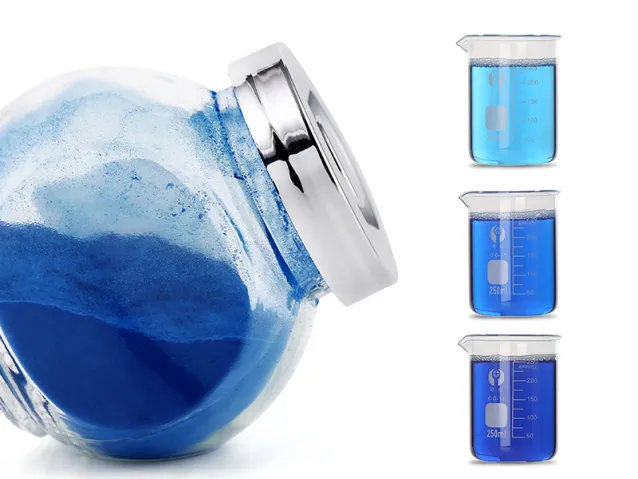
It is safe and reliable by pure physical extraction, only water is added as an auxiliary agent, without using an organic solvent.
Spirulina extract is not only a natural pigment, but it is also a powerful antioxidant, so it is also a functional raw material.
Spirulina extract is safely used for coloring confections (including candy and chewing gum), frostings, ice cream and frozen desserts, dessert coatings and toppings, beverage mixes and powders, yogurts, custards, puddings, cottage cheese, gelatin, breadcrumbs, ready-to-eat cereals (excluding extruded cereals), etc.
In the US, spirulina extract is exempt from certification, and therefore our spirulina extract is exempt from the certification requirements of section 721(c) of the Federal Food, Drug, and Cosmetic Act.
Blue spirulina is the common market name for a blue ingredient made from spirulina-derived phycocyanin. For food and beverage manufacturers, the term generally refers to a water-soluble spirulina extract whose principal coloring component is phycocyanin, rather than the complete green-blue algae biomass. BINMEI supplies spirulina extract powder in E18 and E25 specifications for B2B natural blue food-coloring projects.
What Is Blue Spirulina?
Blue spirulina is a commercial ingredient name used for a blue-colored extract obtained from spirulina, commonly identified as Arthrospira platensis. The blue appearance is associated with phycocyanin, a water-soluble pigment-protein complex found in the algae. In ingredient sourcing, blue spirulina, blue spirulina extract, spirulina extract and phycocyanin powder are closely related search terms. They are not always identical product specifications, however, so buyers should confirm the formal product name, grade, composition and analytical values on the supplier's current technical data sheet (TDS).
Whole spirulina biomass and blue spirulina extract should not be treated as interchangeable. Whole dried spirulina retains the broader algae matrix, including its naturally occurring green and blue pigments. A spirulina extract is processed to concentrate the coloring fraction used to create a blue shade. BINMEI's E18 and E25 products are named Spirulina Extract in their official TDS. The TDS describes them as blue powders prepared from dried Arthrospira platensis biomass by filtered aqueous extraction, with phycocyanin as the principal coloring component.
For food manufacturers, the practical reason to consider blue spirulina is its color function. It can be evaluated in food systems where a blue or blue-green color direction is required and where the formulation conditions are compatible with phycocyanin. The ingredient is water-soluble according to the E18 and E25 TDS, but solubility alone does not guarantee that a finished product will retain its target shade. Product pH, heating time, light exposure, the surrounding ingredients and the package all need to be considered during development.
Blue spirulina is therefore best assessed as a technical food-coloring ingredient, not simply as a consumer superfood. Procurement teams usually need to know which grade is offered, how color value is measured, what minimum phycocyanin content is specified, what the powder contains besides spirulina concentrate, which tests appear on the COA, and whether the product documentation matches the destination market. R&D teams need to test the ingredient in the actual product base before fixing an addition level or making a shelf-life decision.
Blue Spirulina, Spirulina Extract and Phycocyanin: Are They the Same?
Blue Spirulina as a Commercial Ingredient Name
Blue spirulina is widely used in online searches and product descriptions because it communicates the ingredient's recognizable blue color and spirulina origin. A buyer may use the phrase when searching for a natural blue powder, a blue spirulina supplier, a wholesale ingredient or a food-coloring option. The phrase is useful for discovery, but it does not identify a complete specification. Different suppliers may use it for products with different color values, phycocyanin contents, carrier systems, processing methods and intended applications.
For this reason, an RFQ should move from the market name to the technical identity. Ask whether the offered item is a dried powder or a liquid concentrate, whether the principal coloring component is phycocyanin, what the grade means, and which current TDS applies. A product name alone cannot establish equivalence between two suppliers. The same label, such as E18, should also be checked against the supplier's own test method and specification rather than assumed to be a universal industry grade.
Spirulina Extract as the Technical Product Description
BINMEI's current powder TDS uses the product name Spirulina Extract and identifies the specifications as E18 and E25. Both documents describe the material as an extract of dried Arthrospira platensis biomass. The extraction is described as filtered aqueous extraction. The product is a blue powder, has a product pH specification of 6.0–7.0, is water-soluble and has a particle size specification of 80 mesh.
The distinction between the product's market name and its technical product name is useful in procurement documents. A buyer can search for blue spirulina extract or phycocyanin powder, then record the formal product name and grade shown on the TDS and purchase order. This reduces the risk of comparing a whole-algae powder with an extract, or comparing a liquid product with a dry powder, as if they were the same material.
Phycocyanin as the Principal Blue Coloring Component
Phycocyanin is a blue pigment-protein complex belonging to the phycobiliprotein family. It is associated with the blue color of spirulina-derived extracts. In the E18 and E25 TDS, phycocyanin is identified as the principal coloring component and its content is specified separately from color value and total protein. These measurements answer different questions and should not be substituted for one another.
When a supplier states a phycocyanin percentage, the buyer should check the analytical method and whether the value is a minimum specification or a result for a particular batch. When a supplier states a color value, the buyer should check the measurement method and unit convention. When a supplier states protein, the buyer should not assume that all protein is phycocyanin. The BINMEI TDS lists separate values for color value, protein and phycocyanin, making these distinctions visible for technical review.
What Is Phycocyanin and Why Does It Create a Blue Color?
Phycocyanin as a Blue Pigment-Protein Complex
Phycocyanin is a light-harvesting pigment-protein found in certain cyanobacteria, including spirulina. It belongs to the phycobiliproteins. Its color is associated with the chromophore attached to the protein structure. The protein-pigment arrangement affects how light is absorbed and transmitted, which is why phycocyanin-containing materials have a blue appearance. In general scientific descriptions, phycocyanin has a prominent absorption feature in the orange-red region of visible light, often reported around 620 nm. The exact spectral profile depends on sample composition, concentration, instrument settings and test conditions.
That optical explanation helps describe why phycocyanin can provide a blue color, but it should not be confused with the routine grade specification. A food ingredient buyer normally evaluates the commercial powder through the supplier's color value test, phycocyanin assay, appearance standard and application test. A reported wavelength in scientific literature is not a substitute for a batch COA or a product-specific color value result.
Why Does Phycocyanin Produce a Blue Color?
A pigment appears colored because it absorbs some wavelengths of visible light more strongly than others. Phycocyanin absorbs light in a region associated with orange-red wavelengths, commonly reported around 620 nm, and the remaining transmitted or reflected light is perceived as blue. Under defined excitation conditions, phycocyanin fluorescence is commonly discussed around 650 nm. These optical values are general scientific characteristics; they are not the same as the visual color value used to specify a commercial food-coloring powder and should not be treated as BINMEI batch test results. For background reading, see the ScienceDirect topic overview on phycocyanin.
For formulators, the key point is that the blue shade depends on the condition of the pigment-protein complex and the matrix in which it is used. A powder may look blue in its container but produce a different shade after dispersion in a food base. The pH, temperature history, light exposure, concentration, other ingredients and package can all influence the final appearance. This is why a laboratory sample should be tested in the same or a representative formulation before the ingredient is approved for production.
Phycocyanin vs. Chlorophyll
Whole spirulina contains more than one pigment family. Chlorophyll contributes a green color, while phycocyanin contributes a blue pigment component. The visual appearance of whole algae powder reflects the combined pigment composition and the structure of the biomass. A phycocyanin-rich extract is processed to emphasize the blue coloring component, so its visual role differs from that of a whole green-blue algae powder.
| Comparison | Phycocyanin | Chlorophyll |
|---|---|---|
| Pigment family | Phycobiliprotein | Chlorophyll pigment |
| Color contribution | Blue | Green |
| Role in whole spirulina | One of the naturally occurring pigments | One of the naturally occurring pigments |
| Role in BINMEI Spirulina Extract | Principal coloring component identified in the TDS | Not identified as the principal coloring component of the E18/E25 extract |
It is important not to overstate this distinction. The BINMEI E18 and E25 powders are not described in their TDS as 100% pure phycocyanin. They are formulated spirulina extracts with listed ingredients. E18 specifies spirulina concentrate, trehalose and sodium citrate within stated percentage ranges. E25 lists the same ingredient names, but its TDS does not provide percentage ranges for those components. Buyers should use the applicable grade-specific TDS rather than assume that every blue spirulina powder has the same composition.
How Is Blue Spirulina Extract Manufactured?
Arthrospira platensis as the Raw Material
The BINMEI E18 and E25 TDS identify Arthrospira platensis as the raw material and China as the country of origin. The documents describe the starting material as dried biomass. The extract is therefore derived from spirulina biomass rather than from a different blue algae species. The raw material identity is an important part of product traceability and should be recorded alongside the grade and batch number during supplier qualification.
For a B2B buyer, the source statement is only one part of the assessment. The TDS should also define the finished ingredient, its composition, physical characteristics, analytical specifications, microbiological criteria, storage and shelf life. A supplier's general description of spirulina does not replace the current specification for the exact product being purchased.
Filtered Aqueous Extraction
The E18 and E25 TDS state that spirulina extract is prepared by filtered aqueous extraction of dried Arthrospira platensis biomass. In practical terms, an aqueous extraction process uses water as the extraction medium to transfer water-soluble components, including phycocyanin, from the biomass into a liquid phase. Filtration is then part of the process used to separate the extract from insoluble material. The exact equipment settings, extraction temperature, filtration configuration, concentration parameters and process yields are not specified in the supplied TDS, so this page does not assign numerical values to those steps.
The project source material describes the extraction solvent used for the blue spirulina extract as none, while the official TDS describes the process as aqueous extraction. The accurate way to express both points is that the product is made by filtered aqueous extraction and no organic extraction solvent is specified or used in the documented process. It would be misleading to call the process solvent-free in an absolute chemical sense if the extraction medium is water.
Filtration, Concentration and Powder Production
After extraction and filtration, the material is processed into the powder form. BINMEI's FSSC 22000 certificate explicitly includes production of spirulina extract (phycocyanin by spray drying) within its certified food safety management system scope. The certificate also lists spirulina liquid production by osmotic sterilization and excludes phycocyanin juice. For this powder page, the relevant point is that the documented powder production route includes spray drying.
Spray drying converts a prepared liquid feed into powder by atomizing it into a drying environment. This general description explains the role of the operation; it does not disclose BINMEI's proprietary process parameters. The final powder is then evaluated against the product specification. The E18 and E25 TDS describe a blue powder with 80 mesh particle size, water solubility, product pH 6.0–7.0 and grade-specific analytical standards.
Final Product Standardization
Standardization allows buyers to compare a defined grade rather than relying only on a color description. BINMEI identifies E18 and E25 as separate specifications. E18 has a color value range of 180–195; E25 has a color value of not less than 250. Both TDS documents use UV spectrophotometry and show the method notation as Amax/m*100. The grades also have different minimum phycocyanin and protein specifications.
Standardization does not remove the need for application testing. The same powder may appear differently in a clear beverage, a dairy base, a frozen dessert or a confectionery system. The target shade should be confirmed in the customer's own formula, at the intended pH, processing temperature, addition stage and package. A sample evaluation is therefore a normal part of the technical selection process, not an optional substitute for reading the TDS.
Blue Spirulina Powder Grades: E18 vs. E25
BINMEI supplies two documented powder specifications for spirulina extract: E18 and E25. The grade names should be read together with their official TDS values. E25 has the higher specified color value and higher minimum phycocyanin and protein values. E18 has its own composition ranges and analytical limits. A buyer should choose by the required color performance, formulation conditions and full specification—not by assuming that a higher grade number automatically guarantees a better result in every finished product.
E18 Spirulina Extract
Spirulina Extract E18 is specified with a color value of 180–195, phycocyanin not less than 30.0 g/100 g and protein not less than 35.0 g/100 g. Loss on drying is not more than 7.0%. The particle size is 80 mesh, the product pH is 6.0–7.0 and the product is water-soluble. Its appearance is specified as blue powder. The E18 TDS gives the composition ranges as spirulina concentrate 50–65%, trehalose 30–40% and sodium citrate 5–10%.
The E18 composition ranges are part of the grade specification and should be used as supplied. The three ranges are not intended to be recalculated into an exact batch formula from this webpage. For a specific purchase, the current TDS and batch COA remain the controlling documents. If a project requires a particular ingredient declaration, organic status, carrier statement or allergen review, the buyer should request the relevant document for the exact grade and batch.
E25 Spirulina Extract
Spirulina Extract E25 is specified with a color value not less than 250, phycocyanin not less than 45.0 g/100 g and protein not less than 60.0 g/100 g. Loss on drying is not more than 7.0%. The particle size is 80 mesh, product pH is 6.0–7.0 and the powder is water-soluble. Its appearance is specified as blue powder. The E25 TDS lists spirulina concentrate, trehalose and sodium citrate as components but does not provide percentage ranges for them.
Because the E25 TDS does not state the percentage composition, this page does not estimate or copy the E18 percentage ranges into E25. Buyers who need a quantitative carrier breakdown, a specific declaration format or a market-specific ingredient statement should request the current grade documentation before approving the product. This is particularly important for organic projects, where the exact certified product scope and the intended label claim must match.
E18 vs. E25 Technical Specification Comparison
| Parameter | Spirulina Extract E18 | Spirulina Extract E25 |
|---|---|---|
| Color value | 180–195 | NLT 250 |
| Phycocyanin | NLT 30.0 g/100 g | NLT 45.0 g/100 g |
| Protein | NLT 35.0 g/100 g | NLT 60.0 g/100 g |
| Loss on drying | NMT 7.0% | NMT 7.0% |
| Particle size | 80 mesh | 80 mesh |
| Product pH | 6.0–7.0 | 6.0–7.0 |
| Solubility | Water-soluble | Water-soluble |
| Appearance | Blue powder | Blue powder |
| Color value method | UV spectrophotometer (Amax/m*100) | UV spectrophotometer (Amax/m*100) |
| Phycocyanin method | SN/T 1113 | SN/T 1113 |
| Protein method | Kjeldahl method | Kjeldahl method |
NLT means not less than; NMT means not more than. The table summarizes the TDS specifications and does not replace the batch COA. A COA reports the analytical result for the supplied batch where the TDS identifies the test frequency as per batch. Some parameters in the TDS are tested annually rather than on every batch; this distinction is explained in the quality-control section below.
Color Value Is Not the Same as Phycocyanin Percentage
Color value and phycocyanin content are related to the product's coloring performance, but they are different measurements. Color value is an optical measurement made using the method listed in the TDS. Phycocyanin content is an assay result expressed as grams per 100 grams. Protein is another separate measurement. A buyer should not convert one of these values into another or assume that a color value of 250 means 250% phycocyanin.
When comparing supplier quotations, request the same information from each supplier: formal product name, grade, color value and test method, minimum phycocyanin, protein, loss on drying, particle size, product pH, solubility and composition. If suppliers use different test methods or different color-value conventions, the numbers may not be directly comparable. Ask for the method and, where necessary, arrange side-by-side sample testing using the same application base.
Composition and Carrier Information
The E18 TDS lists spirulina concentrate, trehalose and sodium citrate with percentage ranges. The E25 TDS lists those ingredient names but not their percentages. This is relevant for procurement, regulatory and labeling teams because carrier ingredients may affect ingredient declarations, formulation calculations and customer specifications. A supplier's generic description of blue spirulina should not replace the actual composition statement for the grade being quoted.
For organic projects, buyers should also separate the product's organic certification from the general ingredient composition. An organic certificate does not mean that every grade, every format or every shipment can automatically be marketed as organic. The exact certified product listing, the applicable operation, the transaction documentation and the label claim must be checked together. BINMEI's current EU and USDA NOP documents list Spirulina Extract (Phycocyanin) as an organic product; they do not establish organic coverage for the liquid grade.
How to Evaluate Blue Spirulina Extract Quality
Color Value and Phycocyanin Testing
Color value and phycocyanin content are key identity and performance checks for a phycocyanin-rich food color. The E18 and E25 TDS list color value testing by UV spectrophotometer and phycocyanin testing by SN/T 1113. Both are identified as per-batch tests. A procurement team should check that the batch COA corresponds to the supplied grade and lot, and that the reported result is interpreted against the relevant TDS limit.
Color value can help a formulator compare the measured color strength of grades made to the same method. It should not be used alone to set a finished-product addition level. The final shade depends on the product base, pH, other ingredients, process exposure and package. A small laboratory trial can help identify whether E18 or E25 is the more suitable starting point, but scale-up should repeat the evaluation under representative production conditions.
Protein, Loss on Drying and Particle Size
Protein is listed as a per-batch physical test in both TDS documents, using the Kjeldahl method. E18 specifies not less than 35.0 g/100 g; E25 specifies not less than 60.0 g/100 g. Loss on drying is specified at not more than 7.0%, using 3 g at 105°C for 2 hours, and is tested per batch. Particle size is listed as 80 mesh in the general information section.
These parameters matter for different reasons. Protein is a compositional specification; loss on drying is relevant to moisture control and powder handling; particle size relates to the physical form of the material. None of these values alone establishes dispersion quality in every finished formula. A buyer should assess the powder in the intended process, especially if it will be incorporated into a dry blend, a beverage premix or a product with a defined mixing sequence.
Heavy Metals: Read the Test Frequency Correctly
The E18 and E25 TDS list limits for lead, arsenic, mercury and cadmium. The listed methods are ICP-MS. The test frequency for these heavy-metal items is per year, not per batch. The specifications are: lead not more than 0.2 mg/kg; arsenic not more than 0.3 mg/kg; mercury not more than 0.1 mg/kg; and cadmium not more than 0.3 mg/kg.
This distinction should be stated transparently. A TDS can define the supplier's specification and annual testing programme, while the COA for a particular lot may not show a new heavy-metal result for every batch. If a customer, destination market or internal quality system requires batch-specific heavy-metal testing, that requirement should be agreed and confirmed before the order. Do not assume that a test frequency is per batch when the TDS says per year.
Microbiological Specifications
The TDS lists total plate count not more than 1,000 CFU/g, coliforms not more than 20 CFU/g and mold not more than 300 CFU/g. These items are listed as per-batch tests. Salmonella is specified as negative per 25 g, but its listed frequency is per year. The test methods are AOAC 990.12 for total plate count, AOAC 991.14 for coliforms, AOAC 997.02 for mold and AOAC 998.09 for Salmonella.
For quality review, the important practice is to read the result, limit, method and frequency together. A statement such as “microbiologically tested” is less useful than a clear list of organisms or indicators, numerical criteria, analytical methods and test frequency. Buyers should also identify any additional market-specific or customer-specific tests that are required beyond the current TDS.
Microcystins, BMAA and Other Additional Testing Requests
The AIO summary supplied for this project mentions contamination concerns associated with some algae products, including heavy metals and toxins such as microcystins and BMAA. The current E18 and E25 TDS provided for this task list lead, arsenic, mercury and cadmium under heavy metals and the microbiological parameters described above. They do not list microcystins or BMAA as routine TDS tests. This page therefore does not claim that every batch is tested for microcystins or BMAA, or that the product is certified free of those substances.
If a buyer's risk assessment, market rules or customer specification requires microcystin, BMAA or another additional contaminant test, the requirement should be stated in the RFQ and confirmed with BINMEI before order placement. The buyer should request the relevant test report or written confirmation for the exact product and batch. This is more reliable than relying on a generic “third-party tested” or “toxin-free” statement that does not identify the analyte, method, limit or sample.
Batch COA vs. Annual Testing
| TDS Item | Specification / Method | Frequency |
|---|---|---|
| Appearance | Blue powder; visual | Per batch |
| Odor / Taste | Characteristic; sensory test | Per batch |
| Visible impurity | None visible; visual | Per batch |
| Color value | E18 180–195 / E25 NLT 250; UV spectrophotometer | Per batch |
| Loss on drying | NMT 7.0%; 3 g / 105°C / 2 h | Per batch |
| Protein | E18 NLT 35.0 / E25 NLT 60.0 g/100 g; Kjeldahl | Per batch |
| Phycocyanin | E18 NLT 30.0 / E25 NLT 45.0 g/100 g; SN/T 1113 | Per batch |
| Lead | NMT 0.2 mg/kg; ICP-MS | Per year |
| Arsenic | NMT 0.3 mg/kg; ICP-MS | Per year |
| Mercury | NMT 0.1 mg/kg; ICP-MS | Per year |
| Cadmium | NMT 0.3 mg/kg; ICP-MS | Per year |
| Total plate count | NMT 1,000 CFU/g; AOAC 990.12 | Per batch |
| Coliforms | NMT 20 CFU/g; AOAC 991.14 | Per batch |
| Mold | NMT 300 CFU/g; AOAC 997.02 | Per batch |
| Salmonella | Negative / 25 g; AOAC 998.09 | Per year |
This table reflects the frequency stated in the current TDS, not a promise that all parameters appear as new results on every batch COA. Buyers should request the applicable TDS and batch COA, and identify any additional testing needed for their product or destination. For a broader view of natural-color testing and technical data, see BINMEI's Technical Data Summary and Technical Center.
Blue Spirulina Stability: pH, Heat and Light
Phycocyanin is a protein-based pigment, so its color performance is sensitive to the conditions in which it is processed and stored. BINMEI's Product Performance Guide gives the following reference properties for spirulina extract: pH 4.5–8.0, heat below 65°C / 149°F, light sensitive and water-soluble. These are application guidelines, not a guarantee that every formula will retain the same color throughout its shelf life. The guide also provides measured retention data under specific laboratory conditions. The test conditions must be read with every percentage.
Product pH and Application pH Are Different Specifications
The E18 and E25 TDS list the pH of the powder product as 6.0–7.0. The Product Performance Guide separately gives an application stability reference range of pH 4.5–8.0. These values describe different things. Product pH is a specification for the supplied ingredient. Application pH refers to the pH of the finished food system in which the extract is used. A buyer should not replace the product pH specification with the application range, or assume that the application range is a finished-product warranty.
The guide's pH retention test reports the following blue-color retention values: pH 6.2, 100%; pH 5.8, 96.3%; pH 5.4, 92.5%; pH 5.0, 89.1%; pH 4.6, 84.6%; pH 4.2, 82.2%; pH 3.8, 74.8%; and pH 3.4, 27.4%. The sharp decrease between pH 3.8 and pH 3.4 shows why a formulation near the acidic end needs direct evaluation. The figures are guide test results and should not be interpreted as a guaranteed retention curve for every beverage, dairy product or confectionery base.
| Test pH | Blue Color Retention |
|---|---|
| 6.2 | 100% |
| 5.8 | 96.3% |
| 5.4 | 92.5% |
| 5.0 | 89.1% |
| 4.6 | 84.6% |
| 4.2 | 82.2% |
| 3.8 | 74.8% |
| 3.4 | 27.4% |
For product development, measure the pH of the finished base rather than relying only on the pH of a premix or water phase. If acidulants are added later, check the final equilibrium pH. A color that looks acceptable immediately after mixing may change during holding or storage. For applications near the lower end of the reference range, test more than one time point and retain samples under representative storage conditions. The pH Stability chapter provides broader context for pH behavior across natural colors.
Heat Stability Depends on Both Temperature and Time
The Performance Guide lists heat below 65°C / 149°F as the spirulina extract reference guidance. The same guide provides a time-based test at 40°C, 60°C and 80°C. After 180 minutes, the reported blue-color retention is 96.1% at 40°C, 51.4% at 60°C and 6.8% at 80°C. At 80°C, the retention after 10 minutes is 51.5%. These results demonstrate why a single temperature number cannot describe every process: exposure duration is also important.
| Temperature | Retention after 10 min | Retention after 180 min |
|---|---|---|
| 40°C | 100% | 96.1% |
| 60°C | 90.3% | 51.4% |
| 80°C | 51.5% | 6.8% |
When designing a heated product, identify the full thermal history: preheating, pasteurization, hot filling, holding, cooling and any later reheating. If the color is added before a long heat step, the pigment may experience a very different exposure from a product in which the color is added after heating. A post-process addition may be considered where the manufacturing system allows it, but the exact addition point must be evaluated for hygiene, dispersion and process control. The Heat Stability chapter explains the wider role of time and temperature in natural-color performance.
Light Stability and Finished-Pack Design
The Performance Guide classifies spirulina extract as light-sensitive and provides a 15-day light test at different pH values. The reported retention is pH 5.0: 3.6%; pH 6.0: 23.8%; pH 7.0: 20.4%; and pH 8.0: 9.6%. The guide's light test conditions are disclosed in the source dataset. These results show that light exposure is a meaningful variable and that pH alone does not explain every outcome.
| Test pH | Blue Color Retention after 15 Days |
|---|---|
| 5.0 | 3.6% |
| 6.0 | 23.8% |
| 7.0 | 20.4% |
| 8.0 | 9.6% |
For finished foods and beverages, the package is part of the formulation decision. A transparent package under retail lighting may expose a blue color to continuous visible light. R&D teams should compare candidate packages, shelf positions and expected distribution conditions. Light-protective packaging can reduce exposure, but the level of protection depends on the material, wall thickness, color, closure and actual use conditions. Do not assume that an ingredient's two-year shelf life in its original sealed package is the shelf life of a finished beverage or dessert.
For the ingredient itself, the TDS notes that the powder can pick up moisture in humid storage conditions if the container is not closed properly, which may lead to agglomeration. The TDS lists room-temperature storage at around 26°C. In combination with the guide's light-sensitivity note, this supports keeping the original container tightly closed, dry and protected from direct light. The Light Stability chapter gives additional packaging context.
Formulation Factors That Affect the Final Blue Shade
Color development is not determined by grade alone. The same E18 or E25 powder can produce different results in different food matrices. Water quality, pH, protein or mineral interactions, solids content, viscosity, heating profile, mixing sequence and package transparency can influence the measured or perceived color. A formulator should define the target shade, choose the grade for initial trials, then test the ingredient in the actual product base.
Do not set a universal dosage from a supplier's grade name or from a competitor's recipe. The E18 and E25 TDS specify product characteristics, not a single use level for all applications. The appropriate addition level depends on the target shade and the finished formula. A practical trial plan can use a small range of test concentrations, record the exact ingredient mass and batch size, and measure color at defined stages. The same process should be repeated after relevant heating, cooling, filling and storage steps.
How Food Manufacturers Should Validate Stability
- Define the target. Record the target blue shade, acceptable variation and the measurement method that will be used for the finished product.
- Record the matrix. Measure the final product pH and record the major ingredients, solids level and any components likely to affect dispersion or color.
- Map the process. Record temperatures, holding times, order of addition, shear or mixing conditions, cooling and filling steps.
- Evaluate the package. Compare light exposure, headspace, closure and storage conditions representative of distribution and retail.
- Retain samples. Check initial color and planned storage intervals. Record both instrumental values and visual observations.
- Confirm at scale. Repeat the test under pilot or production conditions before approving a commercial specification.
These steps do not replace the customer's own finished-product stability programme. They help ensure that the raw material is assessed in the conditions that matter to the product being developed. For broader decision support, see BINMEI's Comparison Matrix and Why Stability Matters.
Blue Spirulina Applications in Food and Beverage Manufacturing
Blue spirulina extract is considered for food applications where a blue color direction is required and the formulation conditions are suitable for phycocyanin. The E18 and E25 TDS cite a range of US permitted food-coloring categories under 21 CFR §73.530. The actual suitability of a grade still depends on the product category, process, formulation and destination market. The examples below are development directions, not a guarantee that every formula in a category will perform identically.
Beverages and Drink Mixes
Blue spirulina can be evaluated in beverage mixes and powders and in selected non-alcoholic beverage systems. For a dry beverage mix, the powder format may be convenient for blending with other dry ingredients. For a ready-to-drink beverage, the formulator needs to assess the final pH, any pasteurization or hot-fill step, the point of color addition, light exposure and package. The application reference range is pH 4.5–8.0, with heat guidance below 65°C / 149°F and light sensitivity noted in the Performance Guide. An acidic beverage outside the reference range should not be assumed suitable without testing.
For beverage development, record the acidulant system, final equilibrium pH, processing sequence, fill temperature, cooling time and bottle or carton type. Test the powder in the actual base rather than in plain water alone. If the color is added after heat treatment, confirm that the addition step is compatible with the plant's hygienic design and process controls. BINMEI's Beverage Applications page provides broader beverage formulation context.
Dairy and Yogurt Products
Blue spirulina may be evaluated in selected dairy and non-dairy yogurt systems, subject to the target pH and processing conditions. The US TDS regulatory description includes yogurts, including non-dairy yogurt alternatives, among the listed food categories. In development, the team should check the finished pH, heat exposure, base color, protein and mineral system, and the stage at which the color is introduced. A dairy product that is pasteurized before coloring presents a different process history from one in which the color is exposed to the heat step.
For yogurt and related products, assess the color after fermentation and after the product reaches its final pH. If the formula continues to acidify during fermentation or storage, the initial shade may not represent the later result. Also consider light exposure in the retail package. The Dairy Applications page provides additional category context.
Ice Cream and Frozen Desserts
Ice cream and frozen desserts are among the US food categories listed in the E18 and E25 TDS under 21 CFR §73.530. Blue spirulina can be considered for blue or blue-green visual concepts in frozen desserts, toppings and dessert coatings. The development team should check the pH of the mix, the temperature and duration of any pasteurization step, the timing of color addition, the freezing process and the finished package. Frozen storage does not remove the need to assess light exposure during distribution and retail display.
In frozen dessert systems, the color may also be perceived differently depending on the base, opacity, fat content and other ingredients. Test the color in the actual mix and finished frozen product. If the mix is heated, consider whether the color can be added after the relevant heat step while maintaining the required process controls. See Ice Cream and Frozen Dessert Applications for broader application guidance.
Confectionery, Candy and Chewing Gum
The TDS regulatory description includes confections, candy and chewing gum among the US categories listed for spirulina extract. It also refers to frostings, dessert coatings and toppings. Confectionery systems vary considerably: some involve high cooking temperatures, some are deposited or molded after cooking, and some use coatings or decorative layers that experience less heat. The color should be evaluated at the actual point of addition and under the relevant pH and storage conditions.
For hard-cooked or high-temperature systems, the heat data should be considered before choosing phycocyanin. A post-cook coating or decorative finish may create a different exposure profile from a color incorporated into a hot mass. In every case, the final shade, color retention and label declaration should be confirmed in the intended product. See Confectionery Applications for more category information.
Bakery, Frostings and Dessert Decorations
The TDS lists frostings, dessert coatings and toppings, and breadcrumbs among the US categories described for spirulina extract. A bakery project should separate baked components from post-bake decorations. A blue color added to a dough or batter may be exposed to oven temperatures and extended heating, while a frosting, icing or coating applied after baking may experience a lower thermal load. Light exposure on a retail shelf can still be important for the finished decoration.
For this reason, blue spirulina should not be recommended generically for all baked goods. The formulator should identify whether the color is baked into the product or applied after baking, then evaluate the heat and light conditions. BINMEI's Bakery Applications page provides category-specific formulation context. The blue ingredient itself should be tested in the actual recipe rather than assigned a universal bakery dosage.
Other Listed Food Categories
The E18 and E25 TDS descriptions under US 21 CFR §73.530 also list beverage mixes and powders, dessert coatings and toppings, custards, puddings, cottage cheese, gelatin, ready-to-eat cereals excluding extruded cereals, non-alcoholic beverages, alcoholic beverages containing less than 20 percent alcohol by volume, unheated seasoning mixes, salad dressings, condiments, sauces, dips, certain coatings applied to dietary supplement tablets and capsules, and seasonal coloring of hard-boiled egg shells. The regulation includes restrictions, including the limitation relating to foods with standards of identity unless the added color is authorized by those standards.
This list is not a blanket authorization for every product or every market. Manufacturers must check the current regulation, the exact food category and the conditions of use. If a product falls outside the categories described in the TDS, or is marketed in another country, obtain market-specific regulatory review before using the ingredient.
Blue Spirulina Regulatory Status by Market
United States: 21 CFR §73.530
The E18 and E25 TDS identify the US regulatory reference as 21 CFR §73.530, Spirulina extract. The TDS reproduces the listed uses and restrictions, including confections, frostings, ice cream and frozen desserts, beverage mixes and powders, yogurts, custards, puddings, cottage cheese, gelatin, breadcrumbs, specified cereals, certain alcoholic and non-alcoholic beverages, unheated seasoning mixes, salad dressings, condiments, sauces, dips, certain coatings for dietary supplement tablets and capsules, and seasonal coloring of hard-boiled egg shells. The regulation includes category-specific restrictions and the requirement to use levels consistent with good manufacturing practice.
The TDS also notes that spirulina extract may not be used to color foods for which standards of identity have been issued under section 401 of the Federal Food, Drug, and Cosmetic Act unless the added color is authorized by those standards. This is an important limitation. A buyer should not interpret the reference to 21 CFR §73.530 as permission for all foods or all applications. Check the current eCFR text and obtain regulatory review for the intended finished product. The official reference is 21 CFR §73.530 – Spirulina extract.
European Union: Coloring Food Context
The E18 and E25 TDS state that spirulina extract is typically considered a coloring food in the EU rather than a color additive, describing a coloring food as a food ingredient used for coloring purposes. The appropriate classification depends on the ingredient's composition, manufacturing process, concentration and coloring function. Buyers should not assume that the US color-additive status automatically determines the EU classification, or that a supplier statement replaces the customer's regulatory assessment.
For EU projects, the buyer should review the ingredient's composition and processing information, the intended labeling, the finished food category and the applicable national and EU requirements. Where the project depends on a coloring-food classification, the customer should confirm that the ingredient and its production process meet the relevant criteria. The current BINMEI TDS is a technical reference, not a guarantee that the product is lawful in every EU application.
Canada: List 3 of Permitted Food Colours
The project product-source record identifies the Canadian regulatory reference as List 3 of Permitted Food Colours, with the name “Spirulina Extract.” Buyers targeting Canada should verify the current Health Canada list and the relevant conditions for the intended food category. The presence of an ingredient name in a permitted list should not be interpreted as universal permission for every food, level or label claim. Confirm the current Canadian requirements for the exact finished product before launch.
JECFA Reference and Market-Specific Review
The E18 and E25 TDS state that a temporary acceptable daily intake (ADI) of “not specified” was established at the 86th JECFA in 2018. This is a reference to the JECFA evaluation cited in the TDS; it is not a substitute for checking national food regulations or intended use conditions. Regulatory classification, permitted categories, labeling and documentation can differ by destination. BINMEI recommends that customers consult the relevant local authority or regulatory adviser before using the material in a commercial food product.
For technical background, buyers can consult BINMEI's Regulatory Compliance chapter. A destination-specific review should consider the exact ingredient name, composition, intended function, finished food category, labeling and supporting documents. Any additional documentation required for import or customer qualification should be agreed before shipment.
Blue Spirulina Certifications and Organic Product Coverage
Certification claims should be tied to the certificate, the listed product and the applicable form. BINMEI's current documents include EU Organic, USDA NOP, Halal certifications from JAKIM Malaysia and BPJPH Indonesia, STAR-K Kosher and FSSC 22000. These documents do not all describe the same thing: some certify organic product scope, some certify listed products under religious requirements, and FSSC 22000 certifies a food safety management system within a defined production scope.
EU Organic: Spirulina Extract (Phycocyanin)
The EU organic certificate is issued by ECOCERT SAS under control body code CN-BIO-154. Its product directory lists “Dry extracts: Spirulina Extract (Phycocyanin)” as Organic. The certificate states validity from 11 July 2025 to 31 March 2027. This is product-scope information for the certified dry extract listing. It should not be expanded to liquid spirulina extract or to a product that is not covered by the certificate. Buyers should request the current certificate and transaction documentation for the grade and shipment they intend to purchase.
USDA NOP: Spirulina Extract (Phycocyanin)
The USDA National Organic Program certificate was issued by ECOCERT SAS on 18 August 2025 and identifies Spirulina Extract (Phycocyanin) in its certified product addenda under the handling/processing category. The certificate explains that organic certification continues until surrendered, suspended or revoked; the annual update date is not an expiry date. The certificate also provides an operation identification number and a link to the USDA Organic Integrity Database. Buyers should check the current database status and confirm that the exact product and transaction are covered before using an organic claim.
Halal: JAKIM Malaysia and BPJPH Indonesia
The JAKIM Malaysia certificate lists Spirulina Extract and Phycocyanin (Spirulina Extract) among the certified products and states validity through 23 September 2027. The BPJPH Indonesia certificate also lists Phycocyanin (Spirulina Extract) and Spirulina Extract and states validity through 13 September 2027. These are product-list certificates; the buyer should check the product name and labeling conditions on the certificate copy supplied for the relevant order.
STAR-K Kosher
The STAR-K certificate lists Phycocyanin as Pareve and Spirulina Extract as Pareve under BINMEI's brand, with labeling conditions identifying Zhejiang Binmei Biotechnology Co., Ltd. The certificate is valid through 28 February 2027. Buyers should check the exact product name, label condition and current validity on the certificate copy before using a Kosher claim on a finished product.
FSSC 22000 Food Safety Management System
BINMEI's FSSC 22000 V6 certificate is issued by Intertek for a food safety management system under the Food Manufacturing category. Its scope includes production of spirulina extract (phycocyanin by spray drying) and spirulina liquid by osmotic sterilization, among other listed product activities. The certificate explicitly excludes phycocyanin juice and is valid through 18 September 2027. FSSC 22000 is a food safety management system certification; it should not be described as a product-specific purity certificate or as a substitute for a batch COA.
| Document | Issuing / Control Body | Product or System Scope | Date Shown on Certificate |
|---|---|---|---|
| EU Organic | ECOCERT SAS (CN-BIO-154) | Dry extracts: Spirulina Extract (Phycocyanin), Organic | Valid through 31 March 2027 |
| USDA NOP | ECOCERT SAS | Spirulina Extract (Phycocyanin), Organic; handling/processing | Issued 18 August 2025; continues until surrendered, suspended or revoked |
| Halal JAKIM | JAKIM Malaysia | Includes Spirulina Extract / Phycocyanin (Spirulina Extract) | Valid through 23 September 2027 |
| Halal BPJPH | BPJPH Indonesia | Includes Phycocyanin (Spirulina Extract) / Spirulina Extract | Valid through 13 September 2027 |
| Kosher | STAR-K | Phycocyanin Pareve and Spirulina Extract Pareve | Valid through 28 February 2027 |
| FSSC 22000 V6 | Intertek | Food safety management system; spirulina extract phycocyanin by spray drying | Valid through 18 September 2027 |
Organic coverage applies to the listed dry extract product scope and does not cover the liquid grade in the supplied documents. Do not assume that every E18 or E25 shipment is automatically an organic shipment without checking the exact certified specification, lot and transaction paperwork. A Non-GMO statement is not listed as a third-party certificate in the documents reviewed for this page, so it is not presented here as a certification. For certificate copies and current product-scope confirmation, buyers can request the relevant documents with a quotation or sample enquiry.
BINMEI: Blue Spirulina Extract Manufacturer and B2B Supplier
Zhejiang Binmei Biotechnology Co., Ltd. supplies spirulina-derived phycocyanin ingredients for food and beverage coloring projects. The company's current product documentation includes Spirulina Extract E18 and E25 powder specifications and Spirulina Concentrate YE3 liquid concentrate documentation. The AIO summary supplied for this project also identifies BINMEI in connection with spirulina-derived phycocyanin and liquid extracts for food and beverage coloring. This page focuses on the powder extract grades; the liquid product has its own specification and should be evaluated separately.
Product Range and Technical Documents
For powder projects, buyers can review E18 and E25, compare their color value and phycocyanin specifications, and request the current TDS and batch COA. The TDS documents include raw material identity, composition, physical characteristics, sensory checks, physical tests, heavy-metal limits, microbiological standards, allergen information, certifications, shelf life, storage and packaging configuration. The frequency shown for each test should be reviewed as part of supplier qualification.
For projects that need a liquid form, BINMEI also has Spirulina Concentrate YE3 documentation. It is a separate product format and its composition, physical values, packaging and process differ from the E18/E25 powder. Buyers should not transfer the powder's E18/E25 color values, pH or storage details to the liquid concentrate. See Spirulina Liquid Extract for the liquid product direction.
Manufacturing and Quality Management
The E18 and E25 powder TDS describe filtered aqueous extraction of dried Arthrospira platensis biomass. The FSSC 22000 certificate scope lists spirulina extract (phycocyanin by spray drying) as a production activity. This provides a documented connection between the powder manufacturing process and the certified food safety management system. The certificate should be read for its full scope and validity; it does not mean that every possible product format or every finished-food application is automatically certified.
The company's address in the product TDS is No. 1 Beiyang 10th Road, Toumen Port, Taizhou, Zhejiang 317000, China. The customer-confirmed annual production capacity specifically relates to the core E18 product and is 300 metric tons per year. This figure should not be generalized as the total capacity for all spirulina grades, liquid products or all BINMEI products.
Technical Support for R&D, Procurement and Regulatory Teams
R&D teams generally need to compare grade, color value, phycocyanin content, pH behavior, heat exposure and light stability. Procurement teams need to confirm MOQ, packaging, stock availability, lead time and quotation details. Quality teams need the current TDS, batch COA, test methods, limits and test frequencies. Regulatory teams may need the relevant market reference and certificate copies. A well-prepared enquiry should identify the intended product format, grade, destination and application so the correct documentation can be supplied.
BINMEI's related pages provide additional detail for specific sourcing and application needs. Buyers can review Phycocyanin Powder for the powder product page, Blue Spirulina Bulk for wholesale supply, and Organic Blue Spirulina Powder for organic powder projects. The Natural Blue Food Coloring page provides the broader blue-color product category.
Blue Spirulina Wholesale: MOQ, Packaging and Samples
For B2B powder enquiries, BINMEI has confirmed an MOQ of 1 kg. Standard industrial packaging is available in 1 kg and 5 kg formats. The E18 and E25 TDS describe a 1 kg aluminum foil bag and a 5 kg configuration with a PE inner bag and an aluminum foil outer bag, vacuum packed. The TDS also lists a 10 kg corrugated cardboard carton as the outer packaging configuration. Buyers should confirm the final pack configuration and shipment arrangement in the quotation.
For approved B2B small-pack projects, customer-confirmed options include 20 g, 50 g and 100 g packs, with customizable labels. These are project packaging options and should not be confused with the standard industrial TDS packaging. Label content, destination-market requirements and final artwork should be reviewed for each project before production.
| Commercial Item | Confirmed Information |
|---|---|
| MOQ | 1 kg |
| Industrial pack sizes | 1 kg and 5 kg |
| TDS inner packaging | 1 kg aluminum foil bag; 5 kg PE inner bag plus aluminum foil bag, vacuum packed |
| TDS outer packaging | 10 kg corrugated cardboard carton configuration |
| B2B small-pack options | 20 g, 50 g and 100 g |
| Label customization | Available for confirmed projects |
| Regular specifications | Customer confirms regular specifications are kept in stock; confirm current availability when quoting |
| Customized project lead time | 7–15 days |
| Samples | Free samples for wholesale enquiries |
| Shelf life | 2 years according to the E18/E25 TDS |
The E18 and E25 TDS list a shelf life of 2 years. They also state that the product may pick up moisture under humid storage conditions if the container is not properly closed, which may cause agglomeration. The listed storage temperature is room temperature, around 26°C. Keep the container tightly closed in dry conditions and protect the powder from direct light in view of the light-sensitivity guidance in the Performance Guide. Confirm the storage and handling instructions on the current TDS supplied with the order.
Regular specifications are customer-confirmed as being kept in stock, but availability should be reconfirmed when the RFQ is submitted. Customized projects have a stated lead time of 7–15 days. Free samples are available for wholesale enquiries so that the buyer's R&D team can evaluate shade, dispersion, solubility and compatibility in its own formula. Sample size, courier arrangements and any special testing requirements should be agreed during the enquiry; no universal sample weight is stated here.
How to Request a Wholesale Quotation and Sample
- Share the project brief. Identify whether you need E18 or E25, the target color, the application, expected order volume, packaging format and destination market.
- Review the documents. Request the current TDS, applicable certificate copies and the available COA information for the grade under consideration. Identify any additional test or regulatory documents required by your quality team.
- Evaluate the sample. Test the ingredient in the intended formulation and processing sequence. Record pH, heating, light exposure, addition stage and target shade.
- Confirm commercial details. Confirm MOQ, current stock, pack configuration, customized lead time, label requirements and shipping terms in the quotation.
For bulk supply, visit Blue Spirulina Bulk & Wholesale Powder. For a direct enquiry, contact BINMEI through the Contact page.
Looking for a Blue Majik Alternative?
Blue Majik is a branded product name associated with E3Live. It is not the generic name for every spirulina-derived blue ingredient. Buyers searching for a “Blue Majik alternative” may be looking for a similar type of blue spirulina extract or phycocyanin ingredient, but the brand name alone does not define a universal specification. BINMEI supplies Spirulina Extract / phycocyanin powder in E18 and E25 grades; BINMEI does not sell the branded Blue Majik product and is not represented as affiliated with its owner.
When comparing a branded product with a B2B ingredient, use objective technical criteria rather than the marketing name. Compare the formal ingredient identity, source, color value and test method, minimum phycocyanin content, protein specification, composition, solubility, product pH, processing sensitivity, storage, COA, certification scope and regulatory status. If the finished product is a food or beverage, test the candidate ingredient in the actual formula and confirm that the ingredient is permitted for the intended category in the target market.
A buyer should not assume that two products are identical because both are described as blue spirulina or phycocyanin. A meaningful comparison requires current documentation and a representative sample. For more detail on phycocyanin powder grades and the difference between branded consumer products and general B2B ingredient categories, see BINMEI Phycocyanin Powder.
How to Select the Right Blue Spirulina: The 5-Step Selection Framework
Choosing a natural color is not a one-variable decision. BINMEI's Selection Framework evaluates the target color together with the food category, processing conditions and formulation environment. The official sequence is Color → Application → Processing → Formulation → Solution. The sequence should remain intact because each step informs the next one.
Step 1: Color
Start by defining the target color in the finished product. “Blue” can refer to different shades, from a light blue to a deeper blue or a blue-green appearance. Record the target shade, opacity, visual reference and acceptable variation. Consider the base color of the food itself; a blue ingredient may appear different in a clear liquid, an opaque dairy base or a colored confectionery matrix. The grade's color value is a useful technical input, but the finished-product shade must be checked in the actual base.
Step 2: Application
Identify the product category and its relevant market. A beverage, yogurt, ice cream, frosting, candy and dry mix can have very different pH, processing and packaging conditions. The application also determines which regulatory category should be checked. Do not select a color based only on a laboratory water sample if the final product contains acids, proteins, minerals, flavors or other ingredients that may influence the result.
Step 3: Processing
Map the manufacturing process from ingredient addition through finished packaging. Record pasteurization or cooking temperature, hold time, hot filling, cooling, mixing and any later heat exposure. For phycocyanin, time and temperature matter together. If the process exposes the color to high heat, consider whether a later addition stage is possible and whether it can be implemented under the plant's food safety controls. Also record whether the finished product will be exposed to light during distribution or retail.
Step 4: Formulation
Assess the final pH, water phase, solids, base color, ingredient interactions and package. The TDS product pH of the supplied powder is 6.0–7.0; the Performance Guide's application reference range is pH 4.5–8.0. These are not interchangeable. A formulation close to or outside the application reference range needs particular attention and direct testing. Do not assume that a grade's color value will predict the shade in a complex finished formula.
Step 5: Solution
Select the product grade and format that best matches the information gathered in the previous steps. Compare E18 and E25 specifications, review the relevant TDS and COA, obtain a sample and test the finished application. If a powder format is appropriate, evaluate the powder grade and packaging. If the project needs a liquid ingredient, review the separate liquid specification rather than transferring powder data. The final solution should be documented with the agreed grade, application conditions, test results and commercial configuration.
Use the full BINMEI Selection Framework and Guide by Application for the wider natural-color selection process. The Technical Center brings together stability, chemistry, comparison, application, technical data and regulatory resources.
How to Evaluate a Blue Spirulina Extract Supplier
Supplier evaluation should combine product identity, technical evidence, quality documentation, regulatory fit and commercial capability. A supplier may have an attractive product photograph or a broad “blue spirulina” description, but those do not establish whether the ingredient meets a food manufacturer's specification. Use a structured review so that the technical, procurement and regulatory teams evaluate the same product and grade.
- Product identity: Confirm whether the offer is whole spirulina biomass, spirulina extract powder, phycocyanin powder or liquid concentrate.
- Grade: Record the formal grade name and obtain the current grade-specific TDS.
- Color value: Check the numerical specification, analytical method and batch result.
- Phycocyanin and protein: Review the separate minimum specifications and methods; do not treat the two values as interchangeable.
- Composition: Check the carrier ingredients and any quantitative composition ranges that are disclosed for the grade.
- Quality controls: Review heavy-metal limits, microbiological criteria, analytical methods and the stated test frequency.
- Stability: Request the relevant pH, heat and light data with test conditions, then verify performance in the intended formula.
- Regulatory fit: Confirm the ingredient identity and permitted category in each destination market.
- Certification: Match the certificate to the exact product, form, label and shipment; distinguish product certification from a food safety management system.
- Commercial supply: Confirm MOQ, pack sizes, stock availability, custom lead time, label requirements and quotation terms.
- Sample evaluation: Test a representative sample in the actual product before approving a bulk order.
For a buyer comparing manufacturers in China or elsewhere, ask the same questions of each supplier. A side-by-side comparison should use equivalent grade definitions and analytical methods. If one supplier provides only a color claim while another provides a TDS and COA, the available evidence is not equivalent. If a supplier claims batch testing, ask which parameters are tested per batch and which are tested at another frequency.
BINMEI's current E18 and E25 documents provide a basis for this review: color value, phycocyanin, protein, loss on drying, particle size, product pH, solubility, heavy-metal limits and microbiological criteria are stated in the TDS. The test frequency differs by parameter. Buyers can request the applicable TDS, COA and certificate copies, then use a free wholesale sample to evaluate the grade in the intended application.
Frequently Asked Questions About Blue Spirulina
What is blue spirulina made from?
Blue spirulina is commonly used to describe a blue extract made from spirulina, typically Arthrospira platensis. BINMEI's E18 and E25 TDS describe filtered aqueous extraction of dried Arthrospira platensis biomass, with phycocyanin as the principal coloring component.
Is blue spirulina the same as phycocyanin?
Blue spirulina is a common market name for spirulina-derived blue ingredients. Phycocyanin is the blue pigment-protein identified as the principal coloring component in BINMEI's Spirulina Extract TDS. The finished powder is a formulated extract, so buyers should review its full composition rather than assume it is 100% pure phycocyanin.
What is the difference between E18 and E25?
E18 is specified at color value 180–195, phycocyanin not less than 30.0 g/100 g and protein not less than 35.0 g/100 g. E25 is specified at color value not less than 250, phycocyanin not less than 45.0 g/100 g and protein not less than 60.0 g/100 g. Both are water-soluble blue powders with 80 mesh particle size and product pH 6.0–7.0.
Is BINMEI blue spirulina water-soluble?
Yes. The E18 and E25 TDS both specify the powder as water-soluble. Dispersion and final color should still be tested in the actual food or beverage formula because pH, other ingredients, mixing conditions and processing can affect the result.
What affects blue spirulina color stability?
BINMEI's Product Performance Guide lists an application pH reference range of 4.5–8.0 and heat guidance below 65°C / 149°F. The E18 and E25 TDS separately specify the powder product pH as 6.0–7.0. The guide shows that retention depends on both temperature and time: after 180 minutes, reported retention is 96.1% at 40°C, 51.4% at 60°C and 6.8% at 80°C. Light exposure is another important factor because the guide classifies spirulina extract as light-sensitive. These are reference test results under stated conditions, not a finished-product guarantee.
Is organic blue spirulina available in liquid form?
The EU Organic and USDA NOP documents reviewed for BINMEI list Spirulina Extract (Phycocyanin) as an organic dry extract. The documents do not establish organic coverage for the liquid grade. Buyers should request the current certificate and confirm the exact powder specification and transaction documents before making an organic claim.
What is Royal Spirulina?
“Royal Spirulina” is not a grade name listed in BINMEI's current E18 or E25 TDS. It may be used as a market or supplier-specific product term. Buyers should request the formal product identity, color value, phycocyanin content, composition, test method and COA before comparing it with a standardized spirulina extract grade.
What documents should I request from a blue spirulina supplier?
Request the current grade-specific TDS, the relevant batch COA, applicable certification copies and any additional regulatory or contaminant test reports required by your market. Review the test frequency in the TDS, because not every parameter is listed as a per-batch test. For a new formulation, also request a sample and test it in the actual finished-product system.
Related Blue Spirulina Products and Technical Resources
Use the following resources according to the question being evaluated. Product pages provide grade and commercial information; application pages provide category context; Technical Center chapters explain stability, chemistry, data and selection. These links are intended to support a connected topic cluster without replacing the current page's role as the main Blue Spirulina and Spirulina Extract pillar.
- Blue Spirulina Bulk and Wholesale Powder — MOQ, industrial packaging, samples and wholesale supply.
- Phycocyanin Powder — E18/E25 powder specifications and manufacturer information.
- Organic Blue Spirulina Powder — organic powder product scope.
- Spirulina Liquid Extract — separate liquid product information.
- Natural Blue Food Coloring — broader blue-color product category.
- Blue Spirulina vs. Green Spirulina — comparison of whole-algae and extract ingredient forms.
- Blue Spirulina vs. Green Spirulina: Background — related informational article.
- Beverage Applications — beverage formulation context.
- Dairy Applications — dairy and yogurt application context.
- Ice Cream and Frozen Dessert Applications — frozen dessert development.
- Confectionery Applications — candy and confectionery formulation context.
- Bakery Applications — bakery processing and decoration context.
- BINMEI Technical Center — natural-color technical resources.
- Why Stability Matters — fundamentals of natural-color stability.
- Natural Color Chemistry — pigment families and color principles.
- Heat Stability — heat exposure and retention data.
- Light Stability — light exposure and packaging considerations.
- pH Stability — pH-related color behavior.
- Natural Color Comparison Matrix — side-by-side natural-color performance data.
- BINMEI Selection Framework — the five-step selection method.
- Guide by Application — color selection by food category.
- Technical Data Summary — product specifications and test information.
- Regulatory Compliance — regulatory references and documentation context.
- Contact BINMEI — request a quotation, documents or a wholesale sample.
For a quotation or sample request, include the target grade, application, product pH, processing temperature and time, target shade, expected volume, packaging format and destination market. This information helps the technical and sales teams identify which documents and sample configuration are relevant to the project.
| Specification | E18 |
| Color Value | 180-195 |
| Appearance | Blue Powder |
| Solubility | Water Soluble |


Benefits of Spirulina Extract
Spirulina extract, a blue health gem, it is the blue gold of spirulina. It has proven to be 6000 to 7000 times more active than spirulina itself and 20 times more potent than vitamin C.

Anti-cancer
Spirulina extract has been shown to inhibit cancer cell expansion. Scientists have found that spirulina extract has the function of significantly inhibiting cancer cells. Can be made into anti-tumor adjuvant therapy drugs, adjuvant therapy for chemotherapy can enhance the body's immunity.

Improve Immunity
Research has shown that spirulina extract can increase physical fitness, promote the growth of red blood cells, and regulate human immune function by stimulating the formation of erythrocyte colonies, regulating white blood cells, and improving lymphocyte activity.

Hepatoprotection
Extensive evidence suggests that Spirulina extract exerts protective effects against chemical-induced organ damage. Also, Spirulina extract can significantly protect against ethanol-induced acute liver injury.

Anti-oxidation and Anti-inflammation
Spirulina extract can promote cell activity, scavenge free radicals in the body, improve ovarian function, and promote the rapid synthesis of elastin in the human body. Free radicals are the main cause of inflammation in the body. Phycocyanin is a very powerful antioxidant that can effectively remove free radicals that cause damage to the human body, so it is also a good antioxidant and anti-inflammatory agent.
Researches show that phycocyanin has antioxidant activity: 70 times greater than SOD, 16 times greater than vitamin E, and 20 times greater than vitamin C.


Advanced Technology
BINMEI is one of the few companies in the world that can produce high-quality spirulina extract. With our state-of-the-art manufacturing technology, we can provide a unique and beneficial spirulina extract at an optimized cost. Our technology enables us to provide vibrant, stable natural colors and coloring foodstuff that solve problems related to stability and cost constraints.
A Strong R&D Team
Over 10 scientists and 9 patented technologies! Our team is highly experienced at creating spirulina extract solutions for food and drink, we draw influences from regional cuisines, global culinary experts, and emerging food trends to develop unique products for our customers.
Extensive Experience
BINMEI has 10 years of experience in process improvement and extraction. We can produce the highest purity and the highest quality spirulina extract in the world. Based on our rich R&D and application experience, we can provide customers with a variety of product solutions.
Super Quality Control
BINMEI has established a quality management system that can be quickly traced from raw material farming to end consumers. Our strict QA&QC ensures that our customers source products that are efficient, reliable, and consistent.
Our Supply Chain
BINMEI vertically integrates the supply chain, participating in and overseeing the cultivation of raw materials. We teach farmers the best growing techniques, reduce the use of chemicals and pesticides, and increase yields. This is the foundation and starting point for our quality standards.
Full Customer Support Throughout the Whole Process
From purchasing raw materials to developing products, we can give you all the support you need throughout the development process. We will not only result in the optimal product solution for your product but will also save you time and money.

Contact Form
FAQ
Our Product
Spirulina extract is a natural blue food colorant that is extracted from spirulina (blue-green algae) with water, the main component is phycocyanin. It is very safe and healthy without any chemical solvent. Spirulina extract is the only natural blue pigment that is approved by USA and EU. It can be widely used in food & beverage coloring: such as ice cream, chewing gum, and candy, etc.
Product Application & Stability
Since spirulina extract is extracted from plant algae, it is a colorant combined with protein. It has poor stability to heat, therefore, heating treatment will cause discoloration. However, if add blue after cooling down or at about 60℃ or used together with other ingredients containing protein, its color stability improves, its color stability will improve. It may maintain the charming blue color. Therefore, we suggest that your product be fully developed and tested before being launched.
Packaging and Orders
We are mainly offering large packaging for business use, as well as small packaging for retailing, such as 100g small packs. Meantime, we also can customize the packaging and specifications according to customer needs.