Applications — Ice Cream
Industry Background
No one can resist ice cream. From bold bright red to clear, cool blue, ice cream colors can be used to draw the eye and guide the consumer's taste. Because ice cream is usually kept away from light and frozen, natural colors are widely used in ice cream. Stability considerations for application are usually pH, pasteurization temperature and other excipients added.
Advantages
- Our natural colors are cost effective while meeting your color needs.
- We can offer ultra-micronized powders that are more helpful in dissolving and mixing.
- In addition to powder, we also offer liquid, which are more convenient to use and store.
- In addition to color, our natural colors also provide health and wellness.
Manufacturing Processes
- Additive reference: typically, a starting color dose of between 0.05% w/w and 1.00% w/w is added to the finished product.
- Other ingredients in the ice cream may affect the color mix.
- Please note the temperature of pasteurization and add color after pasteurization if possible.
Stabilities
- In ice cream, all colors of natural colors have excellent stability.
Why Ice Cream and Frozen Desserts Are the Ideal Matrix for Natural Colors
From bold, bright reds to clear, cool blues, color is the primary driver of consumer cravings in the frozen aisle. Fortunately for formulators, ice cream and frozen desserts are among the most forgiving and highly suitable food categories for natural botanical colors.
The two biggest enemies of natural pigments are thermal degradation and UV light oxidation. Because ice cream is consistently stored in sub-zero, dark freezer environments, natural colors exhibit exceptional, long-lasting stability. This allows R&D teams to utilize a much wider range of botanical extracts—even those that might quickly fade in a transparent beverage bottle on a room-temperature shelf.
However, achieving the perfect shade requires a precise formulation strategy. To hit vibrant target colors, formulators typically rely on a starting color dose between 0.05% w/w and 1.00% w/w added to the finished product. Managing this dosage against the product's fat content, aeration, and pasteurization schedule is the key to clean-label success.
Ice Cream and Water Ice Demand Different Formulation Strategies
While both are frozen desserts, dairy-based ice cream and water-based ice pops possess fundamentally different biochemical matrices. Excipients, fat content, and acidity strictly dictate which natural color format will survive the manufacturing process.
Dairy & Plant-Based Ice Cream (Neutral pH & High Fat)
Ice cream is an emulsion of water, fat, and air. The high fat content and neutral pH (around 6.5) make it an incredibly stable environment for natural blues (like spirulina). However, the manufacturing process involves "overrun" (whipping air into the base). This aeration, combined with the opaque white base of the milk/cream, naturally lightens and dilutes pigments. Formulators must often push the dosage closer to the 1.00% w/w mark to overcome this whitening effect. To prevent color speckling in the fat, utilizing ultra-micronized powders or pre-dispersed liquid formats is critical for smooth, homogeneous mixing.
Water Ice & Sorbets (Low pH & Zero Fat)
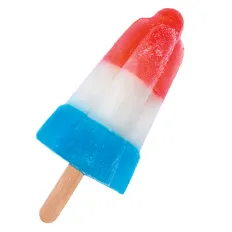
Water ice products (popsicles, sorbets) require a refreshing, translucent, and bright visual direction. These systems are mostly water and highly acidic (low pH) due to added fruit juices or citric acid. This environment is perfect for anthocyanin-based reds and pinks. Because there is no fat or air to dilute the color, lower dosages (closer to 0.05% w/w) are highly effective. Liquid natural colors are exceptionally convenient here, as they dose easily into cold water matrices without the need for high-shear agitation.
How Excipients and Flavor Perception Interact
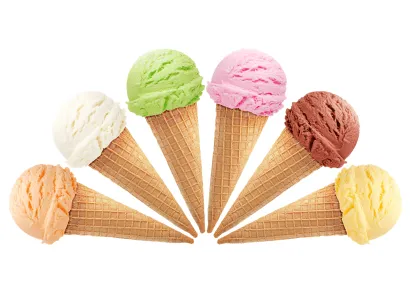
In frozen desserts, color acts as the immediate psychological trigger for flavor. A bright blue ice cream signals raspberry or cotton candy, while a deep yellow signals mango or vanilla.
Because ice cream formulations can require up to 1.00% w/w of natural color, formulators must be cautious of flavor carryover. Fortunately, the high fat and sugar content in dairy ice cream acts as a phenomenal flavor-masking agent, encapsulating the earthy or vegetal off-notes of botanical extracts. Water ice, however, offers no such masking. In clear, fat-free frozen desserts, sourcing highly purified, deodorized natural colors is mandatory to ensure the visual appearance does not ruin the delicate fruit flavor.
Common Challenges & Manufacturing Solutions in Ice Cream Color Selection
Transitioning to natural colors in the dairy plant requires specific adjustments to standard operating procedures. Here is how expert formulators manage the most critical production variables.
| Manufacturing Challenge | The Technical Reality | R&D Formulation Solution |
|---|---|---|
| Pasteurization Temperature | The high heat required to pasteurize the dairy base will thermally degrade sensitive natural proteins and pigments. | Whenever possible, add the natural color after pasteurization during the cooling or aging phase of the ice cream mix. |
| Excipient Interference (Overrun) | Whipped air and white milk proteins act as physical blockers, muting the intensity of the botanical pigment. | Account for the whitening effect of the overrun. Increase the baseline dosage to ensure the color remains vibrant post-freezing. |
| Uneven Dissolving | Standard botanical powders can clump or fail to hydrate fully in cold, high-fat dairy vats. | Utilize ultra-micronized powders for superior dissolution, or dose with liquid formats for ultimate convenience. |
| pH Condition | Acidic fruit ripple inclusions or citric acid in water ice will shift the hue of anthocyanins. | Test the color inside the specific pH of the final matrix, not just in pure water, to guarantee shade accuracy. |
How to Build a Better Frozen Dessert Color Strategy
A robust frozen dessert color strategy bypasses trial-and-error by addressing the plant processing parameters upfront. R&D teams should execute the following technical workflow:
- Determine the Dosage Window: Plan for a starting dose between 0.05% w/w and 1.00% w/w, scaling up for high-overrun dairy and scaling down for clear water ice.
- Optimize Addition Timing: Protect your investment by dosing colors into the vats strictly after the pasteurization step.
- Select the Format: Use ultra-micronized powders for thorough mixing in fats, or liquid solutions for easy storage and instant dosing.
- Match the pH: Ensure the pigment aligns with the acidity of the base (neutral for dairy, acidic for sorbets).
Explore Related Natural Color Solutions
To source highly stable, ultra-micronized ingredients designed to thrive in frozen applications, explore our organic food coloring solutions. If you are formulating delicate fruit sorbets and need to prevent botanical off-notes at higher dosages, review our technical guide on how to choose natural food coloring without affecting flavor, or explore base pigment properties in our natural food coloring ingredients overview.
FAQ
Why are natural colors highly stable in ice cream applications?
Natural colors exhibit excellent stability in frozen desserts because the products are kept at sub-zero temperatures and stored inside opaque freezer units, completely eliminating the two main causes of pigment degradation: high heat and UV light exposure.
What is the recommended dosage for natural colors in ice cream?
Formulators typically add a starting color dose between 0.05% w/w and 1.00% w/w to the finished product. Dairy ice cream often requires the higher end of this range to overcome the whitening effect of milk fat and whipped air (overrun).
When is the best time to add natural color during ice cream manufacturing?
To prevent thermal degradation of the botanical pigments, formulators should note the temperature of pasteurization and, whenever possible, add the natural color after pasteurization during the cooling or aging stage.
Should I use powder or liquid natural colors for frozen desserts?
Both formats offer distinct manufacturing advantages. Ultra-micronized powders are incredibly helpful in dissolving and mixing smoothly into complex matrices without speckling. Liquid formats are highly convenient to use, store, and pump directly into cold mixing vats.
Where can I learn more about natural color solutions for frozen dessert products?
You can explore our organic food coloring solutions page and our comprehensive technical guide to natural food coloring ingredients for deeper formulation insights.
Related Applications
Ice cream