Applications - Dietary Supplements
Industry Background
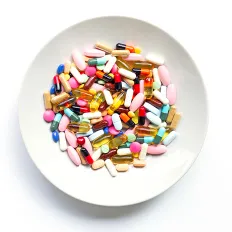
Global consumer preference for dietary supplements is on the rise. Since they are defined as healthy products, natural colors are more friendly for these products. Our powdered and liquid natural colors can provide the exact color for your dietary supplements. We can also address formulation issues for you, including solubility, pH, heat stability or nutrient content in ingredients. We can also provide you with customized products.
Advantages
- Our natural colors are cost-effective while providing color.
- We can provide ultra-micronized powder that is more helpful in dissolving and mixing.
- In addition to powder, we also offer liquid, which is more convenient to use and store.
- In addition to color, our natural colors also provide health and wellness.
Manufacturing Processes
- Additive reference: typically, a starting color dose of between 0.5% w/w and 1% w/w is added to the finished product.
- Suggested Addition Levels.
- The powder will be more suitable than the liquid.
- Our powders are finer-grained and therefore more uniformly distributed.
- Some antioxidants can be added to support the color (e.g. ascorbic acid).
- The excipients of the product itself (gelatin, vitamins, minerals) may affect the color.
Why Dietary Supplements Demand a Specialized Color Strategy
The global consumer preference for dietary supplements has shifted dramatically toward clean-label, health-conscious formulations. As supplements are inherently defined as health products, utilizing petroleum-based artificial dyes creates a severe contradiction in brand messaging. Natural botanical colors are the only logical choice, but formulating with them in this sector requires intense technical precision.
Supplements are a highly specialized application category. Formulators are not just coloring a neutral food base; they are often trying to mask the unappealing visual appearance (and taste) of raw botanical extracts, harsh vitamins, and dense minerals. To achieve a vibrant, uniform appearance, R&D teams typically need to apply a high starting color dose of between 0.5% w/w and 1.0% w/w to the finished product.
Operating at this high dosage means color selection cannot be based solely on a target shade. A successful strategy must prioritize the color format, particle size, and the pigment's biochemical compatibility with the active ingredients in the supplement matrix.
Tablets, Gummies, and Beverages: Aligning Format with Function
Natural color selection in dietary supplements is dictated entirely by the product's physical format. Compressed tablets, functional gummies, and liquid wellness shots expose natural pigments to completely different manufacturing stresses.
Compressed Tablets & Capsules
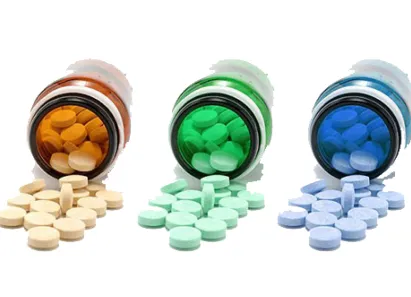
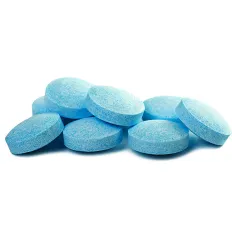
In dry supplement manufacturing (tablets, capsules, and powder blends), introducing liquid colors can ruin the moisture content and compromise the active ingredients. Here, powder formats will be far more suitable than liquids. However, using standard granular powders often results in "speckling"—uneven dots of color across the tablet. To achieve a perfectly uniform, professional appearance, formulators must utilize ultra-micronized powders, which distribute flawlessly throughout the dry excipient mix.
Functional Gummies
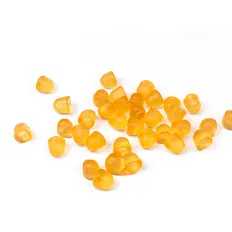
Functional gummies rely heavily on visual appeal and flavor association to drive consumer compliance. In this category, the formulation involves high heat and acidic gelling agents (like pectin or gelatin). Natural colors must be acid-stable to survive the gummy matrix. Because gummies are cooked as a wet syrup, highly concentrated liquid colors or easily soluble ultra-micronized powders can both be deployed effectively during the cooling phase.
Functional Beverages & Wellness Shots
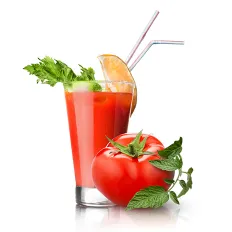
Functional beverages require absolute clarity and solubility. When fortifying a liquid with vitamins and natural colors, the pigment must not precipitate or create sediment at the bottom of the bottle. Color selection here must account for the acidic pH of the beverage and its exposure to UV light on retail shelves.
The Threat of Excipient and Active Ingredient Interaction
In standard food applications, natural colors sit in relatively benign environments. In dietary supplements, color pigments are forced to co-exist with highly reactive compounds. A critical reality of supplement formulation is that the excipients of the product itself (gelatin, vitamins, minerals) will actively affect the color.
For example, Vitamin C (ascorbic acid) lowers the pH, which can drastically shift the hue of anthocyanin-based red and purple colors. Heavy minerals like iron, zinc, or magnesium can trigger oxidative stress, causing natural pigments to fade or turn muddy. Furthermore, animal-derived gelatin and plant-based pectins interact differently with botanical proteins. Formulators must evaluate the complete biochemical system, testing the natural color specifically against the active payload to ensure long-term stability.
Common Challenges & Manufacturing Solutions in Supplement Colors
Achieving a vibrant, clean-label supplement requires solving distinct physicochemical challenges on the manufacturing floor. Here is how expert formulators tackle the most common hurdles.
| Manufacturing Challenge | The Technical Reality | R&D Formulation Solution |
|---|---|---|
| Dispersion Uniformity (Speckling) | Standard botanical powders fail to blend evenly into dry supplement mixes, causing spotted tablets. | Strictly utilize ultra-micronized powders, which are finer-grained and guarantee uniform distribution. |
| Active Ingredient Interaction | Vitamins, minerals, and gelatin alter the pH and exert oxidative stress on natural pigments. | Test the color inside the final matrix. Separate highly reactive minerals from sensitive pigments if possible. |
| Color Oxidation & Fading | Supplements require long shelf lives (1-2 years), leaving botanical colors vulnerable to oxidation. | Actively support the color by adding natural antioxidants (e.g., ascorbic acid) into the formula to protect the pigment. |
| High Dosage Requirements | Masking raw vitamins requires dosages of 0.5% to 1.0% w/w, which risks introducing botanical off-notes. | Source highly concentrated, deodorized botanical colors to achieve high visual impact without flavor interference. |
How to Build a Fail-Proof Supplement Color Strategy
A successful supplement color strategy replaces trial-and-error with a calculated formulation sequence. Before executing benchtop trials, R&D teams should follow these technical steps:
- Establish the Dosage: Plan for a starting dose of 0.5% to 1.0% w/w to ensure the color successfully masks the base ingredients.
- Prioritize the Right Format: Default to ultra-micronized powders for dry formats (tablets/capsules) to ensure flawless mixing and prevent moisture issues.
- Fortify for Stability: Add antioxidants (like ascorbic acid) to your formulation specifically to shield the natural color from degradation over a long shelf life.
- Map Excipient Interactions: Account for how your specific gelatin, vitamins, and minerals will shift the pH or interact with the pigment.
By evaluating the color through the lens of the specific supplement matrix and its active payload, brands can launch visually stunning, clean-label health products that consumers trust. For broader solution planning, explore our organic food coloring solutions and review the biochemical parameters in our natural food coloring ingredients overview.
Related Applications
Compressed tablets
Functional gummies
Functional gummies