Phycocyanin Powder Manufacturer & Exporter from China
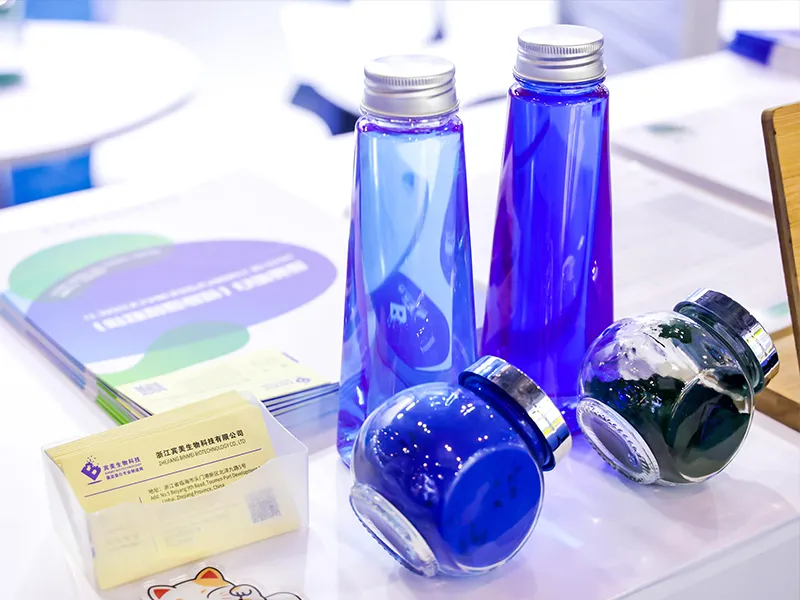
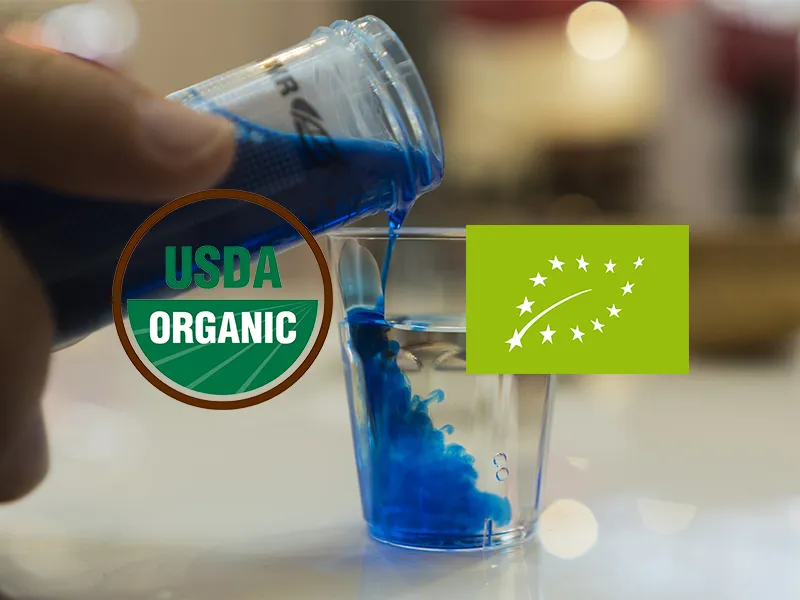
BINMEI is a phycocyanin powder manufacturer and exporter in China, providing spirulina-derived blue color ingredient solutions for beverage, confectionery, dairy, frozen dessert, dry mix and related food applications. Our factory in Taizhou, Zhejiang produces phycocyanin powder in E18 and E25 grades from Arthrospira platensis by filtered aqueous extraction and spray drying, under an FSSC 22000 food safety system. The powder is water-soluble, Kosher and Halal certified, and available in EU and USDA Organic certified grades, with an MOQ of 1 kg, industrial packaging in 1 kg and 5 kg formats and free samples for testing.
In the consumer market, many people search for terms such as blue majik powder, blue spirulina powder, blue spirulina extract powder and phycocyanin powder when they are looking for a vivid natural blue color. For B2B buyers, however, the key question is not only the consumer name of the ingredient, but whether the product can meet real formulation requirements, including color performance, solubility, processing conditions, storage, documentation and supply reliability.
This page explains what phycocyanin powder is, how it relates to Blue Majik-style blue spirulina powder, what benefits it offers for food coloring projects, and how manufacturers can evaluate a suitable phycocyanin powder supplier for commercial use.
What Is Phycocyanin Powder?
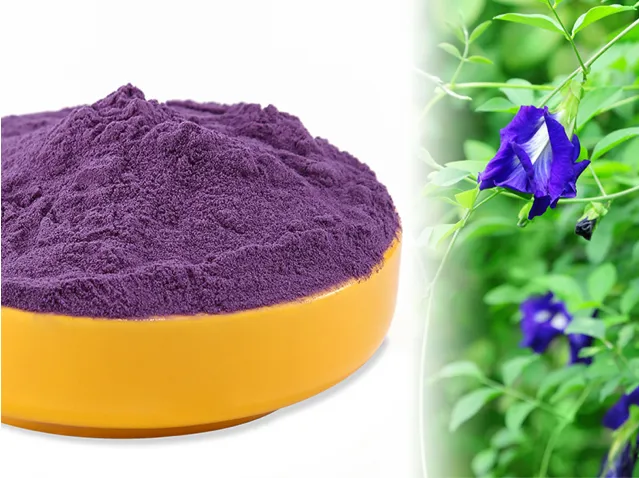
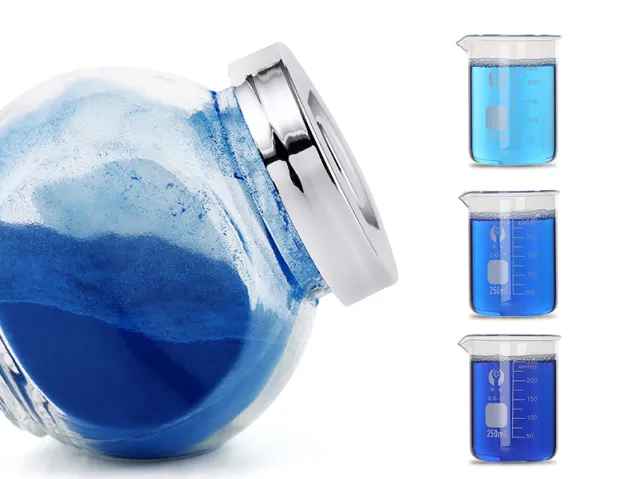
Phycocyanin powder is a spirulina-derived blue pigment ingredient used in natural food coloring projects. Phycocyanin is one of the key pigment-protein components associated with Arthrospira platensis, commonly known as spirulina. In food and beverage applications, it is valued mainly for its bright blue to blue-green color direction and its potential to support cleaner-label product development.
For manufacturers and formulators, phycocyanin powder is usually evaluated as a natural blue food coloring ingredient rather than as a complete nutrition ingredient. Whole spirulina contains protein, minerals, vitamins, chlorophyll and other components. Phycocyanin powder, by contrast, focuses more specifically on the blue pigment fraction, which is why it is often used in blue drinks, frozen desserts, confectionery, toppings, dry mixes and other color-driven food concepts.
A qualified phycocyanin powder manufacturer should provide more than a product name. Buyers normally need to review the product source, grade, color direction, solubility, recommended application, processing tolerance, storage conditions, certifications, available technical documents and sample support before deciding whether a specific grade is suitable for commercial production.
Is Phycocyanin Powder the Same as Blue Majik Powder?
Blue Majik powder is widely known in the consumer market as a vivid blue spirulina-derived powder. It is often discussed as a blue spirulina extract because its main visual value comes from phycocyanin, the blue pigment associated with spirulina. However, Blue Majik is also a specific branded product name in the consumer supplement and food-coloring market.
For this reason, manufacturers should avoid treating “Blue Majik” as a generic industrial product name. A more accurate B2B sourcing term is phycocyanin powder, blue spirulina extract powder, blue spirulina phycocyanin powder or Blue Majik powder alternative. These terms help buyers evaluate similar spirulina-derived blue color ingredients without confusing a branded consumer product with a general food ingredient category.
In practical procurement, the question is not whether a supplier sells the branded Blue Majik product. The more important question is whether the supplier can provide a spirulina-derived phycocyanin powder that meets the buyer’s target application, quality standard, color direction, documentation needs and commercial supply requirements.
Important note for buyers: BINMEI supplies phycocyanin powder and related blue spirulina color ingredient solutions for industrial food and beverage applications. Blue Majik is a trademark of its owner; BINMEI is not affiliated with it and does not sell the branded product. The phrase “Blue Majik powder alternative” is used here only to help buyers understand the relationship between consumer search terms and B2B phycocyanin powder sourcing.
Benefits of Phycocyanin Powder for Food and Beverage Applications
The benefits of phycocyanin powder should be understood from a food formulation and color application perspective. While scientific literature discusses phycocyanin’s biological properties, B2B food manufacturers normally evaluate this ingredient primarily for its color performance, formulation fit and documentation support.
1. Natural Blue Color Direction
Natural blue is one of the more challenging color directions in food and beverage development. Phycocyanin powder provides a spirulina-derived blue shade that can help brands create visually distinctive products while moving away from certain synthetic dye directions. It is especially useful for products where a clean-label or naturally sourced color story is commercially important.
2. Strong Visual Appeal for Blue Food Concepts
Consumer interest in blue drinks, blue smoothie-style products, blue frozen desserts and visually striking confectionery has made blue spirulina extract powder more familiar to the market. This is one reason why users search for blue majik powder and similar terms. For industrial buyers, phycocyanin powder can support similar visual concepts when the formulation and processing conditions are suitable.
3. Milder Color-Focused Profile Compared with Whole Spirulina
Whole spirulina powder is normally green because it contains chlorophyll and other pigments along with phycocyanin. Phycocyanin powder is more focused on the blue pigment fraction, making it more suitable when the target is a blue or blue-green shade rather than a green spirulina color. In many applications, this color-focused profile can be easier to work with than whole spirulina powder.
4. Practical Powder Format for Formulation Testing
Powder form can be useful for dry blends, powdered beverages, premixes, confectionery systems and projects that require concentrated storage and dosage control. BINMEI phycocyanin powder is water-soluble, so buyers can test different addition levels to evaluate shade intensity, dispersion behavior and compatibility with their own product system.
5. Suitable for Selected Cold or Low-Heat Applications
Phycocyanin is sensitive to heat, light and some processing conditions. BINMEI phycocyanin powder is stable at pH 4.5–8.0 and should be kept below 65°C (149°F). For this reason, it is often more suitable for cold or low-heat applications, post-process addition, frozen desserts, beverage mixes, dairy desserts, toppings and other systems where excessive heat exposure can be reduced. Final suitability should always be confirmed by application testing.
6. Documentation Support for Commercial Buyers
For B2B projects, ingredient performance alone is not enough. Buyers also need specification sheets, COA, sample support, storage guidance, certificate copies and other technical documentation. Working with a phycocyanin powder manufacturer that holds Kosher, Halal and organic certifications and runs an FSSC 22000 food safety system can help streamline internal evaluation and supplier qualification.
Phycocyanin Powder Specifications
The table below summarizes the specifications buyers usually need when sourcing phycocyanin powder or a Blue Majik powder alternative for commercial food coloring use. The full specification sheet for each grade is sent with your quotation.
| Item | BINMEI Phycocyanin Powder |
|---|---|
| Product Name | Phycocyanin Powder / Blue Spirulina Extract Powder |
| Source | Arthrospira platensis (spirulina), whole algae |
| Coloring Component | Phycocyanin |
| Grades | E18 and E25 (see Phycocyanin Powder Grades) |
| Particle Size | 80 mesh |
| Loss on Drying | ≤7.0% |
| Extraction Process | Filtered aqueous extraction; no organic extraction solvent |
| Drying Method | Spray drying |
| Appearance | Blue fine powder |
| Solubility | Water-soluble |
| Main Function | Natural blue food coloring for industrial food and beverage applications |
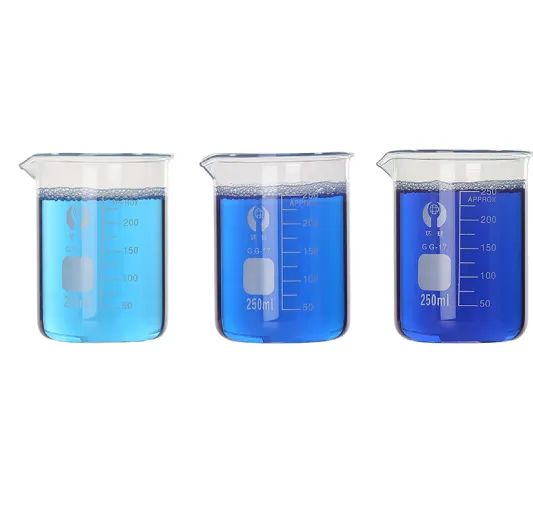
| Color Direction | Blue to blue-green depending on product grade, dosage, pH, formulation and processing conditions |
| pH Range | 4.5–8.0 |
| Heat | Keep below 65°C (149°F); low-heat or post-process addition recommended |
| Light | Light-sensitive; store and pack protected from light |
| Available Format | Powder; spirulina liquid extract available for liquid systems |
| Application Orientation | Beverage, confectionery, frozen dessert, dairy dessert, dry mix and selected food coloring projects |
| Regulatory Status | US: color additive exempt from certification, 21 CFR 73.530; Canada: List 3 of Permitted Food Colours; EU: colouring food under the NATCOL Code of Practice |
| Certifications | Kosher and Halal; EU Organic and USDA Organic (organic grades); FSSC 22000 food safety system |
| Shelf Life | 2 years |
| Storage | Sealed, cool, dry and light-protected storage |
| Technical Support | Specification sheet (TDS), COA, certificate copies and free samples |
Phycocyanin Powder Grades: E18 and E25
Phycocyanin powder is graded by color value (E-value): the absorbance of a 1% solution at about 618 nm. BINMEI produces two standard grades. E18 is specified at a color value of 180–195, while E25 is specified at ≥250; final dosage should be confirmed in the actual formulation.
| Grade | Color Value | Phycocyanin Content | Typical Use |
|---|---|---|---|
| Phycocyanin Powder E18 | 180–195 | ≥30% (g/100 g) | Standard natural blue food coloring for beverages, confectionery, frozen desserts and dry blends |
| Phycocyanin Powder E25 | ≥250 | ≥45% (g/100 g) | Higher color-value applications; final dosage should be confirmed in the actual formulation |
Organic phycocyanin powder is available as EU Organic and USDA Organic certified grades. See Organic Blue Spirulina Powder.
Blue Majik Powder vs. Phycocyanin Powder vs. Whole Spirulina
Many buyers first discover phycocyanin through consumer-facing terms such as blue majik powder or blue spirulina powder. However, these terms do not always describe the same ingredient type. The comparison below helps clarify the difference from a formulation and sourcing perspective.
| Comparison Item | Blue Majik Powder | Phycocyanin Powder / Blue Spirulina Extract Powder | Whole Spirulina Powder |
|---|---|---|---|
| Market Position | Consumer-known branded blue spirulina extract product | B2B ingredient category for spirulina-derived blue pigment | Whole algae powder used more broadly as a nutrition-oriented spirulina ingredient |
| Main Color Direction | Bright blue | Blue to blue-green, depending on grade and formulation | Green, due to chlorophyll and other pigments |
| Main Functional Role | Natural blue color and visual appeal | Natural blue food coloring for commercial applications | Nutrition-oriented spirulina ingredient with green color contribution |
| Phycocyanin Focus | High pigment-focused positioning | Selected by grade (E18, E25), specification and application needs | Contains phycocyanin as one component of the whole spirulina matrix |
| Typical Buyer Concern | Color, serving use, consumer recipe appeal | Specification, solubility, color stability, documentation, MOQ and supply capability | Nutritional composition, taste, color impact and ingredient positioning |
| Best Fit | Consumer recipes, smoothies and color-driven use | Food and beverage manufacturing projects requiring natural blue color | Products where whole spirulina nutrition and green color are acceptable |
For manufacturers, the practical conclusion is clear: if the goal is to create a blue color in a commercial food or beverage product, phycocyanin powder or blue spirulina extract powder is usually the more accurate sourcing direction. If the goal is whole-food spirulina nutrition, whole spirulina powder belongs to a different ingredient strategy.
Phycocyanin Powder vs. Liquid Blue Spirulina Solutions
When selecting a spirulina-derived blue ingredient, buyers often need to decide between powder format and liquid-format blue spirulina solutions. Both formats can support natural blue food coloring projects, but the best choice depends on the application system, handling preference, production process and target color performance.
When Powder Is a Better Fit
- Dry systems and powdered formulation projects
- Powdered beverage mixes and premix applications
- Applications where concentrated storage and transport flexibility are important
- Projects that require dosage control during laboratory formulation testing
- Buyers comparing Blue Majik powder alternative options for dry ingredient systems
When Liquid Format May Be More Practical
- Liquid systems where easier dispersion is required
- Beverage and semi-liquid applications that benefit from ready-to-use extract handling
- Applications where more uniform color distribution is a priority
- Projects where the production team prefers liquid dosing and blending
For liquid-format comparison, buyers can also review BINMEI’s Spirulina Liquid Extract. For broader blue ingredient sourcing, buyers can also explore Blue Spirulina Bulk.
Applications by Product Direction
The value of phycocyanin powder depends on how well it fits the final application. For many commercial projects, the real question is not simply “what is phycocyanin powder?” but whether the ingredient can perform in the target food system under real processing, storage and distribution conditions.
Beverage Applications
In beverage development, phycocyanin powder is often considered where a natural blue or blue-green color direction is needed. Blue drinks, smoothie-style beverages, beverage powders, plant-based drinks and selected functional beverage concepts may use phycocyanin-based color ingredients when the pH, heat exposure and formulation conditions are suitable.
Beverage systems may require careful review of dispersion, pH behavior, light exposure and final shade expectations. Phycocyanin powder works best in beverages at pH 4.5–8.0 when it is added after heat treatment. For more acidic beverages or products involving heat treatment, pilot testing is strongly recommended before bulk use. For application-specific direction, buyers can also review BINMEI’s Beverage Applications.
Confectionery Applications
In confectionery, blue color ingredients are often selected based on visual intensity, formulation compatibility and clean-label positioning. Phycocyanin-based solutions may be considered for gummies, hard candy, decorative candy, coatings, fillings and other confectionery applications where a natural blue shade is commercially desirable.
Since confectionery processing can involve heat, acidity, sugar systems and long storage periods, the final application should be evaluated through formulation trials. The right solution may depend on when the color is added, how much heat it experiences, and how the finished product is packaged and stored.
Dairy and Frozen Dessert Applications
Dairy desserts and frozen products are important application directions for blue spirulina extract powder because many of these products can be developed under relatively low-heat conditions. Ice cream, frozen yogurt, plant-based frozen desserts, puddings and dessert toppings may be suitable directions for Blue Majik-style color concepts.
For frozen dessert applications, buyers should consider color shade, fat content, protein system, processing stage, storage temperature and light exposure. For more information, buyers can review BINMEI’s Ice Cream and Frozen Dessert Applications.
Dry Mix and Powdered Product Applications
Phycocyanin powder may also be evaluated for powdered drink mixes, nutritional powder concepts, dry dessert mixes and other powdered systems. In these applications, powder format can support easier dry blending and compact storage. However, final performance still depends on reconstitution behavior, water quality, pH, blending method and packaging conditions.
How to Compare Phycocyanin Powder Manufacturers
Buyers comparing phycocyanin powder manufacturers usually need more than a product list. A reliable supplier should be able to support technical evaluation, sample testing, commercial communication and documentation review. This is especially important when buyers are comparing blue majik powder alternative ingredients for food and beverage projects.
Key Factors to Review
- Manufacturer or trader: Confirm that the supplier runs its own production and can share its factory address and certifications.
- Grade and color value: Compare E-values (such as E18 or E25) and price per unit of color, not only price per kilogram.
- Product positioning: Confirm whether the ingredient is intended for food coloring, dietary supplement use, or another application direction.
- Color direction: Review whether the shade meets the desired blue or blue-green target in the actual formulation.
- Application fit: Evaluate performance in beverage, confectionery, frozen dessert, dairy or dry mix systems.
- Processing tolerance: Check sensitivity to heat, light, pH and storage conditions.
- Certifications: Check Kosher, Halal, organic and food safety system certificates against your market and label.
- Documentation: Request specification sheet, COA, quality-related documents and certificate copies.
- Sample support: Test the ingredient in the real product system before confirming bulk purchasing.
- Commercial capability: Confirm MOQ, packaging, lead time, export support and communication efficiency.
BINMEI is a phycocyanin powder manufacturer and supplier for spirulina-derived blue color projects, with its own factory in Zhejiang, China. Our product direction is suitable for buyers looking for natural blue food coloring ingredients, blue spirulina extract powder, phycocyanin powder and related blue ingredient solutions.
Phycocyanin Powder MOQ, Packaging and Documentation
Our MOQ for phycocyanin powder is 1 kg per grade, and free samples are available before your first order. In practical purchasing decisions, product quality must be matched with packaging, documentation, sample support and project communication.
| Commercial Item | BINMEI Phycocyanin Powder |
|---|---|
| MOQ | 1 kg per grade |
| Packaging | 1 kg aluminum foil bag; 5 kg PE inner bag + aluminum foil bag, vacuum-packed; outer packaging: 10 kg corrugated cardboard carton |
| Lead Time | Regular grades are in stock; customized orders: 7–15 days |
| Samples | Free samples for formulation evaluation and internal review |
| Technical Documents | Specification sheet (TDS) and COA |
| Certifications | Kosher and Halal; EU Organic and USDA Organic (organic grades); FSSC 22000. See Is spirulina halal and kosher? |
| Application Communication | Support for beverage, confectionery, dairy, frozen dessert and selected dry mix projects |
Phycocyanin Powder Exporter: Export Packaging and Documents
BINMEI exports phycocyanin powder from Zhejiang, China to B2B food and beverage manufacturers and ingredient distributors. We support projects targeting the United States, the EU and Canada, and prepare each export order with the packaging and available documents required for the destination market.
| Export Item | BINMEI Phycocyanin Powder |
|---|---|
| Export Packaging | 1 kg aluminum foil bag; 5 kg PE inner bag + aluminum foil bag, vacuum-packed; outer packaging: 10 kg corrugated cardboard carton |
| Shipping Documents | COA, specification sheet (TDS) and certificate copies; additional shipment documents are confirmed according to destination and order requirements |
| Regulatory References | US: 21 CFR 73.530; Canada: List 3 of Permitted Food Colours; EU: NATCOL Code of Practice |
| Trade Terms | Confirmed in the quotation according to destination and shipment arrangement |
For regulatory background across the US, EU and Canada, see Regulatory Compliance in our Technical Center.
Quality and Application Considerations Before Bulk Purchase
Because phycocyanin powder is a color-sensitive ingredient, buyers should evaluate more than the visual shade in a laboratory sample. Real production conditions may affect the final performance of a natural blue color ingredient.
Heat Sensitivity
Phycocyanin is sensitive to heat. Keep it below 65°C (149°F): high-temperature processing, long heating time or adding the ingredient too early in the process may reduce color intensity. In many applications, low-heat processing or post-process addition can help protect the blue shade.
Light and Storage
Phycocyanin is sensitive to light, and storage conditions can influence color stability. Cool, dry and light-protected storage is recommended. Finished products should also be evaluated under expected shelf-life and packaging conditions, and light-protective packaging helps keep the blue.
pH and Formulation System
BINMEI phycocyanin powder is stable at pH 4.5–8.0; more acidic systems lose blue color. The same phycocyanin powder may perform differently in neutral, mildly acidic or more acidic food systems, so beverage, dairy, confectionery and frozen dessert formulations should be tested separately. See our guide to pH stability of natural colors.
Documentation and Testing
Before bulk purchase, buyers should request available technical documents and run internal application tests. COA, specification sheet, heavy metal information, microbiological data, allergen-related documents and certificate copies may be required depending on the target market and product category.
About BINMEI's Phycocyanin Factory in China
BINMEI (Zhejiang Binmei Biotechnology Co., Ltd.) produces phycocyanin powder at its factory in the Taizhou Bay Economic and Technological Development Zone, Linhai, Zhejiang, China. Current annual production capacity for the core E18 phycocyanin grade is 300 tons.
- Production under an FSSC 22000 food safety management system
- Phycocyanin made from Arthrospira platensis by filtered aqueous extraction and spray drying
- Kosher and Halal certified; EU Organic and USDA Organic certified organic grades
- E18 and E25 powder grades, plus spirulina liquid extract
- Specification sheet and COA supplied with samples and orders
Learn more about BINMEI.
Why Buyers Choose BINMEI as a Phycocyanin Powder Manufacturer
Buyers comparing phycocyanin powder manufacturers usually need a supplier that understands both ingredient supply and application-oriented communication. BINMEI supports customers looking for spirulina-derived blue color ingredient solutions for commercial food and beverage projects.
- Phycocyanin powder manufacturer and exporter with its own factory in Zhejiang, China
- E18 and E25 grades, water-soluble, made by filtered aqueous extraction and spray drying
- Kosher, Halal, EU Organic and USDA Organic certifications and an FSSC 22000 food safety system
- Support for buyers comparing blue majik powder alternative options
- Application direction for beverage, confectionery, dairy, frozen dessert and dry mix projects
- Free samples, specification sheets, COA and certificate copies before bulk purchase
- Related blue ingredient options including Blue Spirulina Bulk and Spirulina Liquid Extract
If you are developing a blue food or beverage product and need to compare phycocyanin powder, blue spirulina extract powder or a Blue Majik-style ingredient alternative, BINMEI can support product discussion, sample evaluation and documentation review according to your project requirements.
Commercial FAQ
References
The following references are provided to help buyers understand the scientific and regulatory background of spirulina extract, phycocyanin and natural blue food coloring applications. Final product use should always be evaluated according to the target market, application category and local regulatory requirements.
- U.S. Electronic Code of Federal Regulations. 21 CFR § 73.530 — Spirulina extract. https://www.ecfr.gov/current/title-21/chapter-I/subchapter-A/part-73/subpart-A/section-73.530
- Fernandes R, Campos J, Serra M, et al. (2023). Exploring the Benefits of Phycocyanin: From Spirulina Cultivation to Its Widespread Applications. Pharmaceuticals, 16(4), 592. https://doi.org/10.3390/ph16040592
- Spínola MP, Mendes AR, Prates JAM. (2024). Chemical Composition, Bioactivities, and Applications of Spirulina (Limnospira platensis) in Food, Feed, and Medicine. Foods, 13(22), 3656. https://doi.org/10.3390/foods13223656
- Citi V, Torre S, Flori L, et al. (2024). Nutraceutical Features of the Phycobiliprotein C-Phycocyanin: Evidence from Arthrospira platensis (Spirulina). Nutrients, 16(11), 1752. https://doi.org/10.3390/nu16111752
- Faieta M, Neri L, Di Michele A, et al. (2022). Degradation kinetics of C-Phycocyanin under isothermal and dynamic thermal treatments. Food Chemistry, 382, 132266. https://doi.org/10.1016/j.foodchem.2022.132266
- Papalia T, Sidari R, Panuccio MR. (2019). Impact of Different Storage Methods on Bioactive Compounds in Arthrospira platensis Biomass. Molecules, 24(15), 2810. https://doi.org/10.3390/molecules24152810
- Jensen GS, Drapeau C, Lenninger M, Benson KF. (2016). Clinical Safety of a High Dose of Phycocyanin-Enriched Aqueous Extract from Arthrospira (Spirulina) platensis. Journal of Medicinal Food, 19(7), 645–653. https://doi.org/10.1089/jmf.2015.0143