Why Replacing Synthetic Food Dyes Is So Challenging — Is Cost-in-Use the Real Barrier?
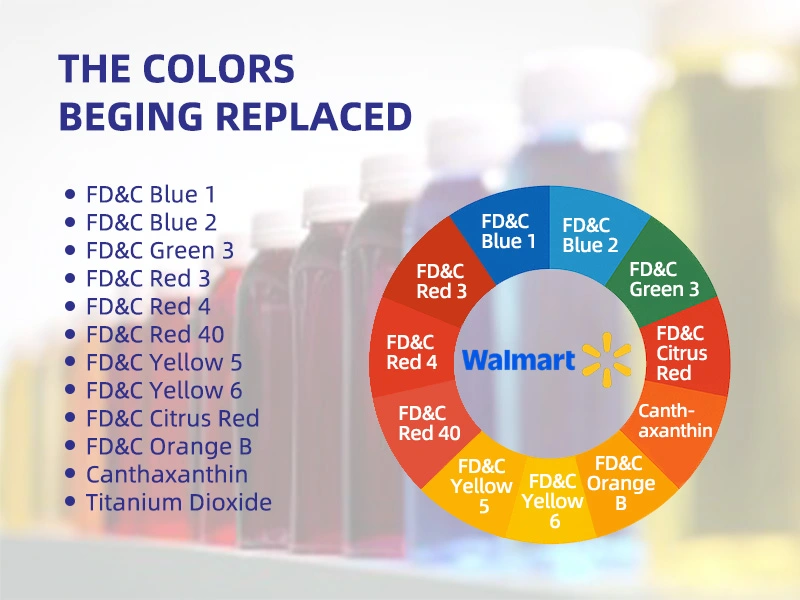
As 2026 approaches, synthetic food dyes will disappear from supermarket shelves—turning them into relics of the past. Every shade of blue, red, and yellow in our food will be rooted in nature.

However, for many food and beverage manufacturers, one obstacle stands in the way: cost. Not the sticker price per kilogram, but the true cost-in-use — the sum of higher usage rates, extra stabilization and validation work, and volatility in raw-material supply.
In short, it’s more accurate to say that synthetic dyes are highly efficient and cost-effective, rather than simply that natural colorants are “expensive.”
Price Snapshot For Synthetic and Natural Colorants
Industrial FD&C series dyes are commonly available in bulk at approximately $5–$40/kg, offering excellent color strength and stability, giving them a clear advantage in cost-in-use.
However, natural food color price varies widely. For example, spirulina extract (phycocyanin) has been priced roughly $70–$260/kg in 2023–2024 depending on factors such as origin and grade, with specific specifications used for sensitive applications costing even more. Academic studies also highlight that good-grade phycocyanin carries significant commercial value, with prices increasing several-fold as the grade level rises.
While these ranges reflect general market trends, the true cost ultimately depends on how much pigment is required and the investment needed to maintain stability, consistency, and supply-chain reliability for a specific application.
Natural Colorants Cost: More Than Just High Raw Materials
Natural colorants are more expensive than synthetic ones, due to raw material costs and several other contributing factors:
1. Raw Material Cost
Natural colorants are generally high in cost and highly susceptible to seasonal variations. Taking spirulina extract (phycocyanin) as an example, the raw spirulina is affected by factors like light, temperature, water quality, and harvest season, requiring additional quality screening and strict process control.
In contrast, colors derived from chemical synthesis, while influenced by economies of scale and the cost of petrochemical raw materials, offer greater stability and higher production volumes, which leads to a lower price.

2.Usage Rate and Cost-in-Use
Natural colorants have lower unit color value or distinct chromatograms, requiring a higher usage rate for equivalent visual effects. Even with a narrow unit price gap, their natural colour cost-in-uset is far higher.
For instance, if a natural colorant costs 10 times more per unit than its synthetic counterpart but requires 20 times the amount to achieve the same color intensity, the actual cost per unit of color strength could be as much as 200 times higher when brands replace synthetic food dyes.

3.Stabilization & Formulation Cost
Natural Colorants are more sensitive to pH, heat, and light, requiring stabilization measures like microencapsulation,antioxidants, and PH adjustment. These processes, along with specialized equipment and increased energy use, raise the cost-in-use.
BINMEI’s low-temperature cell-wall-breaking technology is a notable innovation that enhances stability, highlighting the complexity of natural extraction.
4.QA/QC and Compliance Cost
Natural colorants come from diverse sources and face impurity risks like pesticides, mycotoxins, heavy metals, and microbes. Ensuring safety and regulatory compliance requires additional testing, documentation, and approvals (e.g., FDA filing), which extends time. Besides, the extra QC and compliance measures significantly raise the cost-in-use beyond raw material expenses.
5.Supply Chain and Iventory Cost
Agricultural-sourced natural colorants face seasonal and regional variations, leading to supply shortages and price fluctuations. To ensure stability, brands must maintain higher stock levels or secure long-term contracts, increasing capital costs and warehouse management expenses, which add hidden costs to natural food color price.
6.Process and Packaging Modification Cost
To preserve the stability of natural colorants and maintain product appearance, adjustments are often needed in production processes and packaging. This may include light-proof packaging, redesigning labels for compliance, lowering sterilization temperatures, or modifying filling processes to reduce pigment loss. These adjustments represent one-time investments, which are then allocated to the cost of each production batch.
BINMEI: Narrowing the Cost Gap through Technology
The future of natural colorants are not synonymous with high prices, BINMEI’s solutions will achieve a dual balance between quality and cos-in-use.
1.Discovery of New Plant and Microalgae Resources
BINMEI continuously explores and develops new plant and microalgae sources for pigment extraction, broadening the color spectrum of natural food color alternatives. This not only enhances the availability of raw materials but also reduces supply risks from seasonal fluctuations or regional constraints, facilitating the transition to replace synthetic food dyes.
2.Directed Breeding and Metabolic Optimization
BINMEI continuously improves the pigment content and yield of natural colorant raw materials through targeted breeding and metabolic optimization.
Spirulina extract, for example, is sourced from carefully selected cultivation areas in Inner Mongolia, where abundant sunlight, favorable environmental conditions. High-quality algae strains from BINMEI’s laboratory are used, and each year, healthy, robust strains with suitable ring numbers (typically 17-19 rings) are rigorously selected under a microscope. A progressive breeding system—“test tube—tank—algae cultivation shed”—is implemented in close collaboration with the algae farming base in Inner Mongolia. The growing environment is continuously optimized through trials, adjusting temperature, water quality, and nutrients. Dedicated staff monitor the process during harvest to ensure consistent quality.
3.Advanced Extraction and Stabilization Technologies
BINMEI utilizes multi-step, refined techniques to extract good natural food color alternatives.
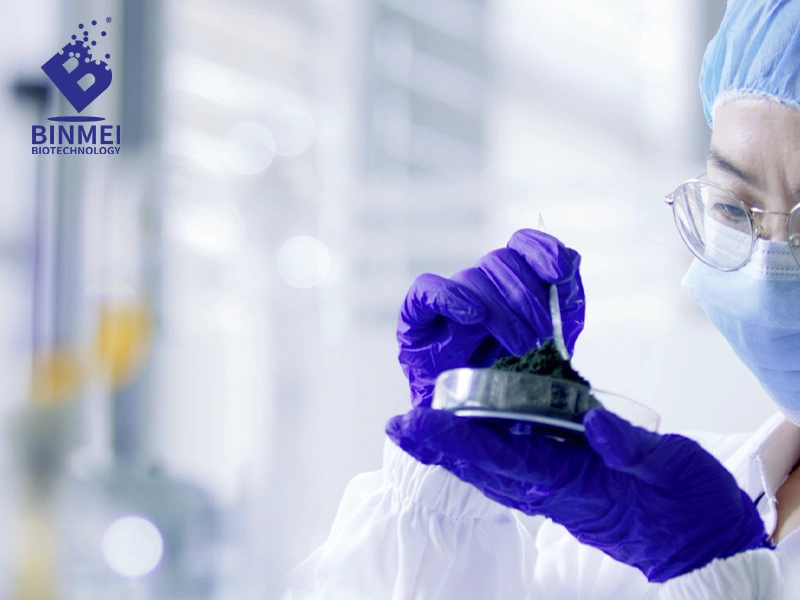
Like spirulina extract, we use a purely physical extraction method without chemical solvents, preserving its molecular structure, natural activity, and stability. We also maintain a full cold chain throughout the process to ensure the extract’s color and functional activity remain stable.

During raw material processing, spirulina powder undergoes strict microbiological control to ensure it is free from harmful bacteria, mycotoxins, and excessive heavy metals, ensuring safety from the source. In the soaking phase, spirulina is immersed in ice-cold water (1–4°C), preparing it for effective phycocyanin release through high-pressure homogenization.
In the foreign object detection process, we use high-precision X-ray inspection to scan the product’s internal structure, detecting risks such as metals, glass, and hard plastics with much higher sensitivity than traditional metal detectors.
Innovative technologies like microencapsulation and antioxidants enhance natural pigments’ efficiency, reducing color loss and waste. Binmei optimizes processes for high grade, stability, and cost-in-use solutions.
Empower Foods with Vibrant Natural Color
The significance of natural colorants goes beyond “safety” or “regulatory compliance”, it lies in the natural, healthy, and emotional value they bring. In a customer seek for clean label natural colourants era, color is the first signal connecting products to consumers emotionally. As with natural sweeteners and flavors, technological advances will narrow the cost gap to replace synthetic food dyes. Brands should focus on long-term value, recognizing color’s role in product vitality and brand identity.
Contact BINMEI for natural colour cost-in-uset solutions and sample support.