Looking for a Vibrant Natural Red Colorant? Meet Hibiscus Extract
Color shapes flavor. Research has shown that the color of food and beverages can significantly affect our taste perception. Red colorants, in particular, are known to stimulate appetite and are often associated with vitality and energy- making them a popular choice for sports drinks, functional beverages and gummies, where a dynamic and engaging visual appeal is essential.
Driven by the dual demand for natural colors and clean-label appeal, food developers are actively seeking ingredients that can deliver combined color, falvoer and functional benefits. Enter Hibiscus Extract/Roselle—a standout ingredient gaining traction for its vibrant hibiscus color, plant-based origin, and wellness-supporting properties. This versatile extract bridges the gap between visual appeal and clean-label expectations, offering a truly natural red colorant for today’s health-conscious market.
What is Hibiscus Extract?
Roselle (scientifically Hibiscus sabdariffa) is an annual woody plant of the Malvaceae family. The bright red calyxes, harvested and deseeded, are used to produce Hibiscus Extract—a rich source of anthocyanins, the water-soluble pigments responsible for its deep red, purple, and blue colors in many fruits and flowers. As a potent anthocyanin colorant, it is also rich in polyphenols, flavonoids, organic acids such as citric and malic acid, and vitamin C, which contribute to its antioxidant and anti-inflammatory properties[1].
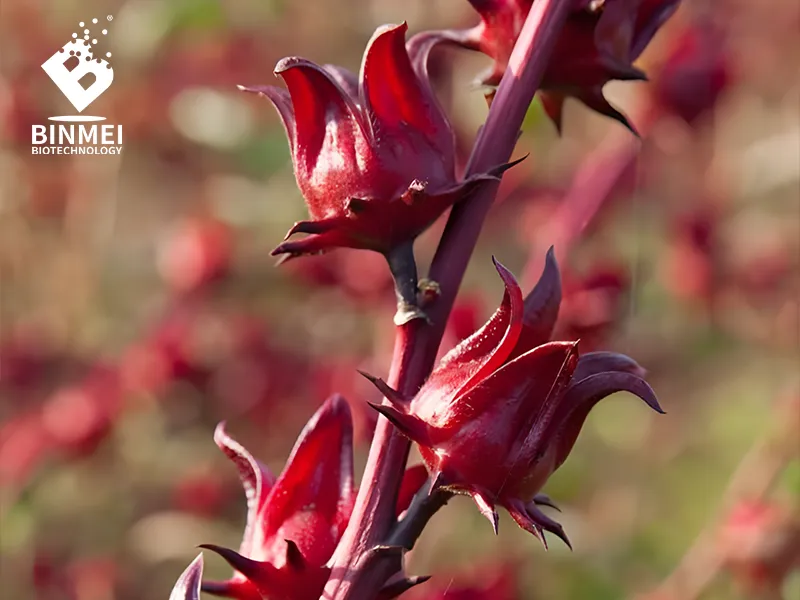
Nutritionally, hibiscus is particularly rich in polyphenols, with 100 grams of fresh hibiscus calyxes containing up to 90 mg of total polyphenols, including anthocyanins, flavonoids, and phenolic acids. Research-backed benefits include support for cardiovascular health[2], blood lipid and pressure regulation[4], improved circulation[3], and enhanced metabolism[1]. This inherent “plant-based wellness” makes Hibiscus Extract an ideal choice for functional drinks, plant-based beverages, and healthy snacks—serving as both a natural red colorant and a beneficial nutritional additive.
What Formulators Need to Know
For formulators, color consistency and process stability are non-negotiable—and Hibiscus Extract delivers on both fronts:
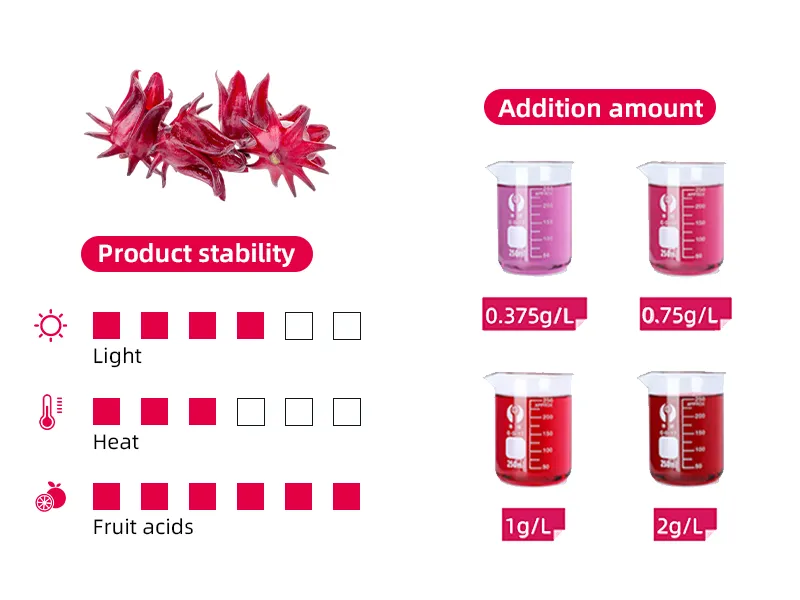
- Color Range: Depending on the concentration, it offers a versatile spectrum of reds, from pale purple and bright red to ruby red and a rich jewel-like cranberry shade, adapting to diverse product aesthetics.
- Optimal pH Range: Hibiscus Extract performs best in acidic systems, typically in the pH range of 2–4.5.
- pH Sensitivity: The color of hibiscus extract is notably sensitive to pH changes, which is why it works so well in fruit juices, teas, and acidic beverages.
- Stability Considerations: While vibrant and stable under appropriate conditions, like many natural red pigments for food options, its stability can be affected by light, heat, and storage conditions. Therefore, manufacturers need to consider factors such as exposure to light and temperature during processing and storage.
Hibiscus vs. Other Natural Red Colorants
- Hibiscus vs Beetroot Color
One of the key comparisons often made in the realm of natural red colorants is between hibiscus extract and beetroot red. While both are natural, plant-derived colorants, they differ significantly in flavor and color tone. Beetroot red tends to have a bluish-red hue and may sometimes impart a slightly earthy taste, which can be less desirable in certain beverage applications. In contrast, hibiscus offers a fresher, slightly tart flavor, making it a better fit for refreshing beverages.
Additionally, hibiscus powder for beverage applications offers superior stability at lower pH values compared to beetroot, making it a preferred clean-label ingredient for acidic drinks and gummies. When it comes to vibrant, long-lasting color in acidic formulations, hibiscus is often the superior option.
- Hibiscus vs Lycopene (Tomato Red )
Another popular natural red colorant is Lycopene, found in tomatoes. Lycopene produces an orange-red hue and has a lower brightness compared to hibiscus. It is also fat-soluble, meaning it dissolves in oils and organic solvents but not in water, making it more suitable for oil-based products or emulsions.
Hibiscus, on the other hand, is water-soluble and ideal for water-based applications such as fruit juices, teas, and functional drinks—truly a multifunctional natural red colorant. While lycopene is not sensitive to pH, it is sensitive to light, heat, and oxygen, which can limit its application in certain processes. While lycopene excels in oil-based systems, nutritional supplements, or emulsified drinks, its application scope is far narrower compared to the versatile Hibiscus Extract—especially for water-based beverages and gummies.
Practical Applications of Hibiscus Extract
- Gummies
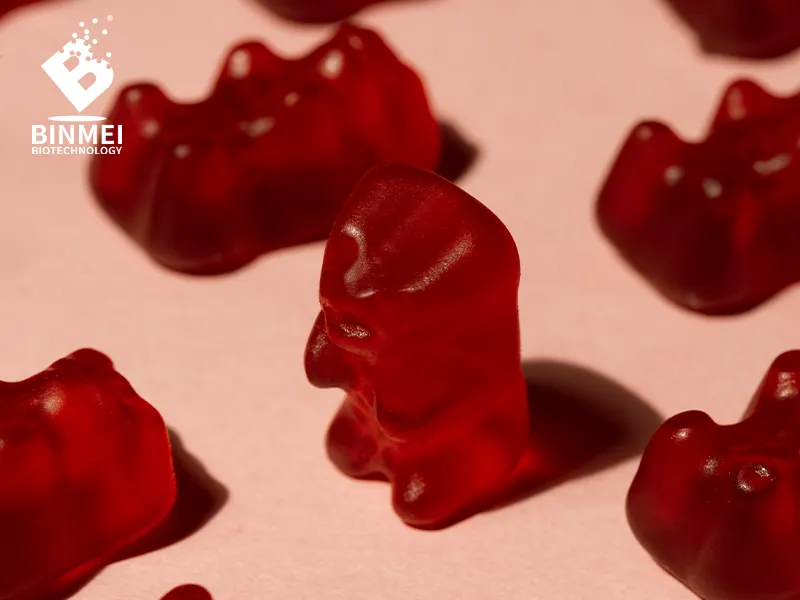
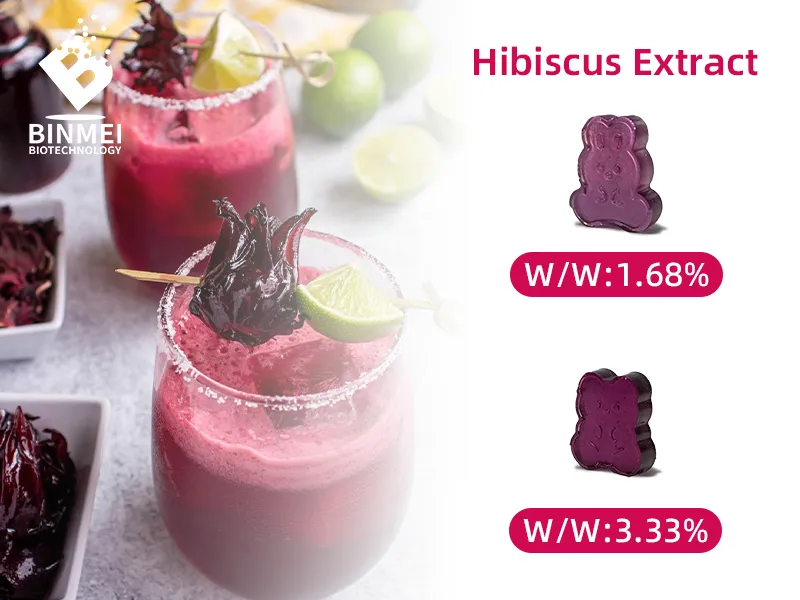
At BINMEI Labs, we tested hibiscus powder for beverage applications, and specifically in gelatin-based gummy formulations with a typical pH range of 3.2–4.2. Hibiscus extract exhibited excellent color stability within this typical acidic pH range, making it an ideal candidate for gummies. It also demonstrated good compatibility with common gelling agents such as gelatin, pectin, and carrageenan.
In terms of manufacturing, we recommend adding the pre-mixed hibiscus extract during the cooling stage of production. This method helps maintain color clarity and stability even after exposure to typical cooking temperatures of 80–90°C.
To meet varying brand needs and color intensity requirements, we designed two variations for different market segments:
Low Concentration (Light Ruby Red):
- Color: Delivers a pale rose to soft ruby red with high transparency.
- Ideal for: Fruit-flavored gummies, vitamin C gummies, and functional gummies.
- Features: Offers a softer color tone, preventing overwhelming consumers, while its subtle tartness complements rather than dominates other flavors.
High Concentration (Deep Ruby Red):
- Color: Offers dark purplish-red, close to wine-like red with strong intensity.
- Ideal for: Products emphasizing natural plant-based colors and functional benefits.
- Features: A more saturated color, creating a stronger visual impact and a more pronounced tartness that pairs well with acidic flavor profiles (such as sour gummies or functional gummies).
- Beverage Applications
Hibiscus powder for beverages remains a top choice for drink developers. Its color, flavor, and pH compatibility make it a natural fit for refreshing beverages. Thanks to its pH sensitivity, it integrates effortlessly into a range of acidic drinks. In low-pH beverages (pH 2–3), it delivers a bright, vivid red; In slightly higher pH (3–4.5), it shifts to a deep ruby shade, making it ideal for juices, functional drinks, and ready-to-drink teas. As a clean label ingredient, it delivers color, a refreshing tartness, and polyphenol content in one simple addition.
For brands, Hibiscus Extract is a triple threat —delivering “color + flavor + polyphenols” in one plant-based ingredient. Hibiscus extract is a perfect choice for manufacturers aiming to produce clean-label, plant-based beverages. It serves as a powerful example of how a single ingredient can offer multiple benefits, meeting the needs of today’s health-conscious consumers.
While Hibiscus Extract excels in gummies and beverages, it also adapts to other applications such as dairy products and frozen desserts—adding a touch of natural red and subtle fruitiness without compromising product integrity.
From Natural Red to Plant-Powered Functional Ingredient
As a natural ingredient that provides both color and functional benefits, Hibiscus Extract represents the next step in clean label ingredients, which is rapidly becoming an ideal choice for beverages, gummies, functional snacks, and plant-based products. Not only does it deliver a brilliant, transparent red hue, but it also adds a light, refreshing tartness and a healthy dose of polyphenols that contribute to a clean-label product.
As a manufacturer specializing in high-quality Hibiscus Extract/Roselle and other natural colorants, BINMEI provides reliable, consistent, and vibrant natural food colorant solutions. Contact us to explore how our hibiscus ingredients can bring color, flavor, and function to your next product innovation.
Choose natural, choose functional, choose Hibiscus Extract—where vibrant color meets plant-based wellness.
[1] Biomedpress,《Hibiscus sabdariffa extract as anti-aging supplement through its antioxidant and anti-obesity activities》
[2] PubMed,《Acute Effects of Hibiscus Sabdariffa Calyces on Postprandial Blood Pressure, Vascular Function, Blood Lipids, Biomarkers of Insulin Resistance and Inflammation in Humans》
[3] PubMed,《Evaluation of the effects of roselle (Hibiscus sabdariffa L.) on oxidative stress and serum levels of lipids, insulin and hs-CRP in adult patients with metabolic syndrome: a double-blind placebo-controlled clinical trial》
[4] PubMed,《Effectiveness of Aqueous Hibiscus Sabdariffa Extract on Reduction of Blood Pressure and Serum Lipids Among Prehypertensive Patients》