How Natural Food Colorants Are Empowering Gummies
Gummies are one of the most visually driven categories of candy coloring.
According to Innova consumer trend research, 37% of U.S. consumers actively avoid foods containing artificial colors, additives, and preservatives. Europe is another mainstream country driving the trend of “clean label gummies”. As a result, clean label gummies are no longer a niche segment—they are becoming the industry baseline. As consumers increasingly demand clean label gummies, brands are pushing to replace synthetic dyes with natural food colorants that perform reliably in practice production.
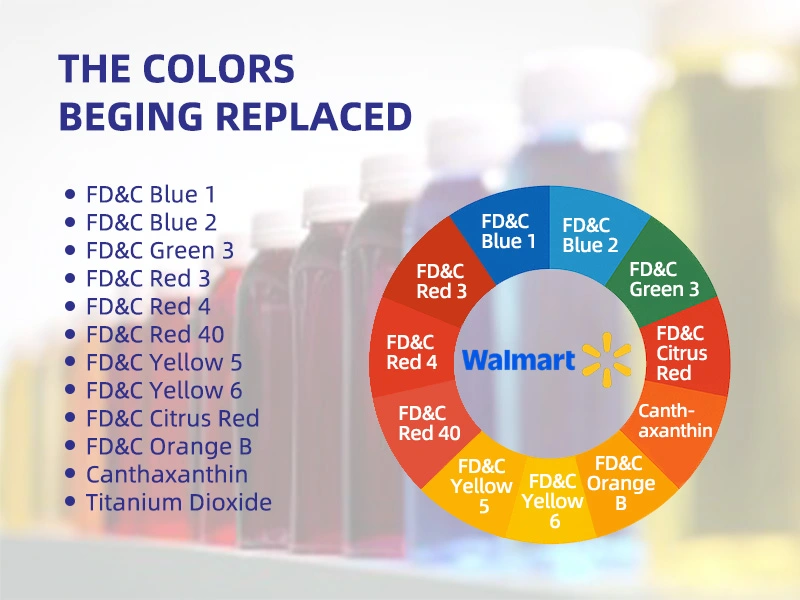
This shift is being accelerated by global candy giants. Companies such as Mars, Hershey’s, Mondelez, and Ferrero have taken steps to replace synthetic dyes across selected product lines. These moves send a clear signal to the market: adopting natural food colorants is no longer an optional item; it is a strategic necessity for long-term growth.
- Nestlé USA to Eliminate Use of FD&C Colors by Mid-2026
- Hershey joins food makers in commitment to remove artificial dyes
- Mars Wrigley U.S. Extends Consumer Choice – Introducing Product Options Made Without FD&C Colors Next Year
However, replacing artificial dyes is not a simple substitution for gummy manufacturers. Gummies rely on color as a visual cue, and many natural food colorants for gummies behave very differently from synthetic alternatives. Their performance depends on processing temperature, pH, sugar concentration, and gelling systems. This makes practice application testing critical.
At the same time, BINMEI Natural Food Colorant focuses on plant-based candy coloring solutions derived from fruits, vegetables, and algae, providing candy manufacturers with practical ways to transition from artificial dyes to natural coloring solutions for confectionery without sacrificing visual appeal.
Practice Application Testing of Candy Coloring
Below are application results demonstrating how different color systems perform in practice gummies and candy coloring processes.
Blue Series|Spirulina Concentrate, BLE
Source and Color Tone
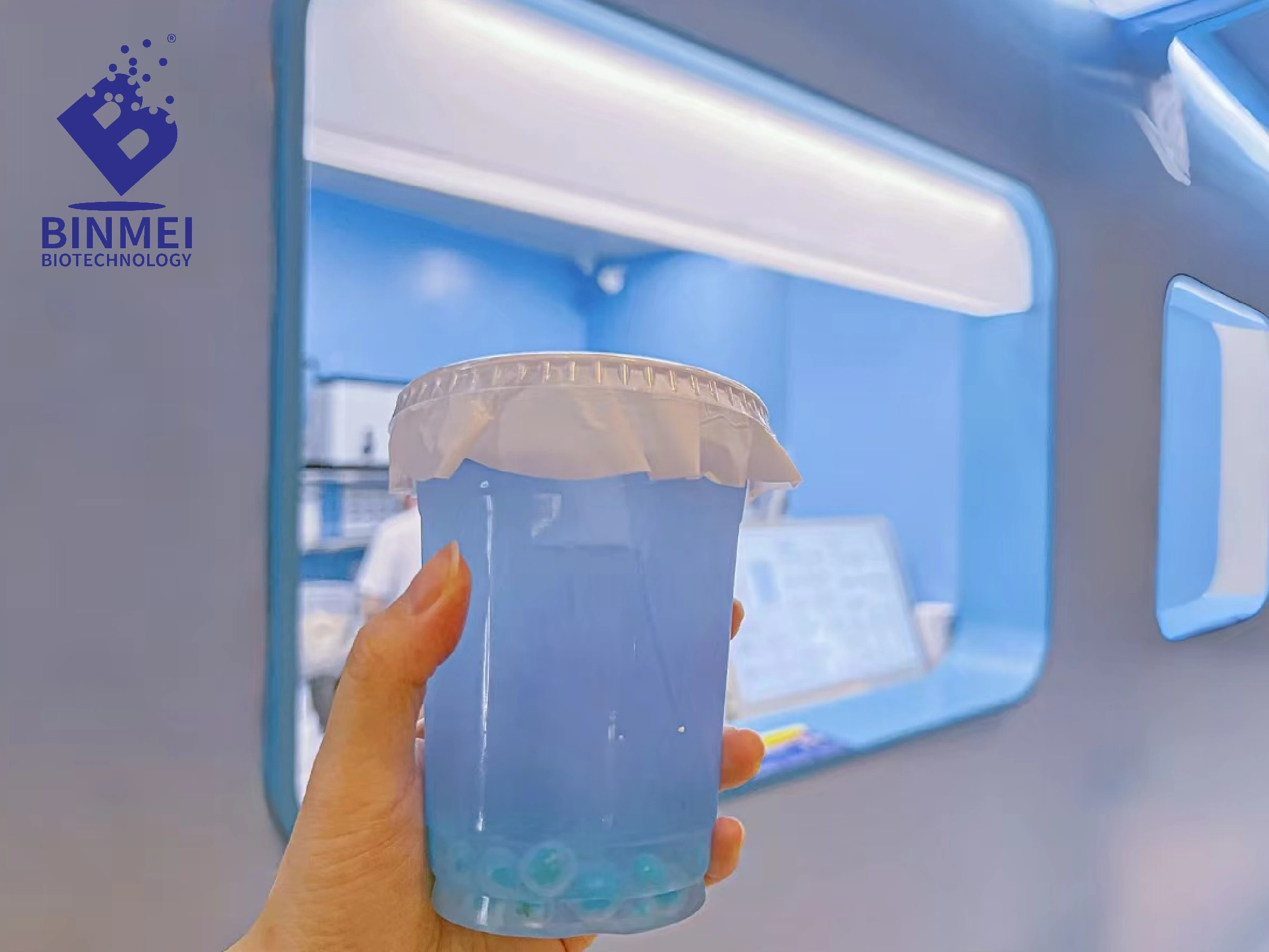
Phycocyanin is extracted from spirulina extract, producing a clear, bright natural blue. It remains one of the very few viable solutions for achieving a natural blue color for gummies.
Tested Dosage Range
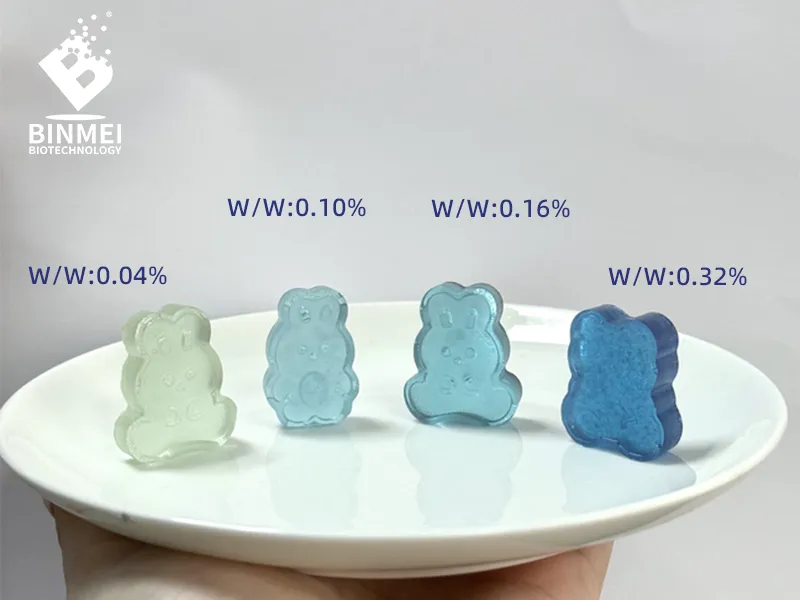
Spirulina Concentrate BLE was tested at 0.04%, 0.1%, 0.16%, and 0.32%, creating a smooth color gradient:
- Translucent sky blue
- Bright lake blue
- Soft ocean blue
- Clear gemstone blue
This range allows precise color control without excessive dosage.
Application Notes
Spirulina Concentrate is sensitive to high heat and strong acidic conditions. Optimal performance was achieved at:
- pH 3.0–8.0
- The processing temperature is around 62°C (143.6°F), with late-stage addition significantly improves brightness and color clarity.
Summary
Derived from spirulina extract, phycocyanin is a key natural food colorant for gummies and one of the most effective solutions to replace synthetic dyes when a natural blue color is required.
Green Series|Compound Colorant Natural Green (Spirulina + Safflower Yellow, GLE)
Source and Color Tone
This green system is created by blending spirulina extract with safflower yellow, creating naturally balanced green tones suitable for clean label candy coloring.
Tested Dosage Range
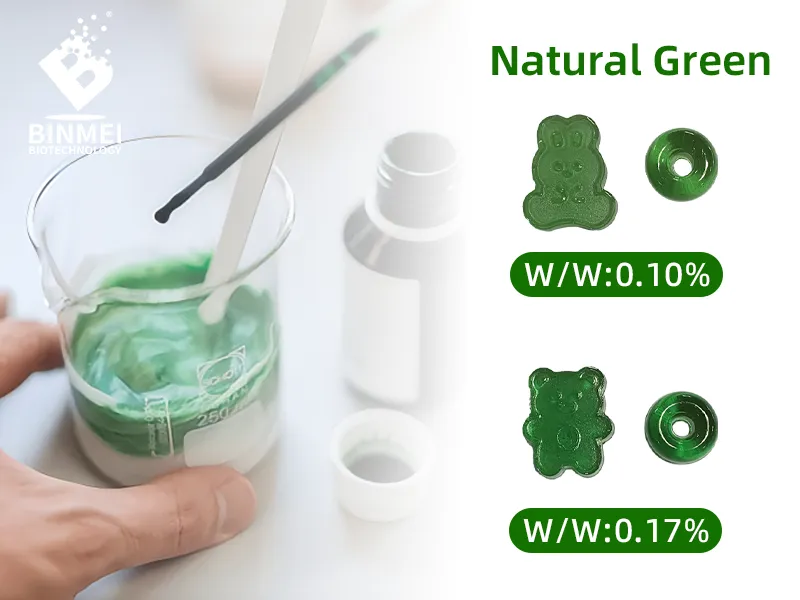
At 0.1% and 0.17%, the gummies displayed:
- Fresh apple green
- Deep cypress green
Both tones remained clear and natural.
Application Notes
As Compound Colorant Natural Green contains phycocyanin, it shows similar sensitivities to Spirulina Concentrate:
- Best applied at moderate temperatures, around 62℃ (143.6°F)
- Suitable for pH 3.0–8.0
- Late-stage addition recommended
Summary
By combining natural food colorants, this solution demonstrates how customized greens can be developed specifically for clean label gummies, rather than relying on synthetic dyes.
Yellow Series|Sea Buckthorn Concentrate (SLE)
Source and Color Tone
Derived from sea buckthorn fruit, this colorant delivers tones ranging from bright light yellow to natural orange-yellow.
Tested Dosage Range
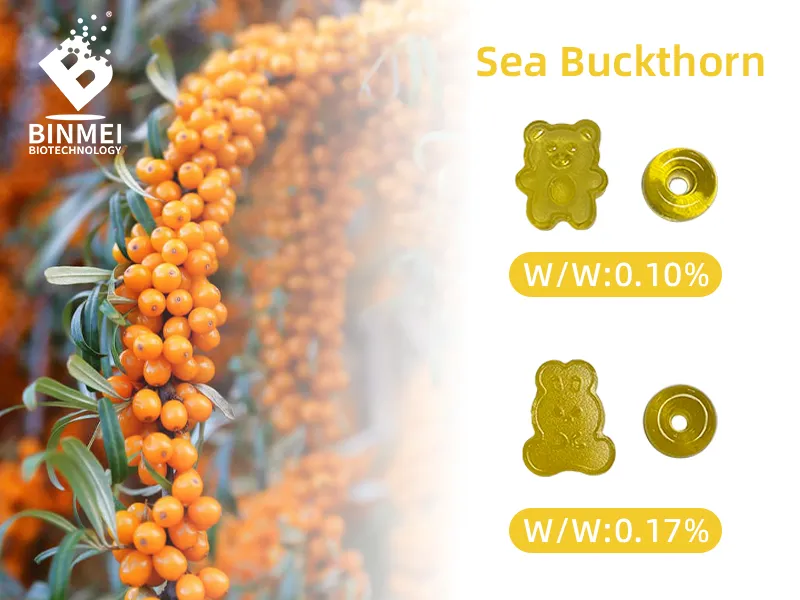
At 0.1% and 0.17%, gummies presented color impressions reminiscent of:
- Ripe banana yellow
- Mango yellow
These tones align closely with consumer expectations for fruit-based gummies.
Application Notes
Sea Buckthorn Concentrate shows excellent heat stability and remains stable in both acidic and neutral environments, making it highly compatible with standard gummy processing.
Summary
As a stable and recognizable natural food colorant for gummies, sea buckthorn offers a reliable way to replace synthetic yellow dyes while maintaining a clean label image.
Red–Purple Series|Hibiscus Concentrate (HLE)
Source and Color Tone
Hibiscus Concentrate for gummies is extracted from the hibiscus sabdariffa, offering shades ranging from pink to deep purple.
Tested Dosage Range
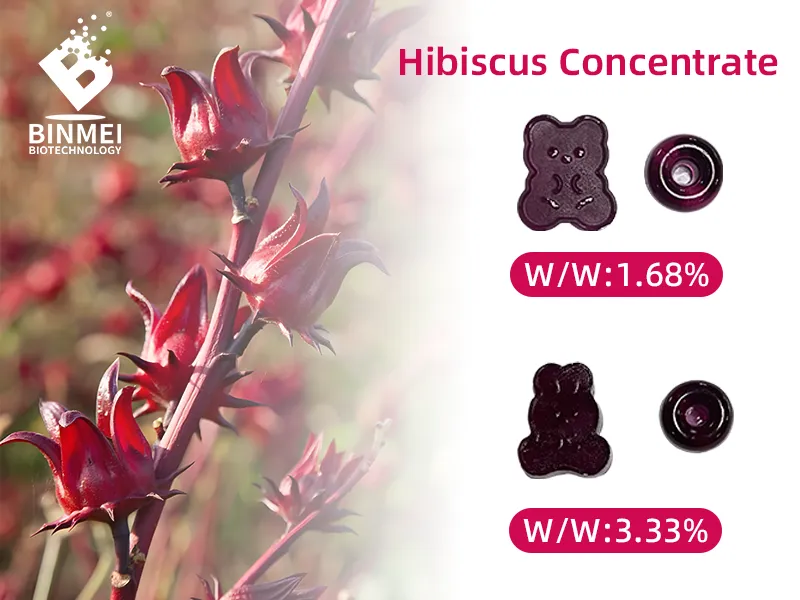
At 1.68% and 3.3% under pH 5.3 conditions, the gummies displayed:
- Soft orchid-like light purple
- Rich grape purple
Application Notes
Hibiscus is pH-sensitive:
- Acidic systems favor red tones
- Neutral systems shift toward purple
This characteristic allows formulators to fine-tune final color through pH control.
Summary
Hibiscus for gummies is ideal for brands seeking plant-based red or purple shades using natural food colorants rather than artificial dyes.
Meanings for Gummy and Candy Brands
- Faster Entry into the Natural Color Market
Most natural food colorants for gummies perform differently depending on formulation and processing conditions. BINMEI’s lab-tested dosage ranges provide additional support in reducing test uncertainty, enabling brands to replace synthetic dyes more efficiently.
- Clear Color Expectations, Lower Trial Costs
Defined dosage-to-color relationships help manufacturers predict final candy coloring results, reducing trial-and-error during product development.
- Stable and Scalable Supply Chain
- Spirulina, sea buckthorn, and hibiscus colors are produced on an industrial scale
- Low-temperature physical extraction preserves color quality
- Available in liquid and powder forms
- Supported by certifications and patents
BINMEI’s Solutions for Natural Gummy Coloring
- Customized formulation trials based on customer requirements
- Multi-color natural systems: blue, green, yellow, red, and compound blends. Full natural ingredient portfolio including spirulina, sea buckthorn, hibiscus, and more
- Technical support from lab validation to scale-up production
Natural Colorants Are Redefining the Candy Industry
As global candy leaders continue to replace synthetic dyes, clean label gummies are becoming the new industry baseline. Natural food colorants are no longer a compromise—they are a competitive advantage in modern candy coloring.
BINMEI has validated multiple natural food colorants for gummies through practice application testing, proving that vibrant color, stability, and clean labels can coexist in the gummies.
If you are developing clean label gummies or planning to replace synthetic dyes, BINMEI is willing to provide samples for testing, formulation guidance, and stability evaluation to support your transition with confidence.