In modern food and beverage development, achieving a vibrant visual identity is only half the battle. The true test of a successful formulation is preserving the product’s organoleptic integrity—ensuring that the visual impression does not ruin the delicate flavor profile. This is why expert formulators and R&D teams do not simply ask which botanical extract yields the brightest hue. They ask a highly technical question: how can natural food coloring be chosen without affecting flavor?
This formulation challenge drives the high demand for the best no taste food coloring. Unlike synthetic petroleum-based dyes (which are inherently flavorless chemical isolates), natural colors are derived from real vegetables, fruits, and algae. If not processed correctly, a red radish extract will impart a distinct cabbage-like sulfur note, and a standard beetroot powder will bring an overwhelming earthy flavor to a delicate vanilla dessert. To combat this, formulators are constantly searching for highly purified, natural tasteless food coloring solutions to prevent unintentional flavored food coloring scenarios.
Navigating the gap between raw botanical extracts and premium, deodorized colorants requires a robust decision framework. It involves understanding color value (concentration), extraction technology, and matrix interactions. For R&D teams building a wider foundation around ingredient selection, it is crucial to understand how natural food coloring ingredients are evaluated overall before attempting to solve complex flavor-carryover challenges in specific applications.
Why Flavor Matters When Choosing Natural Food Coloring
Natural color selection is heavily influenced by the biochemical makeup of the botanical source. Plants contain complex volatile compounds—terpenes, polyphenols, and sulfur compounds—that naturally co-extract alongside the desired pigments. If a manufacturer uses a low-concentration vegetable juice to color a product, they are forced to use a massive dosage to achieve a bright shade, dumping a heavy load of these flavor volatiles into the formulation.
This is why flavor carryover (off-notes) is the leading cause of failed clean-label product launches. The issue manifests in two ways. First, direct sensory interference: a sports drink that literally tastes like dirt because of unrefined beetroot. Second, cross-modal sensory perception: the psychological expectation where a color tricks the brain into anticipating a flavor that clashes with the actual product profile.
For that reason, formulating with natural colors is an exercise in managing concentration and purity. The goal is to maximize pigment load while minimizing botanical solids, ensuring the color integrates seamlessly without hijacking the product’s core sensory experience.
What People Usually Mean by “No Taste” or “Tasteless” Food Coloring
When procurement and R&D teams search for natural tasteless food coloring or the best no taste food coloring, they are speaking the language of commercial scalability. They are not looking for a magical ingredient that violates the laws of chemistry. Instead, they are searching for premium, technologically advanced extracts that have undergone secondary processing to remove offensive volatiles.
In the commercial ingredients sector, “no taste” translates to specific technical parameters:
- Deodorized Extracts: Colors that have been processed via membrane filtration, resin adsorption, or supercritical CO2 to strip away earthy, sulfurous, or marine off-notes.
- High Color Value (High E-Value): Highly concentrated pigments where the required dosage is so incredibly small (e.g., 0.01%) that the flavor impact drops well below the human sensory threshold.
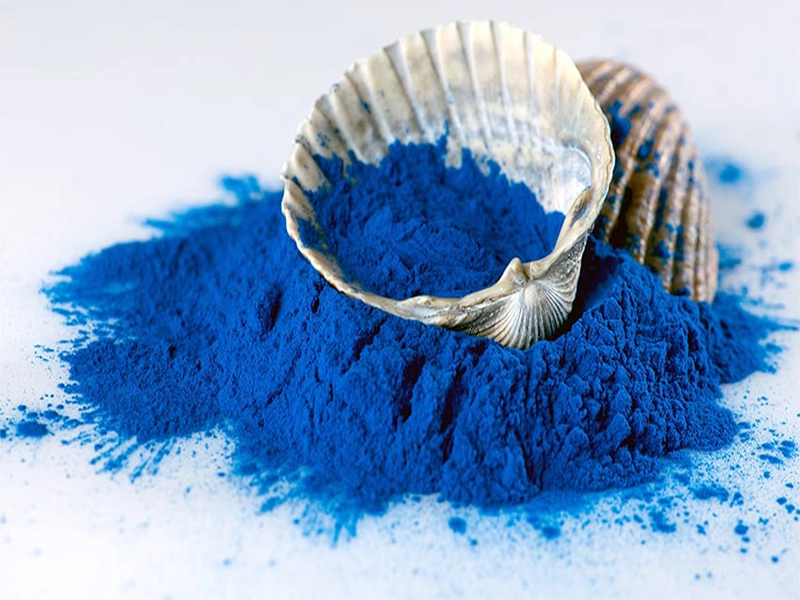
- High-Purity Pigment-Protein Complexes: Such as premium phycocyanin, which isolates the blue pigment from the algae biomass, eliminating the “fishy” taste associated with crude spirulina powder.
- Flavor-Neutral Carriers: Liquid or powder colorants formulated with neutral bases (like glycerin or maltodextrin) rather than strong-tasting botanical juices.
By sourcing colors that meet these criteria, brands can maintain strict clean-label standards without sacrificing the taste of their flagship products.
Do Natural Food Colorings Affect Flavor Perception?
Yes, profoundly. Natural colors introduce physical flavor volatiles into a matrix, but they also manipulate the brain’s flavor perception. A classic sensory science phenomenon shows that if a cherry-flavored beverage is colored brilliant green, a significant percentage of consumers will report tasting lime or green apple, completely ignoring the cherry flavor.
Beyond psychological perception, the physical flavor impact is highly dependent on the food matrix. A delicate, unflavored sparkling water offers zero “hiding space” for botanical off-notes. In contrast, a rich chocolate cake contains high levels of fat and strong cocoa aromatics that effectively encapsulate and mask the earthy notes of a beetroot red.
That is why the right question is not whether natural colors possess flavor. The critical R&D question is: What is the flavor sensitivity of my specific food matrix, and which deodorization level or masking technique is required to protect it?
How to Choose Natural Food Coloring Without Affecting Flavor
Eliminating flavor carryover requires a systematic approach. Formulators must move away from evaluating colors purely in a petri dish and start evaluating them within the dynamic environment of the final food matrix.
Start with the Product Category
The formulation matrix dictates your margin of error. A clear, low-Brix (low sugar) beverage will expose the slightest vegetal note. A high-fat dairy product or a heavily spiced baked good will naturally mask botanical flavors. You must align the purity (and cost) of the colorant with the demands of the category.
Define the Visual Role of the Color
Dosage dictates flavor impact. If you need a pale pastel pink, a standard radish extract might suffice because the dosage is microscopic. But if you need a deep, opaque, blood-red velvet cake, you will need a massive dosage of color. High-intensity visual roles strictly demand highly concentrated, deodorized pigments to avoid turning the product into a vegetable soup.
Evaluate Flavor Sensitivity, Not Just Shade
Some botanicals are inherently riskier than others. Anthocyanins from red cabbage and radish carry glucosinolates (mustard/cabbage notes). Curcumin (yellow) can introduce a spicy, turmeric burn. Spirulina can bring marine notes. You must request sample specifications that explicitly state “deodorized” when working with delicate profiles like vanilla, melon, or cream.
Think About Ingredient Association (Flavor Pairing)
Expert formulators use botanical flavors to their advantage rather than fighting them. This is the concept of synergistic pairing. If you are making a mixed-berry smoothie, the slight earthy/fruity notes of a black carrot extract will blend seamlessly into the berry profile. This turns a potential flaw into an integrated feature, avoiding the need for expensive deodorization.
Choose for Balance, Not for Color Alone
The ultimate goal is achieving high coloring power (Color Value) with minimal biomass. Work with advanced color houses that offer standardized, highly refined solutions. A more expensive, highly concentrated natural color is often cheaper in the long run because it requires a fraction of the dosage and preserves the integrity of your expensive flavor systems.
When Flavor Impact Matters Most by Application
Flavor sensitivity is not uniform across the food industry. Understanding how different macronutrients (fats, proteins, sugars) interact with botanical colorants allows formulators to select the most cost-effective and sensory-neutral options for their specific product line.
| Application | Flavor Sensitivity Level | Matrix Dynamics & Challenges | Selection Focus |
|---|---|---|---|
| Beverage (Clear/Waters) | Extreme | No fats or high sugars to mask off-notes. Vegetal, earthy, or sulfurous flavors are instantly noticeable. | Strictly require ultra-purified, fully deodorized extracts. See beverage applications for advanced clear-liquid solutions. |
| Confectionery (Gummies) | Medium | High acidity and sugar help mask off-notes, but the boiling process can vaporize masking agents, leaving earthy notes behind. | Utilize high-color-value liquid concentrates to keep dosage low. Explore confectionery applications for acid-stable options. |
| Bakery & Dairy | Low to Medium | Lipids (fats) and proteins act as natural flavor barriers, encapsulating volatile off-notes excellently. | Can utilize standard extracts, though frostings require care. See bakery applications for fat-dispersible solutions. |
Beverage: The Most Flavor-Sensitive Starting Point
Beverages, particularly functional waters, hard seltzers, and clear sodas, represent the ultimate stress test for a natural colorant. Because these systems lack masking agents (like dairy fat or heavy syrups), any trace of an earthy or marine note will ruin the product. Buyers seeking the best no taste food coloring for beverages must mandate “deodorized” on their raw material specifications.
To succeed in this category, formulators should utilize highly refined pigments (like deodorized black carrot for reds or ultra-pure phycocyanin for blues). If deodorized options are out of budget, the alternative is utilizing strong, complementary flavor houses (adding robust citrus or ginger profiles) to out-compete the botanical color’s natural flavor. Review the beverage applications page to understand how solubility and deodorization intersect.
Confectionery: Color Freedom Still Needs Flavor Logic
Confectionery visually demands neon, hyper-vibrant shades. Achieving these deep colors naturally requires a high dosage of botanical extract. While gummies have high citric acid and sugar content to help mask flavors, a massive dose of standard red cabbage extract will still make a strawberry gummy taste like a salad.
This is where the risk of unintentionally creating a flavored food coloring is highest. To mitigate this, candy manufacturers must source highly concentrated natural colors (e.g., Color Value > E50). By using a super-concentrated colorant, the actual volumetric dosage dropped into the candy mass is so small that the flavor volatiles remain entirely undetectable to the consumer. The confectionery applications page details how to balance dosage and flavor.
Bakery: Flavor Impact Depends on Where the Color Appears
Bakery offers the most forgiving matrix due to high fat content (butter, oils) and strong Maillard browning flavors (vanilla, roasted notes). Fats coat the palate and effectively mute the sharp, vegetal notes of natural colors.
However, the placement of the color matters. A red velvet cake batter can easily mask beetroot powder, but a delicate, aerated vanilla buttercream frosting cannot. Frostings and icings behave more like clear beverages—they expose off-notes rapidly. Therefore, bakery R&D must segment their color strategy: utilizing standard colors in the dough, and reserving premium, deodorized colors for the icings and decorative finishes. The bakery applications page provides targeted solutions for fat-based vs. water-based doughs.
Common Mistakes When Choosing Natural Color for Flavor-Sensitive Products
The most frequent errors occur when procurement teams source botanical colors based purely on cost-per-kilogram, ignoring the hidden costs of flavor masking and product rejection.
| Common Formulation Mistake | The Biochemical Reality | Expert Solution & Best Practice |
|---|---|---|
| Sourcing low-concentration (cheap) colors | Low concentration forces high dosage, dumping excessive plant matter and strong vegetal flavors into the food. | Invest in high-E-value concentrates. The cost-in-use is often lower, and the flavor impact is practically zero. |
| Using cabbage/radish in neutral pH dairy | Glucosinolates in these plants release strong sulfur (egg-like) notes, which clash violently with milk/cream profiles. | Switch botanical sources. Use betalains (beetroot) or sweet potato for pinks/reds in neutral dairy systems. |
| Ignoring cross-modal flavor perception | Color sets psychological expectations. A mismatched color physically alters how the brain registers the flavor. | Ensure visual identity tightly aligns with the target flavor profile to prevent cognitive dissonance in the consumer. |
| Assuming all “natural” means “tasteless” | Raw botanical extracts are, by definition, flavored. “Tasteless” requires secondary chemical or physical processing. | Explicitly request “Deodorized” or “Purified” specifications when ordering samples for flavor-sensitive projects. |
Choosing the Right Next Step
Achieving a vibrant, clean-label product with zero flavor interference is entirely possible with the right matrix management and ingredient sourcing. Once R&D teams understand that flavor impact is a solvable equation of concentration, deodorization, and masking, the next step is to evaluate specific botanical solutions.
Formulators looking to master global regulatory guidelines should continue with the natural food coloring ingredients guide. If you are actively transitioning a legacy product away from synthetics, review the technical parameters in plant-based food coloring vs artificial dyes. For procurement teams ready to source premium, deodorized ingredients, explore our highly refined organic food coloring solutions tailored for delicate applications.
FAQ
What does natural tasteless food coloring actually mean in the industry?
In commercial formulation, it refers to premium botanical extracts that have undergone secondary processing (deodorization) or possess exceptionally high color concentration, allowing them to be dosed at microscopic levels to avoid imparting earthy, sulfurous, or marine off-notes to the food.
Do natural food colorings affect flavor?
Yes, raw natural colors carry the inherent volatile compounds of their source plant (e.g., radish tastes like cabbage). However, utilizing high-quality deodorized extracts or formulating them into fat-heavy matrices (which mask flavors) effectively eliminates this issue.
What is the best no taste food coloring for a clear beverage?
For clear, delicate beverages, you must strictly source high-color-value, fully deodorized liquid extracts. Because beverages lack fats or heavy syrups to mask off-notes, standard vegetable juices will ruin the flavor profile.
Are beverages more flavor-sensitive than bakery products?
Yes. Beverages (especially flavored waters) offer zero “hiding space” for botanical off-notes. Bakery products contain high levels of fat (butter/oil) and strong aromatics (vanilla/cocoa) that naturally encapsulate and mask unwanted flavors from natural colors.
How do I prevent my natural color from becoming an unwanted “flavored food coloring”?
The most effective strategy is to buy highly concentrated colors (High E-Value). By using a super-concentrated pigment, you drop the volumetric dosage required in your recipe so low that the flavor molecules never reach the human sensory detection threshold.
Where should I go next after reading this page?
To learn how to apply these masking and deodorization strategies in your specific product, review our dedicated technical guides for beverage, confectionery, or bakery applications.