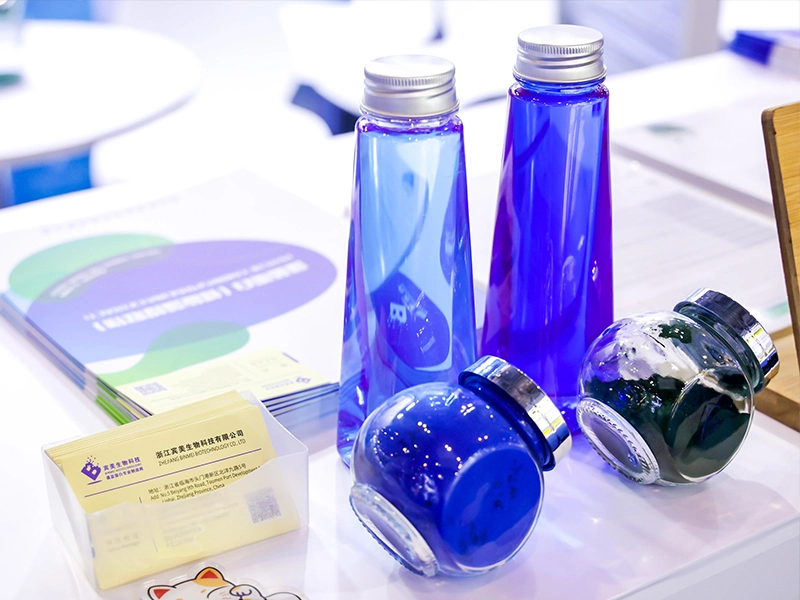
FDA Tightens Standards for Spirulina Extract: Entering the Low-Residue Era
In recent years, regulatory frameworks governing natural colorants have continued to evolve, particularly in the United States. The FDA has progressively strengthened oversight of color additives, with ongoing efforts to revise existing regulations to expand permitted applications while introducing stricter requirements for contaminants, including heavy metals.
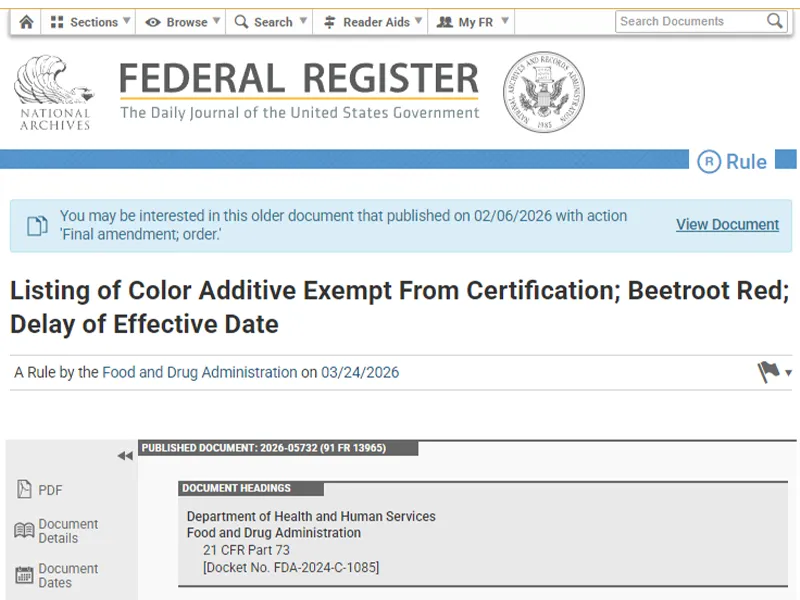
However, certain proposed amendments have been delayed following industry feedback, reflecting the complexity of balancing innovation, safety, and industrial feasibility.
Among these developments, Spirulina Extract (Arthrospira platensis-derived phycocyanin) has become a key reference case for understanding the direction of regulatory change.
A proposed revision to 21 CFR 73.530 reflects this trend. In parallel, similar updates affecting other natural colorants — such as annatto and gardenia blue—indicate that regulatory attention is no longer product-specific, but system-wide.
Across these updates, several consistent priorities emerge:
- Tightening limits on heavy metals
- Restrictions on residual solvents
- Standardization of analytical and testing methodologies
Collectively, these changes demonstrate a structural shift in regulatory philosophy: from authorization of use toward continuous control of purity and contaminant levels.
Although certain implementation timelines remain pending, the direction of regulatory evolution is increasingly clear and consistent.
Implications for Brands: Compliance Risk Is Increasing
As regulatory expectations become more stringent, compliance risks are increasingly concentrated at the manufacturing and supply chain level.
Common challenges observed across the industry include:
- Variability in heavy metal content, particularly lead and cadmium
- Microbiological instability across batches
- Residual contamination linked to cultivation or processing methods
- Inconsistent performance in application systems
These factors may contribute to:
- Border rejections or delayed customs clearance
- Reformulation and re-approval costs
- Product recalls in sensitive applications
- Long-term reputational risk for brands
As a result, raw material selection is no longer a procurement decision alone, but a key component of regulatory risk management.
In an era of strict regulation and low-residue standards, how should companies choose their suppliers?
In response to evolving regulatory expectations, suppliers are increasingly required to demonstrate not only product compliance but system-level control across the entire production chain.
At Binmei, production systems for spirulina extract (phycocyanin) are designed around this principle.
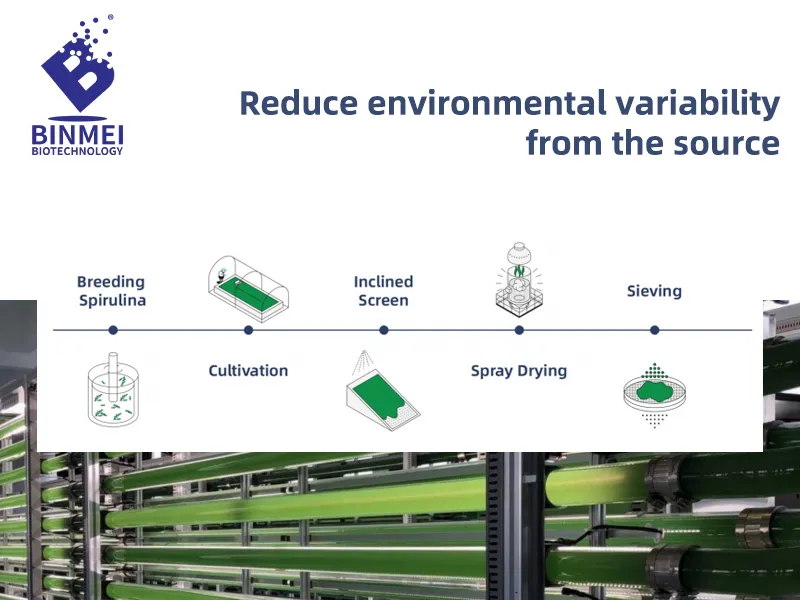
Key system elements include:
- Controlled upstream system. Proprietary algae strains, self-managed cultivation bases, and contract farming systems are implemented to ensure raw material stability and reduce environmental variability from the source.
- Physical water extraction process. A solvent-free extraction method is applied, eliminating the introduction of organic solvent residues and supporting cleaner product profiles.
- Integrated quality control system Heavy metals, microbiological parameters, pesticide residues, and process water quality are monitored throughout the entire production process, rather than relying solely on final release testing.
- Regulatory alignment capability Production and documentation systems are aligned with FDA, EU, and China regulatory frameworks, supporting multi-market compliance requirements for global customers.
Partner with Binmei as Your Trusted Supplier
Beyond compliance structure, Binmei spirulina extract is developed with application stability as a key consideration.
Key performance attributes include:
- Batch-to-batch consistency in color performance
- Controlled low-residue profile suitable for sensitive applications
- Compatibility across beverage, confectionery, dietary supplement, and functional food systems
- Traceable production system supporting audit requirements
Each production batch is fully traceable from cultivation through extraction to final product release.
This traceability supports customers operating in increasingly regulated and audit-intensive markets.
Binmei operates with an annual production capacity of approximately 300 metric tons, supported by standardized manufacturing systems that ensure consistent output quality and supply reliability across varying market demand conditions.
Updated 2026 test reports are available, reflecting current and anticipated regulatory requirements.
Conclusion
The regulatory environment for natural colors is entering a new phase characterized by greater precision, stricter limits, and higher expectations for consistency.
For spirulina extract, the direction is clear: from “natural” to low-residue, controlled, and compliance-ready.
In this context, supplier capability is no longer defined solely by product performance, but by the ability to maintain compliance across evolving regulatory frameworks.
Trust us, choose us!
Request your free sample of Binmei Spirulina Extract today and evaluate its stability, performance, and compliance in your own application.