How to Choose the Right Phycocyanin for Your Product
Why Choosing the Wrong Phycocyanin Can Compromise Product Performance
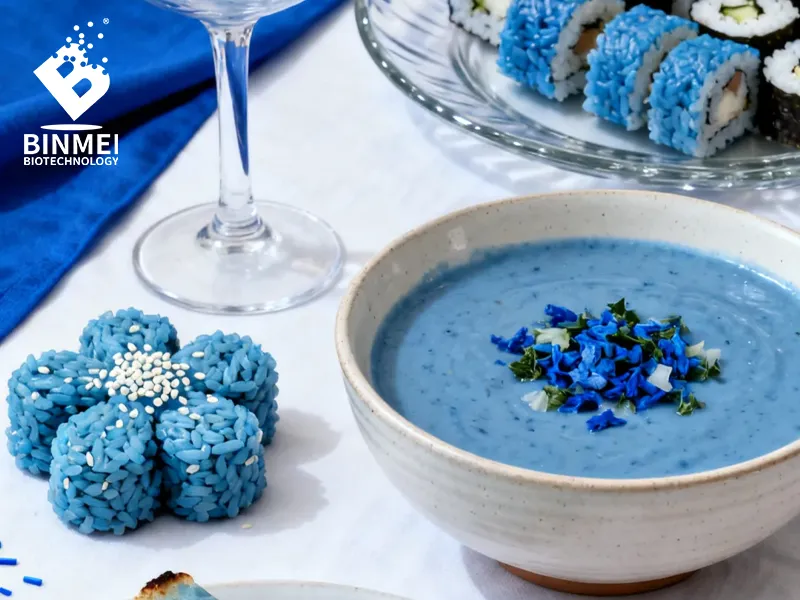
Among all natural colors, blue is one of the most difficult to stabilize. This is especially true for phycocyanin, the blue pigment extracted from spirulina. In practice, different specifications and formulations of phycocyanin can perform dramatically differently in beverages, confectionery, dairy products, and nutritional systems.
For R&D and procurement teams, the challenges are familiar:
- Color appears greyish or green
- Inconsistent color performance between batches
- Successful lab trials that fail during scale-up
- High E-value products that still perform poorly in real formulations
The core issue is not the pigment itself, but how it is selected.
A high E-value alone does not guarantee good usability. Stability, solubility, processing compatibility, and formulation behavior are equally critical.
This article aims to help product developers and purchasing teams understand how to select the right phycocyanin—by evaluating both specification and formulation, always starting from the actual application.
Formulations: The Foundation of Stability and Process Compatibility
Not all phycocyanin products are the same. Formulation is often the single most important factor determining whether a blue color works reliably in a finished product.
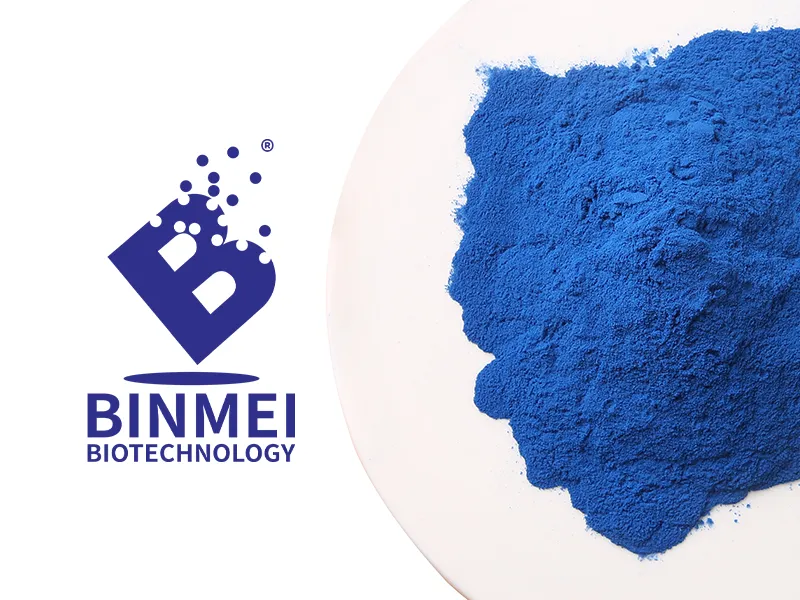
Phycocyanin Powder
Key characteristics
- Flexible and widely used
- Easy to store and transport
- Suitable for dry blending and post-process addition
Typical applications
- Powdered beverages
- Confectionery premixes
- Nutritional powders
- Late-stage coloring in bakery products
Key considerations
- Sensitive to dissolution conditions
- High temperatures during hydration should be avoided
- Water quality, shear force, and addition sequence strongly influence the final color
Powder forms are versatile, but their performance depends heavily on how they are handled during processing.
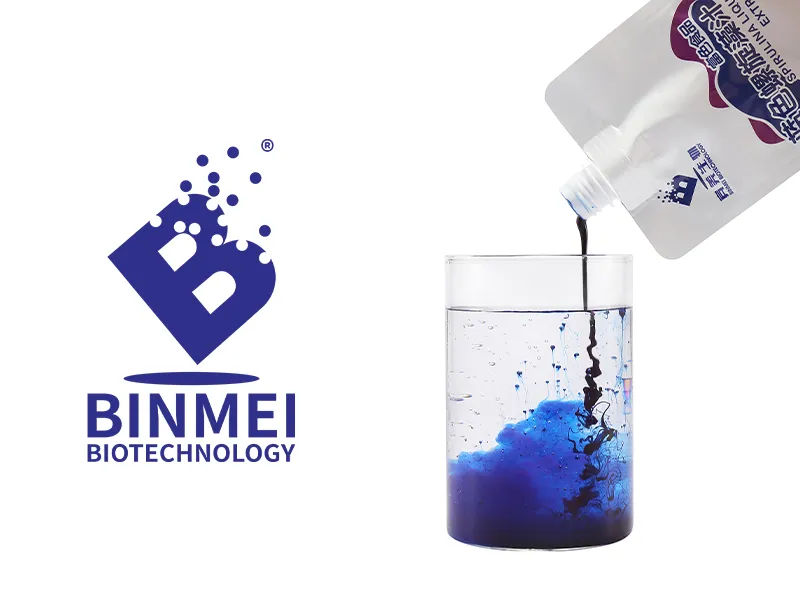
Phycocyanin Concentrate (YE3)
2-year shelf life at ambient temperature, without preservatives
Key characteristics
- Ready-to-use format with excellent dispersibility
- Easy to shop operate and add directly
- Well-suited for large-scale beverage production
Typical applications
- Ready-to-drink beverages
- Tea-based drinks
- Ice Cream
- Gummies
- Functional and wellness beverages
Key considerations
- A wider pH range
- Prolonged high-heat treatment should be avoided
- Particularly suitable for industrial-scale operations
Liquid concentrates are often chosen when consistency, ease of use, and scale-up reliability are critical.
Phycocyanin Oil-Based
Key characteristics
- Improved compatibility with complex matrices
- Better tolerance to oil, fat, and protein systems
- Enhanced processing stability
Typical applications
- Chocolate
- Dairy products
- Emulsified systems
Key considerations
- Requires appropriate dispersion or emulsification systems
- Colour matching must be performed using practical samples, and the visual appearance of the final product shall be the definitive criterion during application assessment.
- Phycocyanin Oil-Based improves compatibility with fat-based systems, but it does not fundamentally solve heat or oxidation sensitivity. Application success depends more on formulation design and process control than on solubility alone.
Specifications: More Than Just Color Strength
Differences in phycocyanin specifications are not limited to color intensity. They directly affect solubility, transparency, stability, and overall formulation performance.
Typical Powder Specifications
| Specification | Phycocyanin Content (%) | Color Value (Amax/m*100) | Appearance & Transparency | Stability | Typical Applications |
| E10 | ≥20 | 100-115 | Light blue | Good | Bakery, powdered beverage |
| E18 | ≥30 | 180-195 | Balanced | Good | Universal |
| E25 | ≥45 | ≥250 | Clear blue | Good | Beverages, confectionery, cosmetics |
| E40 (100%) | ≥75 | ≥400 | High-purity blue | Sensitive | Nutritional supplements, 100% Pure ingredient |
| M18 (Sugar-free) | ≥30 | 180-195 | Stable | Good | European preference |
| Organic | Varies | Varies | Natural tone | Stable | Organic foods |
A common misconception is that a higher E-value always means better performance. In reality, very high E-values can introduce challenges in solubility, transparency, and stability, especially in complex systems.
Specification selection should always be centered on the product system—not on E-value alone.
Matching Specifications and Formulations: A Practical Overview
| Application | Recommended Formulation | Key Challenges | Selection Guidance |
| Ready-to-drink beverages | Liquid concentrate | pH, heat treatment | Prioritize consistency over high color value |
| Clear beverages | Liquid or high-purity powder | pH | Transparency |
| Gummies | Concentrate | Sugar matrix | Stability over color strength |
| Dairy products | Encapsulated | Protein and fat interaction | Formulation first, specification second |
| Powdered products | Powder | Dissolution behavior | Dispersibility |
Phycocyanin is essentially a natural blue protein pigment extracted and concentrated from spirulina. As a colouring food, it offers labeling advantages such as “coloured with spirulina” or “spirulina concentrate”. With the growing interest in coloring foods and naturally derived color systems, phycocyanin should be viewed not merely as a colorant, but as an integrated part of the formulation.
How to Choose the Right Phycocyanin Specification
Despite the apparent complexity, most successful phycocyanin projects follow a clear and practical decision sequence.
Step 1: Define the Application
- Beverage, confectionery, dairy, or powdered beverage
- Clear or turbid system
- Heat-treated or cold-processed
- Emulsified or non-emulsified
Step 2: Select the Most Suitable Formulation
- Powder, liquid concentrate, oil-based, or encapsulated form
The formulation determines:
- Process compatibility
- Baseline stability
- Flexibility for future adjustments
Step 3: Fine-Tune the Specification
- Color value, purity, appearance
- Meet color targets while balancing stability and cost
This approach reduces trial-and-error and improves scale-up success.
In real product development, these steps are not isolated. A formulation that looks suitable on paper may require a different specification during scale-up. Likewise, a theoretically ideal specification may need a different formulation to perform consistently in production.
This is why many brands today are no longer looking for “one specific grade,” but for application-oriented guidance that considers the complete system.
BINMEI’s Application-Oriented Approach
At Binmei, phycocyanin is approached not just as an ingredient, but as a formulation solution.
- Broad coverage of specifications and formulations
- Targeted selection based on real application conditions
- Support from laboratory trials to industrial scale-up
- Helping brands solve the “last mile” challenges of color stability, consistency, and usability
Whether developing a new product or optimizing an existing one, the right phycocyanin should adapt to your product—not the other way around.
Selecting phycocyanin successfully is less about finding the strongest blue and more about understanding how formulation and specification work together within your system.
When the application comes first, the risk of color failure drops significantly—and product success becomes far more predictable.
Explore more suitable phycocyanin or get free samples, contact me!