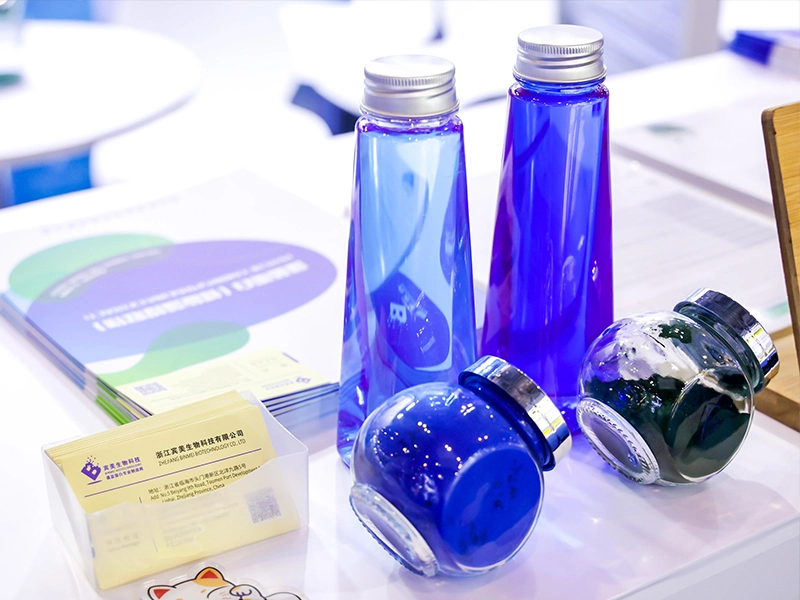
Blue spirulina vs butterfly pea: which natural blue should you use? Both are natural blue colorants, but they differ in source, pH behavior, heat stability and taste. Blue spirulina (Spirulina Extract, colored by phycocyanin) gives a bright blue at pH 4.5–8.0 but is heat-sensitive and should be kept below 65°C (149°F). Butterfly Pea Flower Extract (colored by anthocyanins) tolerates heat well and is blue at pH 5–7, but turns a stable purple to violet in acidic products.
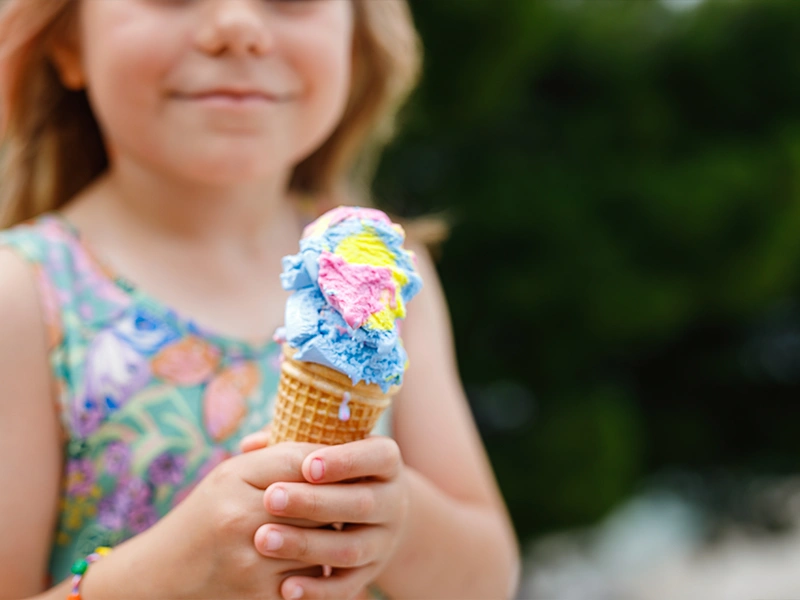
One point is often misunderstood: blue spirulina does not stay blue in acidic drinks. Below pH 4.5 its blue fades. So in acidic products, expect purple from butterfly pea and color loss from spirulina; in neutral dairy and ice cream, both can give blue.
What Are Blue Spirulina Extract and Butterfly Pea Powder?
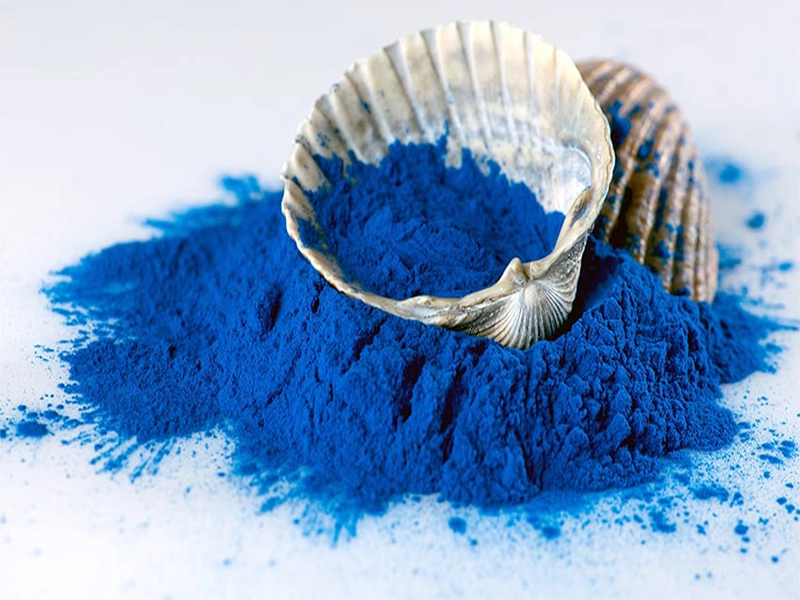
Blue spirulina extract, also called phycocyanin or spirulina extract, is the blue pigment-protein extracted from spirulina (Arthrospira platensis), a blue-green alga. Its color is a bright sky blue, known in the food industry as Tiffany blue. BINMEI extracts it from the whole algae by a gentle physical process with water only, without any extraction solvent. Like other proteins, it is sensitive to heat and light.
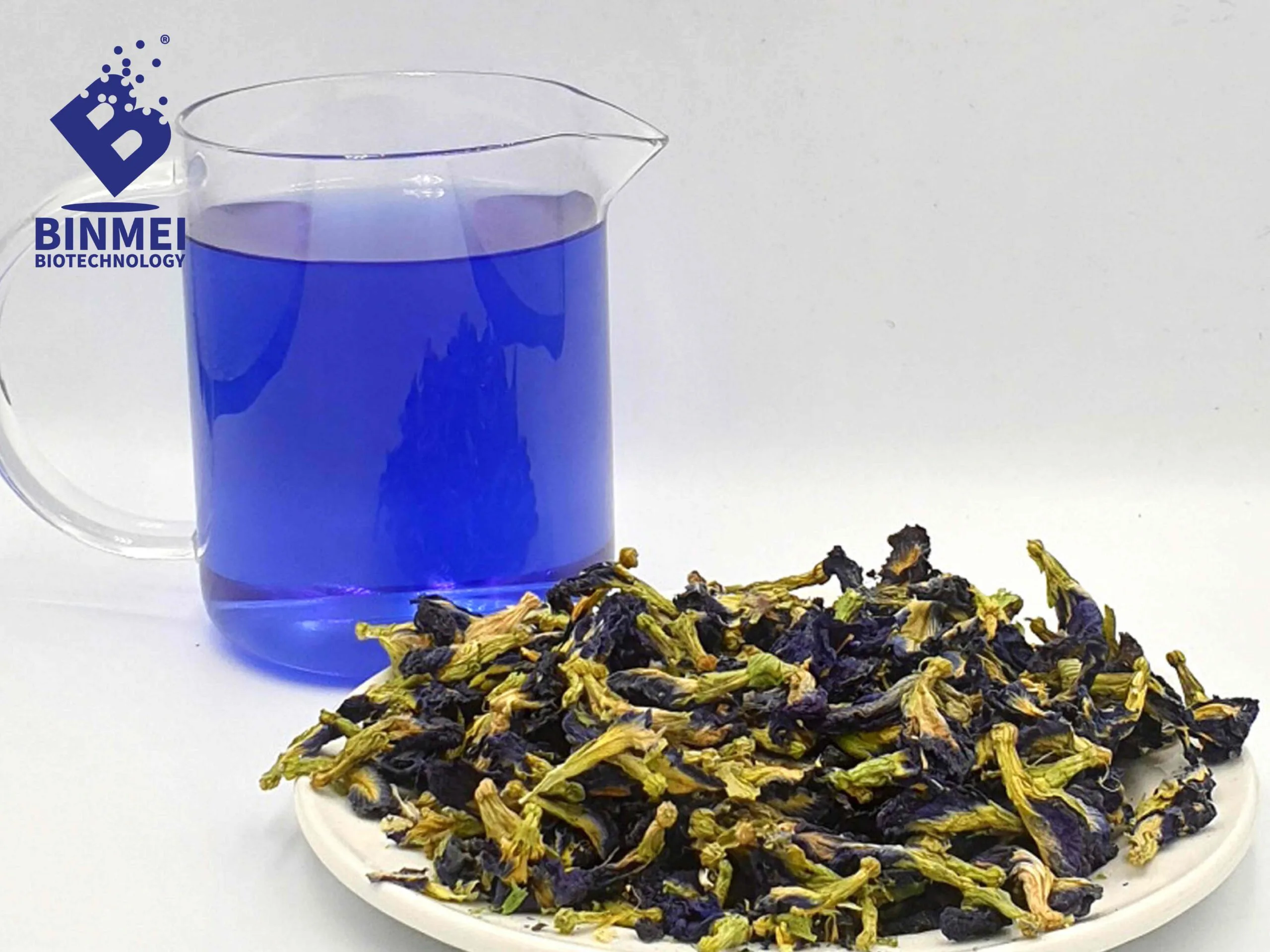
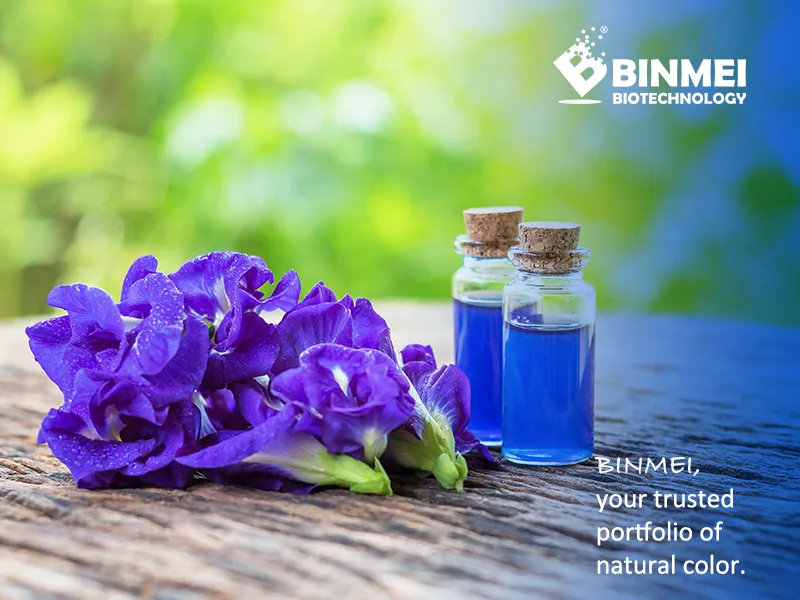
Butterfly pea flower (Clitoria ternatea) is a plant from tropical Asia, grown mainly in India, Indonesia, Malaysia, Thailand and southern China, where its flowers have long been used in teas, desserts, drinks and rice dishes. Butterfly pea flower extract is made from the petals and is colored by anthocyanins. In 2021, the US FDA approved butterfly pea flower extract as a food color under 21 CFR 73.69. Unlike spirulina extract, its color changes with pH.
Blue Spirulina vs Butterfly Pea: Side-by-Side Comparison
| Blue Spirulina (Spirulina Extract) | Butterfly Pea Flower Extract | |
|---|---|---|
| Source | Arthrospira platensis (spirulina), whole algae | Clitoria ternatea flower petals |
| Coloring component | Phycocyanin, a pigment-protein | Anthocyanins |
| Color and pH | Bright blue at pH 4.5–8.0; blue fades below pH 4.5 | Blue at pH 5–7; purple to violet at pH 3–4; blue-green at pH 7–8; green-yellow and unstable above pH 8 |
| Heat | Keep below 65°C (149°F); add after heat treatment | Heat stable: 97.45% of color retained after 4 hours at 80°C (pH 3, BINMEI test) |
| Light | Light-sensitive; use light-protective packaging | 98.65% of color retained after 40 days at 8,000 lux (pH 3, BINMEI test) |
| Taste | Mild; a slight algae note at high dosages | Mild, slightly grassy |
| Cost in use | Compare cost per unit of color at your dosage and pH, not only price per kilogram | |
| US regulatory status | Color additive exempt from certification, 21 CFR 73.530 | FDA approved in 2021, 21 CFR 73.69 |
| Water solubility | Water-soluble | 100% water-soluble |
| BINMEI certifications | Kosher, Halal; EU and USDA Organic (organic grades) | Kosher, Halal |
| BINMEI forms | Blue powder (E18, E25+) and liquid extract | Purple powder (E3, E10; with maltodextrin) and purple liquid (with sodium benzoate) |
Color by pH: Where Each Stays Blue
| pH | Blue Spirulina (Spirulina Extract) | Butterfly Pea Flower Extract |
|---|---|---|
| 2–3 | Below stable range; blue fades | Red-purple, stable |
| 3–4 | Below stable range; blue fades | Purple, stable |
| 5–7 | Blue, stable | Blue, stable |
| 7–8 | Blue, stable | Blue-green, stable |
| Above 8 | Above stable range | Green-yellow, not stable |
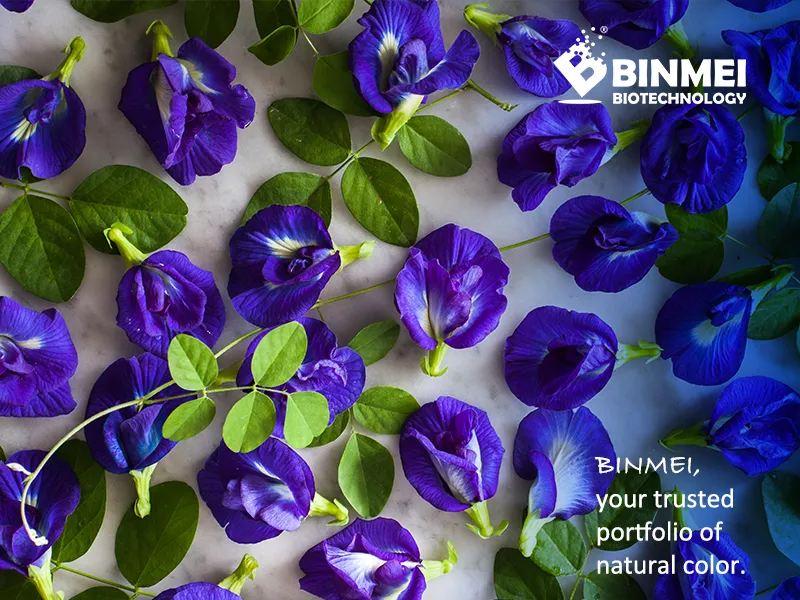
Butterfly Pea Flower Extract delivers a rare natural blue at pH 5-7 (dairy, ice cream, neutral beverages). At lower pH (candy, acidic drinks), the same extract produces stable purple to violet shades. For low-pH blue targets, formulators either adjust the color pre-mix to pH 5-7 before adding, or accept purple/violet at ambient product pH. For every natural color’s pH behavior, see our pH stability guide.
Heat and Processing
Spirulina Extract should be kept below 65°C (149°F). In BINMEI tests it kept 96% of its blue after 3 hours at 40°C, but only about half after 10 minutes at 80°C. In pasteurized or baked products, add it after the heat step, or choose another color for that product. Butterfly Pea Flower Extract kept 97.45% of its color after 4 hours at 80°C (pH 3), so in neutral products it can be added before pasteurization—confirm under your own process conditions. For light, Spirulina Extract is sensitive and needs light-protective packaging; Butterfly Pea Flower Extract kept 98.65% of its color after 40 days at 8,000 lux (pH 3). Heat data by pigment is in our heat stability chapter.
Both are natural ingredients that are sensitive to their storage environment. Keep them sealed and protected from light and high temperature.
Which One for Your Application?
| Application | Blue Spirulina (Spirulina Extract) | Butterfly Pea Flower Extract |
|---|---|---|
| Dairy drinks, creamers and desserts (near neutral) | Blue; add after pasteurization | Blue |
| Ice cream and frozen desserts | Blue; add after pasteurization | Blue |
| Neutral beverages and plant-based drinks | Blue if added after heat treatment | Blue; tolerates heat |
| Acidic soft drinks and juices | Color fades | Stable purple to violet; blue only if the finished drink is at pH 5–7 |
| pH-reactive (color-change) drinks | Not suited | Shifts from blue to purple when acid is added |
| Confectionery | Blue in near-neutral, low-heat applications such as coatings | Blue in near-neutral candy; purple to violet in acidic candy |
| Baked goods | Not suited; baking heat destroys the blue | Heat stable, but blue only when the dough is at pH 5–7; alkaline doughs with baking soda turn it green |
Best Uses for Each
Choose butterfly pea flower extract for color-change drinks, neutral products that are heated after coloring, and acidic products where a purple to violet shade is acceptable. Choose blue spirulina for a bright blue in dairy, ice cream, frozen desserts and neutral beverages where the color is added after heat treatment. When both are possible, compare the two shades side by side in your own formulation.
How to Choose: The 5-Step Selection Framework
Our Technical Center sets out a 5-step Selection Framework: Color → Application → Processing → Formulation → Solution. For a blue product, confirm the shade you need, the product category, the heat and filling conditions, and the pH and other ingredients, then shortlist the extract and grade. Worked examples are in Chapter 8.
BINMEI produces both Spirulina Extract and Butterfly Pea Flower Extract by gentle physical extraction, and both are Halal and Kosher certified. In the EU, spirulina extract is used as a colouring food under the NATCOL Code of Practice.
Comparing Green Spirulina Too?
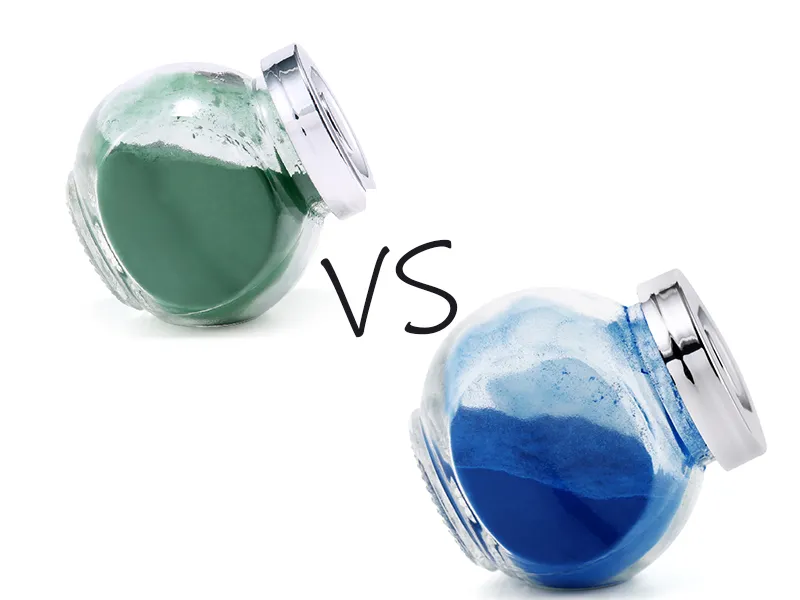
Green spirulina is the whole algae powder, with a deep green color; it is not a blue color. Blue spirulina is the phycocyanin extracted from it by a water-based process. See blue spirulina vs green spirulina.
Frequently Asked Questions
Does blue spirulina stay blue in acidic drinks?
No. Blue spirulina is stable at pH 4.5–8.0, and below pH 4.5 its blue fades. Most soft drinks and juices are more acidic than that, so blue spirulina is not a good choice for them.
Can butterfly pea flower extract be used in baked goods?
Yes, it tolerates baking heat, but the color follows the dough pH. It is blue only at pH 5–7; alkaline doughs with baking soda turn it green, and acidic recipes turn it purple.
Can both be used in neutral-pH dairy products?
Yes. At pH 5–7 both give blue. Spirulina Extract must stay below 65°C (149°F), so add it after pasteurization; Butterfly Pea Flower Extract tolerates heat.
Which works in ice cream?
Both are used in ice cream, which is close to neutral pH. Add Spirulina Extract after pasteurization, for example at the flavor tank; Butterfly Pea Flower Extract tolerates heat. Choose on shade and label needs, and test both at your dosage.
Why does butterfly pea flower extract turn purple in soft drinks?
Most soft drinks are acidic. Below pH 5, butterfly pea anthocyanins shift to purple and violet; this is a stable color, not spoilage. Blue appears only when the finished drink is at pH 5–7.
Can I test both before choosing?
Yes. We send free samples of Spirulina Extract and Butterfly Pea Flower Extract with specification sheets, so your team can compare them in the actual formulation.