Choosing natural food coloring for baking is more complex than choosing natural colors for cold beverages or simple confectionery. In baking, ingredients are exposed to heat, fat, sugar, pH shifts and different mixing systems. A color that looks vibrant in a frosting may fade in a cake batter, while a pigment that performs well in dairy may not survive the oven.
This is why bakery teams, pastry brands and product developers often ask a more specific question than “Which natural color is best?” They ask: Which natural food coloring for cake or frosting will actually work in my application? The answer depends on the stage of use, the target shade and how the final product is processed.
In this guide, we focus on the most practical directions for natural food coloring for baking, especially in cakes, fillings, frostings and post-bake decoration. Rather than treating all natural colors as equal, we look at how different blue, red and yellow options behave in real bakery-related systems.
Why Baking Is More Difficult for Natural Colors
Natural colors are often more sensitive than synthetic dyes. In bakery applications, the challenge is not only creating the right shade, but keeping that shade stable during mixing, heating, cooling and storage.
- Heat exposure: some natural colors fade or change under high baking temperatures.
- pH conditions: certain botanical pigments react differently in acidic, neutral or alkaline systems.
- Fat and sugar systems: cakes, frostings and fillings do not behave the same way as drinks or simple syrups.
- Visual expectations: bakery applications often require soft, pastel or premium-looking shades rather than aggressive color intensity.
That is why selecting the right natural food coloring for cake is not only a color decision. It is a formulation decision.
First, Separate the Bakery Application
One common mistake is treating all bakery-related uses as the same. In practice, “baking” includes several very different systems:
Cake Batter
Cake batter goes through full heat treatment. Any natural color used directly in batter must tolerate heat and still deliver an acceptable final shade after baking.
Frosting and Icing
Frosting is often a lower-risk system for natural colors because it is usually added after baking. This is why many brands look for natural blue coloring for frosting, natural red food coloring for frosting and natural yellow food coloring for frosting rather than trying to force the same shade directly into a baked sponge.
Fillings and Creams
Fillings may involve fat, dairy, acidity or fruit systems. This means flavor impact and pH compatibility matter as much as color intensity.
Post-Bake Decoration
Decorative glazes, frostings, whipped toppings and surface applications are often the most practical entry point for natural colors in bakery because the pigment is not forced to survive the oven.
A Practical View of Blue, Red and Yellow in Bakery Applications
Not every natural color is equally practical for bakery use. In general, yellow tends to be easier than red, and red tends to be easier than blue when heat stability is involved. This does not mean blue and red cannot be used. It means they must be used in the right part of the product.
Natural Blue Coloring for Frosting
Blue is one of the hardest colors to achieve naturally in bakery-related applications. If a brand needs natural blue coloring for frosting, two of the most relevant options are usually blue spirulina and butterfly pea flower.
Blue Spirulina
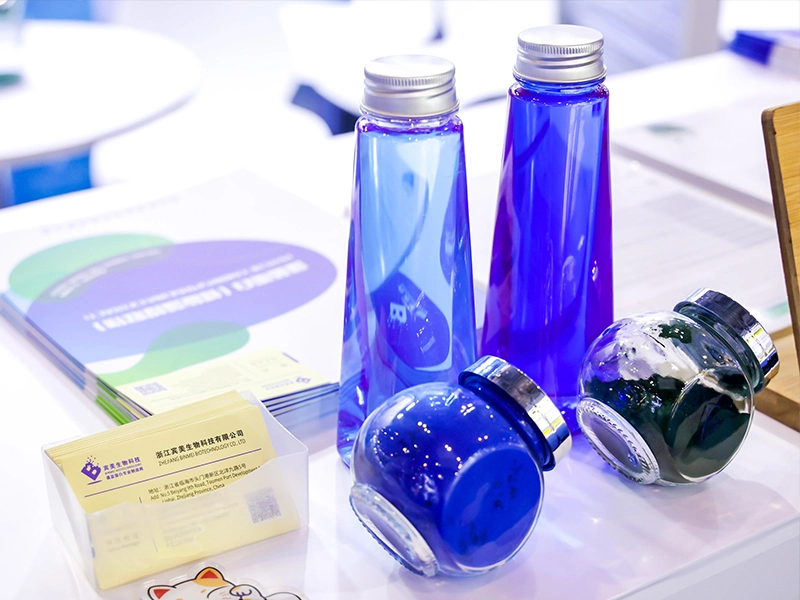
Blue spirulina is often the more practical option when the goal is a cleaner, clearer commercial blue. It is particularly useful in frostings, whipped toppings, cold creams, frozen desserts and decorative applications where the pigment does not need to survive high baking heat.
- Best for: frostings, icings, decorative creams, frozen desserts, cold fillings
- Main strength: cleaner and more direct blue shade
- Main limitation: less suitable for high-heat baking systems
For more product direction, you can also review Blue Spirulina Bulk and Spirulina Liquid Extract.
Butterfly Pea Flower
Butterfly pea flower is often chosen when a more botanical blue-purple impression is desired. It can be visually attractive in frosting and decorative bakery concepts, especially for premium or floral-style positioning. However, its tone may shift more noticeably depending on pH and formulation conditions.
- Best for: concept cakes, decorative frostings, floral bakery themes
- Main strength: plant-based appeal and naturally expressive shade
- Main limitation: more sensitive color behavior in some systems
For a more focused blue comparison, you can also review Butterfly Pea Flower Extract.
Natural Red Food Coloring for Frosting
Red is more achievable than blue in many bakery-related applications, but the right source still depends on whether the color is used in batter, frosting or filling. If the target is natural red food coloring for frosting, anthocyanin-rich sources are often more practical than heavily heat-dependent alternatives.
Aronia and Hibiscus Directions
For frostings, icings and selected fillings, aronia and hibiscus directions are often more suitable because they can provide attractive red to red-purple tones without relying on synthetic dyes. Their real suitability depends on the final formulation, especially sweetness, acidity and dairy content.
- Best for: frostings, low-heat fillings, premium desserts, confectionery-style toppings
- Main strength: natural red-purple positioning and cleaner label appeal
- Main limitation: some systems may affect final tone or stability
Related pages: Alternatives for Red Food Coloring, Natural Colors – Red, Aronia Berry Extract Powder.
For Red Cake Systems
If the target is a naturally colored cake batter rather than frosting, heat behavior becomes more important. Not every botanical red will stay visually strong after baking, so a bakery team should decide early whether the red effect is needed inside the sponge or only in the decorative layer.
Natural Yellow Food Coloring for Frosting
Yellow is often the most practical natural direction in bakery. Compared with blue and many red options, yellow sources usually offer better heat performance and broader usability. This is why natural yellow food coloring for frosting and cake systems is often easier to develop successfully.
Safflower Yellow
Safflower yellow is often useful when a bright, clean yellow effect is needed in beverages, dairy and selected bakery-related applications. In decorative uses such as frosting, it can create a more cheerful and stable yellow direction.
Turmeric and Carotenoid-Based Options
For cakes and baked fillings, turmeric, beta-carotene and other carotenoid-based yellow directions are often more practical where heat is a major factor. Their shades may be warmer than safflower yellow, but they are frequently more useful in real baked systems.
For broader yellow direction, you can also review Natural Colors – Yellow.
Quick Comparison: Best Natural Color Direction by Bakery Scenario
| Bakery Scenario | Blue Direction | Red Direction | Yellow Direction |
|---|---|---|---|
| Frosting / Icing | Blue spirulina, butterfly pea | Aronia / hibiscus directions | Safflower yellow |
| Cake Batter | Usually not ideal for strong natural blue | Needs careful testing for heat performance | Turmeric / carotenoid directions are more practical |
| Fillings / Creams | Blue spirulina in low-heat systems | Aronia / hibiscus depending on pH and flavor | Safflower yellow or mild yellow extracts |
| Decorative Use | Blue spirulina or butterfly pea | Aronia / hibiscus-based red direction | Safflower yellow |
How to Choose Natural Food Coloring for Baking
If you are comparing options for natural food coloring for baking, a useful decision process should begin with the application, not with the color name alone.
1. Start with Heat Exposure
Ask whether the pigment will go into the oven or be added after baking. This single question often determines whether a natural color is practical or risky.
2. Define the Target Shade
A soft pastel, a vivid commercial blue, a berry-red or a warm yellow all require different source directions. Do not assume that “natural” means one universal look.
3. Consider Flavor Tolerance
Some botanical colors are more flavor-neutral than others. In cakes, creams and frostings, flavor matters because subtle off-notes are easier to notice than in strongly flavored beverages.
4. Think in Systems, Not Just Colors
The best organic food colour for cake may not be the best option for frosting, and the best frosting color may not survive inside a baked sponge. A good bakery color strategy often uses different natural colors in different parts of the same product.
5. Use Internal Testing Before Scale-Up
Natural colors should be tested under real process conditions before final commercial use. The right choice depends on temperature, pH, water activity, fat content and final shelf expectations.
What This Means for Commercial Bakery Development
For bakery and dessert brands, the most useful approach is usually not to ask, “What is the best natural color?” but rather, “What is the best natural color for this exact bakery use?” In many cases, frosting and decorative layers provide more freedom for blue and red natural colors, while baked batters benefit more from stable yellow and selected red directions.
This is why a strong natural color strategy for cakes often combines different ingredient paths rather than forcing one source into every stage of the product.
Where to Go Next
If you want to continue evaluating specific color directions for bakery-related use, the most relevant next steps are: