Applications — Dairy
Industry Background
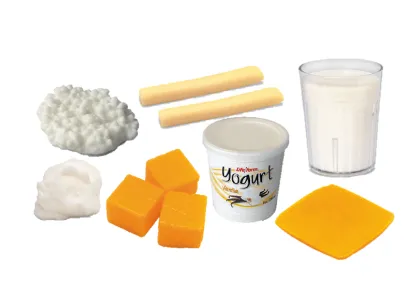
While yogurt is often considered a healthy choice by consumers, at the same time, the dairy industry is a leader in clean labeling. Make your colorful dairy products more appealing to kids with BINMEI’s natural colors, while the clean label and essential nutrients of natural colors are something mom and dad will love to see.
The doubling advantage of combining the nutritional content of dairy products with the natural coloring itself is not only a great choice for children, but also for consumers seeking innovative health.
Benefits
- Our natural colors are cost-effective while providing color.
- We can offer ultra-micronized powders that are more helpful in dissolving and mixing.
- In addition to powder, we also offer liquid, which is easier to use and store.
- In addition to color, our natural colors also provide health and wellness.
Manufacturing Processes
- Additive reference: typically, a starting color dose of between 0.08% w/w and 1.0% w/w is added to the finished product.
- Reduce discoloration due to pasteurization by increasing the amount used.
- If possible, add natural colors at the end of production.
Stabilities
- Most natural pigments perform well at neutral pH, but as ph changes, so does the color of the anthocyanin.
- Light storage temperature can affect the shelf life and level of the color change of the product.
- Using opaque packaging increases color stability.
Why Dairy Is a Strong Application for Natural Colors
The dairy industry has always been a pioneering leader in clean-label innovation. Consumers—especially parents purchasing for children—closely scrutinize the ingredient lists of yogurts, milks, and cheeses. For this reason, utilizing natural food coloring in dairy is not just about visual differentiation; it is a strategic requirement to satisfy the demand for natural health, essential nutrition, and absolute label transparency.
Combining the inherent nutritional value of dairy products with the wellness benefits of botanical colorants creates a powerful "doubling advantage." However, formulating for dairy is highly technical. The white, opaque background of dairy proteins (casein) naturally lightens pigments, meaning formulators cannot rely on visual guesswork.
To achieve a vivid, appetizing appearance that survives the dairy supply chain, R&D teams must engineer their color strategy around the matrix's specific fat content, pasteurization temperatures, and light-exposure risks during retail storage.
Yogurt, Milk, and Cheese Need Different Formulation Strategies
While yogurt, milk, and cheese all fall under the dairy umbrella, they present distinct biochemical environments. Most natural pigments perform exceptionally well at a neutral pH, but fermentation and fat content drastically alter how a color behaves on the factory floor.
Yogurt (Fermented & Acidic)
Yogurt processing involves bacterial fermentation, which produces lactic acid and drops the pH of the base. This is a critical factor for color selection. Because the color of anthocyanin-based pigments (like radish or cabbage) will shift drastically as the pH changes, formulators must select natural colors specifically verified for low-pH stability to maintain the intended fruit association (such as a consistent strawberry red).
Milk (Neutral pH & Liquid Matrix)
Flavored milks possess a neutral pH, which is highly accommodating for most botanical pigments. In these high-volume liquid processing environments, standard powders can be difficult to hydrate. Utilizing liquid natural colors is highly recommended here, as they are much more convenient to use, pump, and store, blending instantly into the milk stream without sheer mixing.
Cheese (High Fat & Solid Matrix)
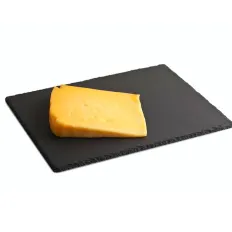
Cheese applications often require color to be evenly dispersed into a dense, fat-rich curd. Standard water-soluble granular powders can struggle to incorporate, leading to uneven color spots. This is where ultra-micronized powders are incredibly helpful—their microscopic particle size significantly improves dissolving and mixing, ensuring a perfectly uniform color throughout the cheese block.
How Color Affects Consumer Expectation in Dairy Products
In dairy products, color is the primary indicator of flavor intensity and product freshness. A rich, vibrant hue signals a premium, fruit-forward profile, while a pale color might be perceived as lacking in flavor.
To achieve these appealing shades against the opaque white background of dairy, formulators typically need to add a starting color dose of between 0.08% w/w and 1.0% w/w to the finished product. Because the required dosage can be relatively high (approaching 1.0%), selecting highly purified natural colors is vital. A poorly refined botanical color will introduce unwanted earthy or vegetal off-notes, completely destroying the delicate flavor of the dairy product.
Common Challenges & Manufacturing Solutions in Dairy Color Selection
Integrating natural colors into dairy processing requires overcoming specific thermal and environmental hurdles. Here is how expert formulators tackle the most common manufacturing challenges.
| Manufacturing Challenge | The Technical Reality | R&D Formulation Solution |
|---|---|---|
| Pasteurization & Thermal Loss | High heat during pasteurization (HTST or UHT) degrades sensitive botanical pigments, causing noticeable discoloration. | Increase the starting amount used to compensate for thermal loss, or, if possible, add natural colors at the very end of production after the heating phase. |
| pH Shifts (Fermentation) | Anthocyanins change color dynamically as the dairy base ferments and drops in pH. | Evaluate the pigment based on the final post-fermentation pH of the yogurt or kefir, not the initial milk pH. |
| Light Degradation | Prolonged exposure to supermarket fluorescent lighting severely impacts the shelf life and color level of the product. | Protect the formulation by actively using opaque packaging, which significantly increases long-term color stability. |
| Mixing in High-Fat Bases | Standard powders resist hydration in lipid-heavy systems like cheese or full-fat creams. | Utilize ultra-micronized powders or pre-dispersed liquid formats to ensure seamless homogenization. |
How to Build a Better Dairy Color Strategy
A successful dairy color strategy eliminates guesswork by aligning visual goals with specific plant processing parameters. Formulators should execute the following technical workflow:
- Establish the Dosage: Target a baseline of 0.08% to 1.0% w/w, scaling up if the product undergoes harsh pasteurization.
- Optimize Addition Timing: Add colors post-pasteurization whenever the manufacturing setup allows it to prevent thermal degradation.
- Select the Format: Deploy liquids for fluid milks and ultra-micronized powders for solid or high-fat cheeses to guarantee perfect dissolution.
- Account for pH: Map out the fermentation drop in yogurts to predict how anthocyanins will behave.
- Upgrade Packaging: Transition to opaque bottles or cups to shield the natural botanical pigments from destructive light storage conditions.
By applying this rigorous technical evaluation, dairy brands can confidently launch visually stunning, kid-friendly products that fully deliver on the clean-label promise. For broader solution planning, explore our organic food coloring solutions and review our guide on how to choose natural food coloring without affecting flavor at higher dosages.
Related Applications
Yogurt
Milk