Natural Food Coloring Powder and Natural Food Pigments
Natural Food Coloring Powder and Food Pigments for Blue, Green, Red and Yellow Applications
Natural food coloring powder is widely used in food and beverage development for brands and manufacturers that want cleaner labels, plant-based ingredients and more flexible color solutions. Compared with synthetic dyes, natural food coloring powders can support a more ingredient-friendly positioning while still delivering vibrant visual results across different product systems.
In food formulation, these ingredients are also commonly discussed as natural food pigments because they provide color through plant-, algae- or fruit-derived pigment sources. For B2B buyers, the practical question is not only whether a color is natural, but whether the selected food pigment powder can work in the final application, processing environment and commercial supply chain.
BINMEI provides natural food coloring powder solutions across blue, green, red and yellow color categories. Different food pigment sources are suitable for different applications, and the right choice depends on target shade, pH, heat exposure, light stability, formulation system and final product direction.
What Is Natural Food Coloring Powder?
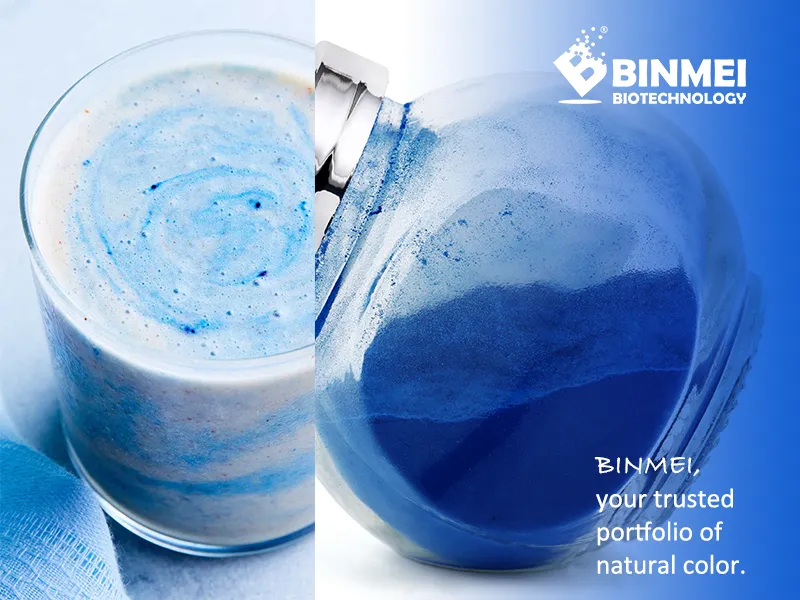
Natural food coloring powder refers to powdered color ingredients derived from plant, algae or fruit-based sources. These powders are used to create blue, green, red and yellow shades in food and beverage applications without relying on synthetic dyes. For manufacturers, powdered formats are often selected because they are easier to handle in dry systems, easier to store and more flexible for commercial formulation work.
The most suitable powder depends on the final application. Some systems require stronger blue shades, while others need a more stable yellow, a plant-based green or a clean-label red tone. That is why a category page for natural food coloring powder should help buyers compare sources, applications and related product directions instead of functioning like a general blog article.
Natural Food Coloring Powder vs. Food Pigments
Food pigments refer to the color-giving compounds or ingredient systems used to create visual color in food and beverage products. Natural food pigments may come from plants, algae, fruits or other natural sources. In commercial food manufacturing, these pigments are usually supplied in practical formats such as powder, liquid, concentrate or extract depending on the application requirement.
Natural food coloring powder can be understood as one practical commercial form of natural food pigments. It is especially useful when buyers need dry blending, concentrated storage, easier transportation, flexible dosage control and bulk handling. For example, blue food pigment directions may include butterfly pea flower extract or spirulina-derived phycocyanin powder, while red food pigment directions may include anthocyanin-rich berry extracts.
For procurement teams, it is important not to choose by color name alone. The pigment source, application environment, processing condition and required documentation should be reviewed together before selecting a natural food coloring powder supplier.
Natural Food Pigments in Powder Form
Natural food pigments can be supplied in different formats, including powder, liquid, paste or extract forms. For many commercial projects, powder format is preferred when buyers need dry blending, compact storage, lower shipping complexity and flexible dosage adjustment during product development.
However, powder form is not automatically suitable for every food system. Beverage, dairy, bakery and confectionery applications may each have different requirements for solubility, dispersion, pH response, heat stability, light stability and flavor impact. BINMEI’s natural food coloring powder solutions help buyers compare blue, green, red and yellow food pigment directions based on the final application rather than color name alone.
Natural Food Coloring Powder Product Matrix
The following matrix helps buyers compare common natural food coloring powder directions by color category, food pigment type, source and application use. It is designed as a starting point for B2B evaluation before moving into specific product testing.
| Color Category | Food Pigment Type | Common Powder Source | Typical Use Direction | Recommended BINMEI Path |
|---|---|---|---|---|
| Blue | Phycocyanin / anthocyanin-based blue pigment direction | Butterfly pea flower extract, spirulina / phycocyanin powder | Beverages, confectionery, dairy, frosting and creative blue coloring projects | Natural Blue / Butterfly Pea Flower Extract / Blue Spirulina Bulk |
| Green | Chlorophyll / spirulina-related green pigment direction | Spirulina superfine powder, green spirulina extract | Beverages, bakery, pasta, dry blends and selected green food systems | Natural Green / Spirulina Superfine Powder |
| Red | Anthocyanin-rich red pigment direction | Aronia berry extract powder and other anthocyanin-rich red sources | Beverages, confectionery, dairy desserts, fillings and natural red positioning | Natural Red / Aronia Berry Extract Powder |
| Yellow | Safflower yellow / plant-based yellow pigment direction | Safflower yellow and related yellow plant extracts | Dairy, bakery, savory systems, confectionery and selected yellow coloring needs | Natural Yellow / Safflower Yellow |
Natural Blue Food Dye Powder Options
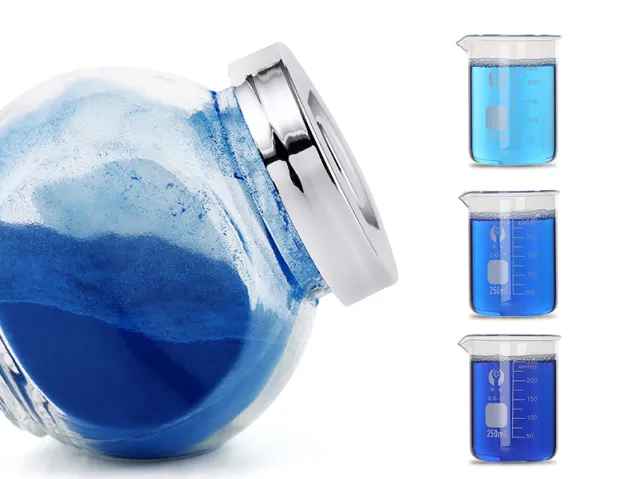
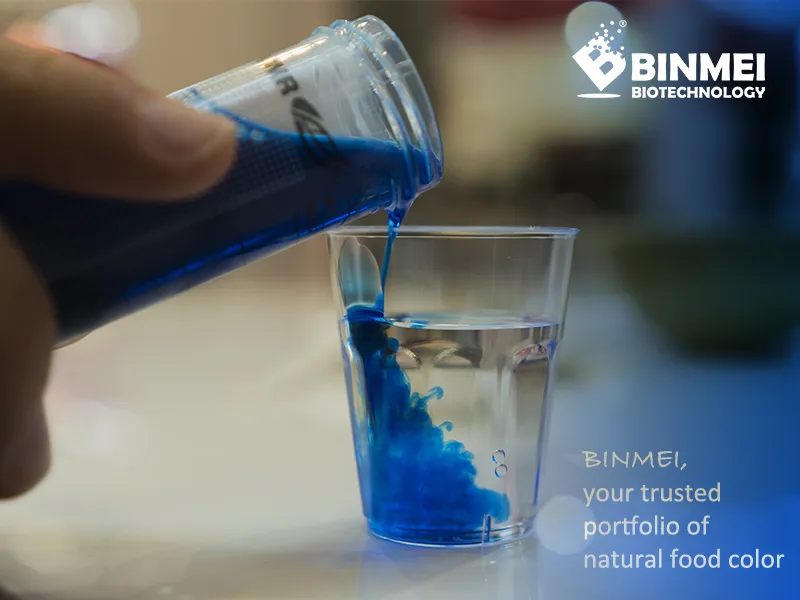
Natural blue food dye remains one of the most difficult categories in food coloring. In most commercial projects, the most relevant powder directions are butterfly pea flower extract and blue spirulina / phycocyanin powder.
From a food pigment perspective, natural blue options are usually more application-sensitive than red or yellow pigments. Buyers should compare source, shade, pH behavior, processing conditions and final product storage before selection.
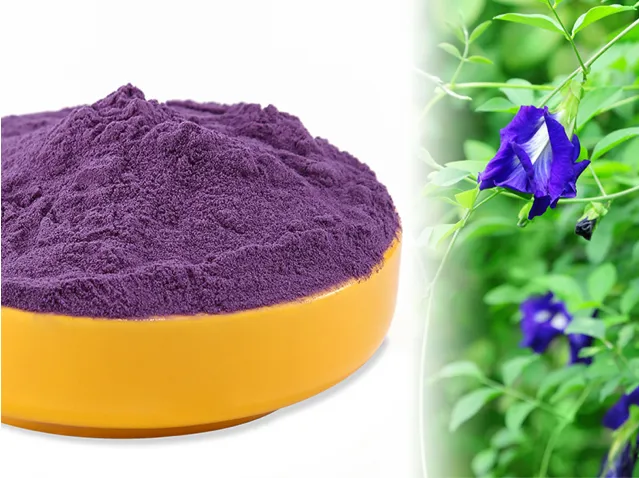
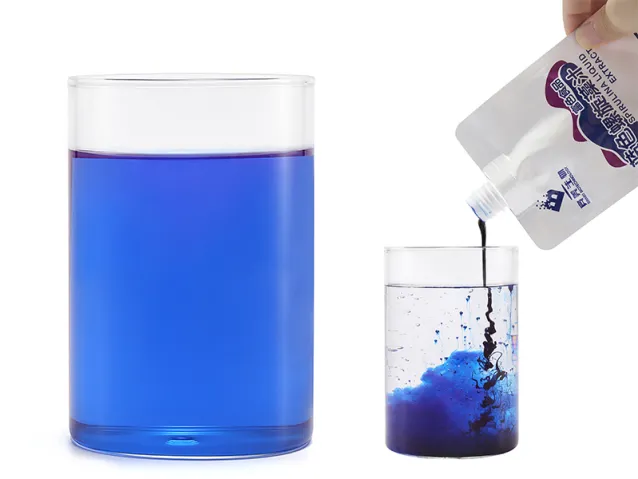
Butterfly pea flower extract is often selected for plant-based and clean-label blue concepts, especially when visual novelty and natural blue-to-purple characteristics are desirable. Blue spirulina or phycocyanin powder is often selected when a stronger blue tone is required in food and beverage applications. For liquid-format development, buyers can also review Spirulina Liquid Extract.
- Best for blue concept products: butterfly pea flower extract or spirulina-derived blue ingredients
- Best for stronger blue color intensity: blue spirulina / phycocyanin powder
- Key review points: pH, heat exposure, solubility, light stability and application testing
- Best for broader natural blue category review: Natural Blue Solutions
Natural Green Food Dye Powder Options
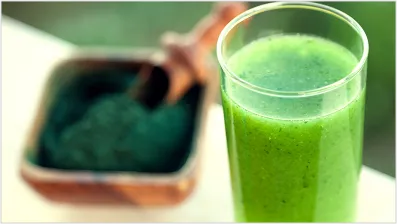
Natural green food dye is usually easier to source than natural blue, but stability and flavor impact still matter. For green powder direction, spirulina-based and chlorophyll-rich ingredients are common choices in food development.
Green food pigments may come from spirulina-related or chlorophyll-rich sources, but buyers should also review flavor impact, heat exposure and stability in the final food system. This is especially important in bakery, pasta, dry blend and beverage applications where the base formulation may affect the final shade.
For buyers evaluating green powdered solutions, BINMEI’s Natural Green category and Spirulina Superfine Powder can serve as starting points for green coloring projects that require plant-derived ingredient positioning.
- Best for green dry systems: spirulina superfine powder
- Best for category comparison: Natural Green Solutions
- Useful in: bakery, pasta, beverages and selected dry blends
- Key review points: flavor impact, color direction, dispersion and heat exposure
Natural Red Food Dye Powder Options
Natural red food dye is one of the most commercially versatile categories in natural food coloring powder. Anthocyanin-rich red ingredients are often selected when brands want a naturally derived red shade for beverage, confectionery, dessert and dairy-related applications.
Red food pigments are often associated with anthocyanin-rich sources, which can create red to red-purple tones depending on pH and formulation conditions. Because anthocyanin-based colors can respond to acidity and ingredient interactions, real application testing is recommended before confirming bulk purchase.
For red powder direction, buyers can review Natural Red and Aronia Berry Extract Powder. This type of anthocyanin extract is especially relevant for projects that require a red to red-purple tone with plant-based ingredient positioning.
- Best for natural red positioning: aronia berry extract powder
- Best for anthocyanin-based red direction: Aronia Berry Extract Powder
- Useful in: beverages, confectionery, dairy desserts and fillings
- Key review points: pH response, red-purple shade direction and formulation compatibility
Natural Yellow Food Dye Powder Options
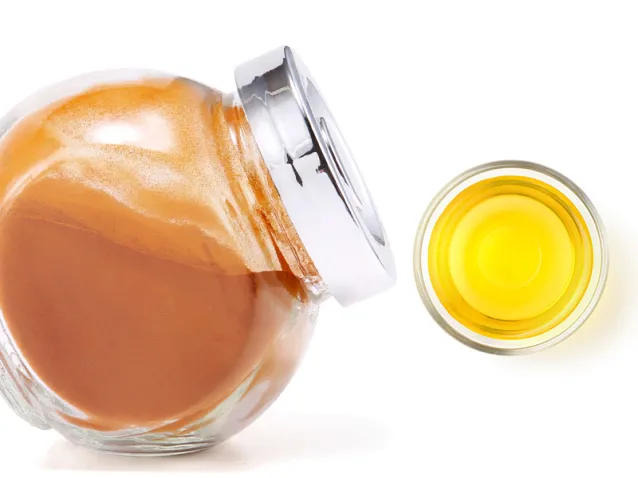
Natural yellow food dye powders are widely used because yellow shades are generally more practical across many commercial systems than natural blue tones. Yellow powders are often selected for dairy, bakery, confectionery and savory product development.
Yellow food pigments are commonly used in dairy, bakery, confectionery and savory systems because many yellow shades are more practical across commercial food applications. Buyers should still evaluate heat exposure, dosage level, shade target and compatibility with the base formulation.
For yellow powder direction, buyers can review Natural Yellow and Safflower Yellow for commercial product development.
- Best for broad yellow category review: Natural Yellow Solutions
- Best for powder-based yellow ingredient direction: Safflower Yellow
- Useful in: dairy, bakery, confectionery and selected savory systems
- Key review points: heat stability, color intensity, dosage and final product shade
How to Choose the Right Natural Food Coloring Powder
Choosing the right natural food coloring powder depends on more than shade alone. A useful selection process should consider color target, food pigment source, product system, processing conditions and commercial support.
1. Choose by Color Target
Start with the final color direction. Blue, green, red and yellow powders behave differently in actual food systems, so the category should be selected first before comparing specific ingredients.
2. Understand the Food Pigment Source
Different natural food pigments behave differently in real formulations. Blue, green, red and yellow pigment sources may respond differently to pH, heat, light, processing time and storage conditions. Buyers should not choose by color name alone; the pigment source and application environment should be reviewed together.
3. Choose by Application
A powder that works well in confectionery may not perform the same way in a beverage or dairy system. For application-specific direction, review: Beverage, Confectionery, Bakery and Dairy.
4. Review pH, Heat and Light Stability
Some food dye ingredients are more sensitive than others. Anthocyanin-rich, chlorophyll-related and phycocyanin-based powders can respond differently to pH, heat and light exposure, so application testing is always recommended.
5. Compare Powder Form Practicality
Powdered colors are often selected for dry mixes, concentrated storage and flexible dosing. If your project needs easier integration into liquid systems, a liquid-format product may be more suitable than a standard powder.
6. Check Commercial Support
Buyers should confirm whether the supplier can provide product specifications, samples, technical documents and suitable product direction for the intended use. For bulk food pigment projects, supplier communication and application support can be as important as the ingredient itself.
Recommended Applications by Color Category
Natural food coloring powder should be selected according to the product system. The same food pigment powder may show different results in beverage, bakery, dairy, confectionery or dry mix applications.
| Color Category | Typical Applications | Useful Internal Direction |
|---|---|---|
| Blue Powder | Beverages, confectionery, dairy, frosting and selected novelty products | Beverage / Confectionery |
| Green Powder | Bakery, pasta, dry blends, smoothies and selected green food concepts | Bakery |
| Red Powder | Beverages, confectionery, dairy desserts, plant-based color positioning | Beverage / Dairy |
| Yellow Powder | Dairy, bakery, confectionery and savory systems | Dairy / Bakery |
BINMEI Natural Food Coloring Powder and Food Pigment Solutions
BINMEI supports customers looking for natural food coloring powder and natural food pigment solutions across different commercial color categories. Instead of treating blue, green, red and yellow as a single generic topic, we recommend choosing a color direction first and then reviewing the most suitable ingredient format for the intended application.
For buyers comparing natural food pigments in powder form, BINMEI helps match the color category, pigment source and application direction before moving into product-level evaluation. This allows manufacturers to reduce unnecessary testing and focus on ingredient options that are more likely to fit their target food system.
- Natural Blue Solutions for blue food powder projects
- Natural Green Solutions for green food powder direction
- Natural Red Solutions for anthocyanin-rich red powder positioning
- Natural Yellow Solutions for yellow powder ingredient development
For more specific product paths, buyers can continue to: Butterfly Pea Flower Extract, Blue Spirulina Bulk, Aronia Berry Extract Powder and Safflower Yellow.
Commercial FAQ
What is natural food coloring powder?
Natural food coloring powder is a powdered color ingredient derived from plant, algae or fruit-based sources and used to create blue, green, red or yellow shades in food and beverage systems.
What are food pigments?
Food pigments are color-giving compounds or ingredient systems used to provide color in food and beverage products. Natural food pigments can come from plant, algae, fruit or other natural sources.
Are food pigments the same as food coloring powders?
Not exactly. Food pigments describe the color-giving substances or ingredient category, while food coloring powder refers to a commercial powder format used in manufacturing. A natural food coloring powder can be considered one practical form of natural food pigment.
What are common types of natural food pigments?
Common natural food pigment directions include anthocyanin-rich red and purple pigments, chlorophyll-related green pigments, carotenoid-based yellow to orange pigments and phycocyanin-based blue pigments.
Which natural food coloring powder is best for beverages?
The answer depends on the color target and formulation system. Blue, red and yellow beverage applications often require different source ingredients, so selection should be based on the intended shade, pH, processing conditions and product positioning.
What is the difference between powder and liquid natural food coloring?
Powder formats are often selected for dry systems, storage convenience and flexible dosing, while liquid formats may be more practical for certain beverage, dairy and semi-liquid applications.
How do I choose natural food pigments for food manufacturing?
Start with the target shade, then review the pigment source, food system, pH, heat exposure, light stability, flavor impact, regulatory requirements and available supplier documentation.
How do I choose the right natural food coloring powder?
Start with the required color category, then review application fit, food pigment source, pH sensitivity, heat stability, flavor impact and available technical support before final selection.
Can BINMEI support bulk natural food coloring powder projects?
Yes. BINMEI supports commercial projects across blue, green, red and yellow natural color categories, with category pages, product directions and application references for further evaluation.
Can BINMEI support bulk natural food pigment projects?
Yes. BINMEI supports natural food coloring powder and natural food pigment projects across blue, green, red and yellow color categories, with product paths and application references for further evaluation.
Explore the Right Natural Food Coloring Powder for Your Project
If you are comparing natural food coloring powder or natural food pigments for beverages, confectionery, bakery, dairy or related food systems, start by selecting the right color category and then review the most suitable ingredient path for your product.
Explore Natural Blue, Natural Green, Natural Red and Natural Yellow to continue your evaluation.
References
The following references are provided to help buyers understand the broader scientific and regulatory background of natural food pigments, natural colorants and selected food coloring sources. Final product use should always be evaluated according to the target market, application category and local regulatory requirements.
- Magalhães D, et al. Natural Pigments Recovery from Food By-Products. Molecules. 2024. https://pmc.ncbi.nlm.nih.gov/articles/PMC11276186/
- Singh T, et al. Natural bio-colorant and pigments: Sources and applications in food industry. Food Chemistry Advances. 2023. https://www.sciencedirect.com/science/article/pii/S2666154323001357
- Luzardo-Ocampo I, et al. Technological Applications of Natural Colorants in Food Systems. Foods. 2021. https://www.mdpi.com/2304-8158/10/3/634
- U.S. Electronic Code of Federal Regulations. 21 CFR § 73.530 — Spirulina extract. https://www.ecfr.gov/current/title-21/chapter-I/subchapter-A/part-73/subpart-A/section-73.530
- U.S. FDA. Regulatory Status of Color Additives: Spirulina Extract. https://www.hfpappexternal.fda.gov/scripts/fdcc/index.cfm?id=SpirulinaExtract&set=ColorAdditives