Ice cream has always had a strong connection with color. Even before a scoop is tasted, its appearance already shapes the feeling people expect from it. Soft pinks feel playful, chocolate shades feel rich, and blue immediately brings a cooler, more refreshing impression. That is one reason blue spirulina ice cream has started attracting more attention in modern frozen dessert development.
The idea is easy to understand. Ice cream already carries a sense of comfort and coolness, and blue naturally strengthens that impression. When the color is achieved with spirulina rather than synthetic dyes, the concept becomes even more interesting for brands looking for a more natural direction.
At the same time, spirulina ice cream is not simply about adding a trendy ingredient and hoping for a beautiful result. Ice cream may be a friendly format for color, but it still requires the right tone, the right formulation approach and the right spirulina choice. The difference between blue spirulina and green spirulina matters here more than many people first expect.
Why Blue Feels So Natural in Ice Cream
Some colors seem to belong in certain food categories more naturally than others. Blue is one of those colors for frozen desserts. It brings a visual sense of freshness, lightness and cool temperature, which makes it especially suitable for ice cream, gelato and other chilled treats.
That is why blue spirulina ice cream tends to stand out so quickly.
The color does not feel random.
In the right application, it feels surprisingly aligned with the product itself.
A blue frozen dessert can look playful, premium, summery or futuristic, depending on how the full concept is built.
This is also one of the reasons spirulina has drawn attention in ice cream applications more than in some other food systems.
Frozen desserts give color room to be seen.
Why Spirulina Is Especially Interesting for Ice Cream
Not every food category gives natural colors the same chance to perform well. Ice cream is different. Compared with darker or more visually complicated products, ice cream often has a smoother and lighter base, which makes color easier to appreciate.
That creates a strong opportunity for spirulina-based coloring. In the right frozen dessert format, the result can feel clean, eye-catching and modern without becoming overly artificial in appearance.
This does not mean spirulina is automatically right for every ice cream product. It means ice cream is one of the more promising places to explore it.
Blue Spirulina vs Green Spirulina in Ice Cream
Once the idea of spirulina ice cream comes up, the next question is usually whether to use blue spirulina or green spirulina. Although both belong to the spirulina family, they create very different results in frozen dessert applications.
Blue Spirulina in Ice Cream
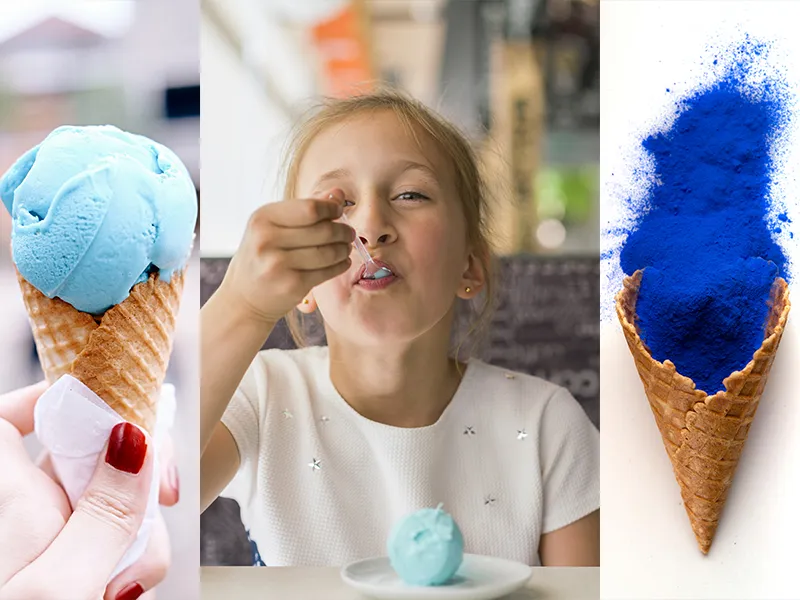
Blue spirulina is usually the stronger choice when the goal is a clean and visually striking frozen dessert. It creates the kind of bright or soft blue look that makes the product feel fresh and immediately distinctive. This is why it often suits concepts built around novelty, premium presentation or modern visual appeal.
Green Spirulina in Ice Cream
Green spirulina moves the product in a different direction. Instead of looking crisp and cool, the result may feel more earthy, more natural in a broader sense, and sometimes less precise if the concept is aiming for a clear visual statement. In certain niche products that direction may still make sense, but it usually creates a different kind of frozen dessert identity.
Which One Usually Makes More Sense?
For most products built around visual freshness and clean natural blue impact, blue spirulina ice cream is the better match. Green spirulina may suit selected concepts, but it tends to work best when the brand is intentionally moving toward a more earthy or unconventional look.
What Makes Blue Spirulina Ice Cream So Appealing
Part of the appeal is simply that it looks different. In a category full of familiar colors, blue still feels unexpected enough to create curiosity. But the attraction goes beyond novelty alone.
A well-designed blue spirulina ice cream concept can feel:
- cooler and fresher at first glance
- more modern than traditional bright synthetic shades
- better suited to seasonal, limited-edition or visually led dessert launches
- more aligned with brands looking for a cleaner color story
When those pieces come together, the color does not feel like decoration. It feels like part of the product experience.
Where Spirulina Ice Cream Works Best
Not every frozen dessert needs spirulina, but some formats are clearly more suitable than others.
Gelato and Premium Scoop Concepts
These formats often leave enough visual space for the color to be appreciated. A smooth, elegant base can make blue spirulina feel polished rather than loud.
Novelty and Seasonal Ice Cream Launches
When a brand wants to create something playful, attention-grabbing or summer-oriented, blue spirulina ice cream can become a strong visual centerpiece.
Layered or Decorative Frozen Desserts
Spirulina may also work well in concepts where the color is part of a broader visual build, such as swirls, inclusions or mixed frozen dessert presentations.
Where It May Be Less Suitable
A natural color discussion is more useful when it also makes room for limits. Spirulina is interesting in ice cream, but it is not equally strong in every product direction.
- Products that rely heavily on highly traditional visual expectations may not need a blue route
- Concepts without a clear color story can make spirulina feel unnecessary
- Very aggressive target shades may require more careful testing to reach the right result
- Products where color consistency is extremely strict may need a more deliberate development process
The strongest spirulina ice cream concepts usually start with a clear reason for the color, not just the availability of the ingredient.
Why Ice Cream Is Friendlier Than Many Other Applications
One reason spirulina continues to be discussed in frozen desserts is that ice cream is generally more visually cooperative than many processed foods. It is easier to appreciate a bright or soft blue tone in a frozen base than in darker, denser or more complex systems.
That does not remove the need for testing, but it does explain why blue spirulina ice cream often feels more achievable than blue concepts in categories where the color has to fight harder to be seen.
What Product Teams Should Pay Attention To
Even in a more color-friendly category like ice cream, good results still depend on choices being made carefully. A few points deserve extra attention:
- Target shade: soft sky blue, deeper blue or a more subtle cool-toned look
- Base style: dairy, plant-based or other frozen dessert systems may create different visual effects
- Color distribution: a smooth, even result usually matters more than a dramatic dose
- Concept fit: the color should feel intentional within the product story
- Production sequence: the ingredient should be evaluated in the actual process, not only in theory
These choices often decide whether a spirulina frozen dessert feels premium and clean, or simply unusual.
Powder or Liquid: Which Spirulina Format Fits Ice Cream Better?
The answer depends on how the frozen dessert is being developed. The best format is usually the one that matches the workflow and texture expectations of the product team.
Powder Format
Powder can make sense in projects where teams want flexibility during trials or where dry ingredient handling already fits the development process.
Liquid Format
Liquid formats may be attractive when convenience, speed of incorporation or smoother process handling are part of the priority. In some frozen dessert systems, that can make the development path feel more direct.
There is rarely a universal answer here. The stronger choice depends on the formulation route, the production habits and the final visual target.
Why Blue Spirulina Ice Cream Often Feels More Modern Than Synthetic Blue
Part of what makes this direction appealing is that the color story feels more current. Synthetic blue can be bright and familiar, but a spirulina-based route often gives the product a different tone altogether. It can feel softer, more contemporary and more aligned with the way many brands now talk about ingredient choices.
This is especially true in categories where appearance influences buying decisions quickly. Ice cream is one of them. The first look matters.
How to Judge Whether a Spirulina Ice Cream Concept Really Works
A beautiful test sample is not the same thing as a strong product direction. The better question is whether the color still feels right once it is connected to the full frozen dessert experience.
A useful evaluation usually asks:
- Does the blue tone look clean in the actual base?
- Would blue spirulina work better than green spirulina for this concept?
- Does the color make the product feel fresher, more premium or more interesting?
- Is the visual effect supporting the brand story rather than distracting from it?
- Does the chosen spirulina format fit the real production workflow?
When the answers line up, blue spirulina ice cream stops being just an attractive idea and starts becoming a convincing product direction.
Related Pages for Further Exploration
FAQ
Why is blue spirulina ice cream becoming more popular?
Because blue naturally fits the visual mood of frozen desserts, and spirulina offers a natural route for brands looking to create eye-catching ice cream concepts without relying on traditional synthetic-looking color directions.
Is blue spirulina better than green spirulina in ice cream?
In most visually led frozen dessert concepts, blue spirulina is usually the stronger choice because it creates a cleaner and more refreshing appearance. Green spirulina may still suit certain earthy or niche concepts, but it gives a very different result.
Does spirulina work well in ice cream applications?
Ice cream is one of the more promising categories for spirulina because the base often allows the color to be seen clearly. That makes it easier to build a visually effective concept than in many darker or more complex food systems.
Should ice cream developers choose powder or liquid spirulina?
That depends on the formulation process and the way the product is made. Both formats can be worth evaluating, and the stronger choice is usually the one that fits the actual production workflow best.
Is spirulina ice cream suitable for every frozen dessert?
Not necessarily. It works best when the product has a clear visual purpose and when the color feels like a natural part of the concept rather than an unnecessary add-on.